
Google Expands Gemini Into Android Auto

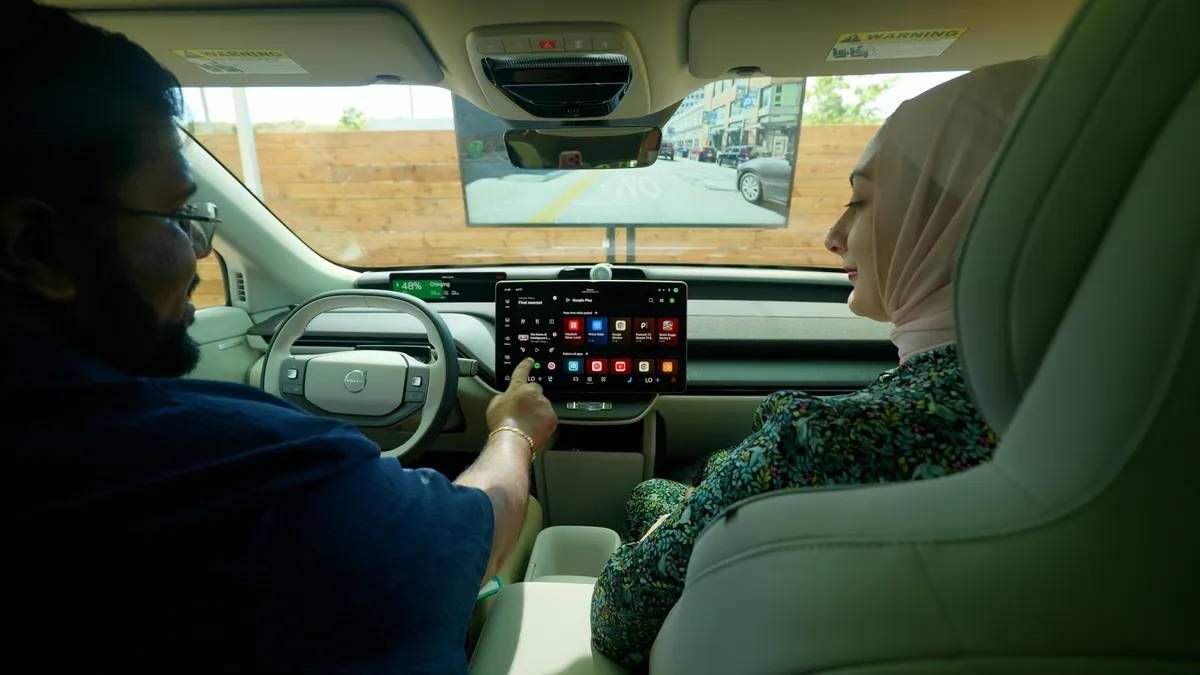
Google showcased a demonstration of its Gemini-powered in-car assistant performing a range of tasks, including adjusting vehicle settings such as sunroof controls, providing travel guidance.

May 22, 2026
|
Image Source: CNET Roadshow

Google is expanding the role of its Gemini AI assistant into in-car environments, demonstrating how advanced generative intelligence can manage navigation, entertainment, and real-world tasks through Android Auto integration. The development signals a shift toward AI-driven mobility ecosystems, with implications for automotive manufacturers, technology platforms, and in-vehicle user experience design.

Google showcased a demonstration of its Gemini-powered in-car assistant performing a range of tasks, including adjusting vehicle settings such as sunroof controls, providing travel guidance, and assisting with lifestyle-related actions like restaurant ordering.

The system is designed to operate as a conversational interface within vehicles, allowing drivers and passengers to interact with AI using natural language rather than traditional touchscreen or voice-command systems. The assistant integrates with Android Auto, extending Google’s ecosystem deeper into automotive environments.

The demonstration highlights how generative AI is being positioned as a centralized control layer for in-car digital experiences. Instead of separate applications for navigation, media, and vehicle controls, Gemini aims to unify these functions into a single intelligent interface.

The concept reflects broader efforts to make vehicles more software-defined, where digital platforms increasingly determine user experience rather than hardware alone. This also aligns with ongoing collaborations between technology companies and automotive manufacturers to embed AI capabilities directly into infotainment systems.

The integration of AI assistants into vehicles is part of a wider transformation in the automotive sector, where cars are evolving into connected computing platforms rather than purely mechanical systems.

Over the past decade, infotainment systems have shifted from basic GPS and media playback to sophisticated digital ecosystems. The introduction of generative AI represents the next phase, enabling contextual decision-making, conversational interaction, and task automation inside vehicles.

Companies such as , , and multiple automotive OEMs are competing to define the dominant in-car operating system. Android Auto and Apple’s CarPlay have already established strong footholds, but AI-native interfaces could reshape control layers entirely.

Historically, in-car technology adoption has been driven by safety, convenience, and connectivity. The addition of AI introduces new capabilities but also raises questions around driver distraction, system reliability, and regulatory compliance.

From a market standpoint, the global connected car ecosystem is expanding rapidly, with increasing demand for personalized, voice-driven, and automated in-vehicle services. AI assistants are emerging as a central differentiator in this competitive landscape.

Industry analysts suggest that embedding generative AI into vehicles could significantly enhance user experience by reducing friction in accessing navigation, entertainment, and communication tools. They note that natural language interfaces may become the default interaction model in next-generation vehicles.

Automotive technology experts highlight that the ability to execute complex multi-step commands such as planning routes, adjusting cabin settings, and recommending stops marks a shift toward “agentic” in-car systems.

UX specialists emphasize that conversational AI could reduce cognitive load for drivers, but caution that design must prioritize safety and minimize distraction. Regulatory frameworks in many regions will likely influence how deeply such systems can operate while a vehicle is in motion.

Some industry observers point out that success will depend on seamless integration with vehicle hardware and third-party services, including maps, payment systems, and entertainment platforms.

Google has positioned Gemini as a multimodal assistant capable of understanding context across devices, with in-car integration seen as a key extension of its broader AI ecosystem strategy.

For automotive and technology companies, in-car AI represents a strategic battleground where control of the user interface could determine long-term platform dominance. Partnerships between OEMs and tech firms are likely to intensify.

Investors may view AI-enabled vehicles as a major growth vector in the broader connected mobility market, particularly as subscription-based in-car services expand. From a policy standpoint, regulators may need to reassess safety standards for AI-driven vehicle interactions, especially regarding driver attention, data privacy, and system accountability.

The next phase will focus on real-world deployment, safety validation, and regulatory approval of AI-powered in-car systems. Competition is expected to intensify as automakers and tech firms race to define the standard for intelligent mobility interfaces.

The trajectory points toward vehicles evolving into fully conversational digital environments, where AI becomes the primary interface between humans and machines.

Source: CNET Roadshow
Date: 2026-05-21

  • Featured tools
Upscayl AI
Free

Upscayl AI is a free, open-source AI-powered tool that enhances and upscales images to higher resolutions. It transforms blurry or low-quality visuals into sharp, detailed versions with ease.

#
Productivity
Learn more
Murf Ai
Free

Murf AI Review – Advanced AI Voice Generator for Realistic Voiceovers

#
Text to Speech
Learn more

Learn more about future of AI

Join 80,000+ Ai enthusiast getting weekly updates on exciting AI tools.
Thank you! Your submission has been received!
Oops! Something went wrong while submitting the form.

Google Expands Gemini Into Android Auto

May 22, 2026

Google showcased a demonstration of its Gemini-powered in-car assistant performing a range of tasks, including adjusting vehicle settings such as sunroof controls, providing travel guidance.

Image Source: CNET Roadshow

Google is expanding the role of its Gemini AI assistant into in-car environments, demonstrating how advanced generative intelligence can manage navigation, entertainment, and real-world tasks through Android Auto integration. The development signals a shift toward AI-driven mobility ecosystems, with implications for automotive manufacturers, technology platforms, and in-vehicle user experience design.

Google showcased a demonstration of its Gemini-powered in-car assistant performing a range of tasks, including adjusting vehicle settings such as sunroof controls, providing travel guidance, and assisting with lifestyle-related actions like restaurant ordering.

The system is designed to operate as a conversational interface within vehicles, allowing drivers and passengers to interact with AI using natural language rather than traditional touchscreen or voice-command systems. The assistant integrates with Android Auto, extending Google’s ecosystem deeper into automotive environments.

The demonstration highlights how generative AI is being positioned as a centralized control layer for in-car digital experiences. Instead of separate applications for navigation, media, and vehicle controls, Gemini aims to unify these functions into a single intelligent interface.

The concept reflects broader efforts to make vehicles more software-defined, where digital platforms increasingly determine user experience rather than hardware alone. This also aligns with ongoing collaborations between technology companies and automotive manufacturers to embed AI capabilities directly into infotainment systems.

The integration of AI assistants into vehicles is part of a wider transformation in the automotive sector, where cars are evolving into connected computing platforms rather than purely mechanical systems.

Over the past decade, infotainment systems have shifted from basic GPS and media playback to sophisticated digital ecosystems. The introduction of generative AI represents the next phase, enabling contextual decision-making, conversational interaction, and task automation inside vehicles.

Companies such as , , and multiple automotive OEMs are competing to define the dominant in-car operating system. Android Auto and Apple’s CarPlay have already established strong footholds, but AI-native interfaces could reshape control layers entirely.

Historically, in-car technology adoption has been driven by safety, convenience, and connectivity. The addition of AI introduces new capabilities but also raises questions around driver distraction, system reliability, and regulatory compliance.

From a market standpoint, the global connected car ecosystem is expanding rapidly, with increasing demand for personalized, voice-driven, and automated in-vehicle services. AI assistants are emerging as a central differentiator in this competitive landscape.

Industry analysts suggest that embedding generative AI into vehicles could significantly enhance user experience by reducing friction in accessing navigation, entertainment, and communication tools. They note that natural language interfaces may become the default interaction model in next-generation vehicles.

Automotive technology experts highlight that the ability to execute complex multi-step commands such as planning routes, adjusting cabin settings, and recommending stops marks a shift toward “agentic” in-car systems.

UX specialists emphasize that conversational AI could reduce cognitive load for drivers, but caution that design must prioritize safety and minimize distraction. Regulatory frameworks in many regions will likely influence how deeply such systems can operate while a vehicle is in motion.

Some industry observers point out that success will depend on seamless integration with vehicle hardware and third-party services, including maps, payment systems, and entertainment platforms.

Google has positioned Gemini as a multimodal assistant capable of understanding context across devices, with in-car integration seen as a key extension of its broader AI ecosystem strategy.

For automotive and technology companies, in-car AI represents a strategic battleground where control of the user interface could determine long-term platform dominance. Partnerships between OEMs and tech firms are likely to intensify.

Investors may view AI-enabled vehicles as a major growth vector in the broader connected mobility market, particularly as subscription-based in-car services expand. From a policy standpoint, regulators may need to reassess safety standards for AI-driven vehicle interactions, especially regarding driver attention, data privacy, and system accountability.

The next phase will focus on real-world deployment, safety validation, and regulatory approval of AI-powered in-car systems. Competition is expected to intensify as automakers and tech firms race to define the standard for intelligent mobility interfaces.

The trajectory points toward vehicles evolving into fully conversational digital environments, where AI becomes the primary interface between humans and machines.

Source: CNET Roadshow
Date: 2026-05-21

Promote Your Tool

Copy Embed Code

Similar Blogs

May 22, 2026
|

AI Boom Expands Beyond TSMC Stocks

Investor flows are increasingly rotating into semiconductor firms positioned across AI infrastructure rather than concentrating solely on leading foundry capacity.
Read more
May 22, 2026
|

Spotify Positions Taste Intelligence AI Edge

Spotify is leaning into user taste as a defining feature of its next-generation platform strategy, positioning personalization as a core competitive advantage in the AI era.
Read more
May 22, 2026
|

AI Search Platform Strain Big Tech Divide

The report highlights internal strategic and operational pressures at Meta as it continues to restructure its long-term positioning in an AI-driven digital economy.
Read more
May 22, 2026
|

Microsoft AI Priorities Raise GitHub Questions

The report suggests that as Microsoft accelerates integration of AI capabilities across core products including development tools and productivity software GitHub’s strategic differentiation may be under pressure.
Read more
May 22, 2026
|

Google Expands Gemini Into Android Auto

Google showcased a demonstration of its Gemini-powered in-car assistant performing a range of tasks, including adjusting vehicle settings such as sunroof controls, providing travel guidance.
Read more
May 22, 2026
|

Google Simplifies AI Consumer Strategy Push

Google’s latest product updates and AI capabilities are being reframed in simpler, more user-friendly terms to improve public understanding and adoption.
Read more