
China Seedance 2.0 Jolts Hollywood, Signals AI Shift

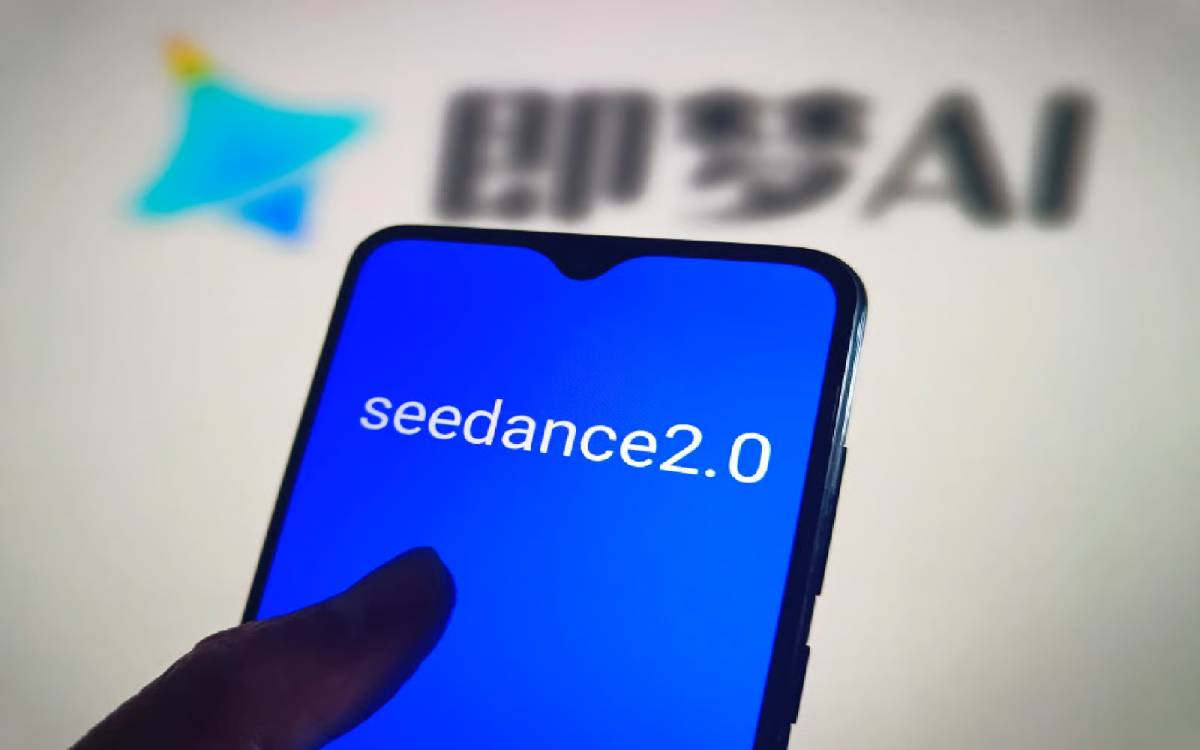
Chinese developers unveiled Seedance 2.0, an advanced generative AI system capable of producing high quality video content that rivals professional studio output.

February 24, 2026
|

A major escalation in the global AI race has emerged from China, where Seedance 2.0 is reportedly delivering video generation capabilities advanced enough to unsettle Hollywood studios. The breakthrough highlights intensifying technological rivalry and raises fresh questions about regulation, intellectual property, and geopolitical competition.

Chinese developers unveiled Seedance 2.0, an advanced generative AI system capable of producing high quality video content that rivals professional studio output.

The model’s performance has reportedly drawn attention from US entertainment executives concerned about cost disruption and copyright exposure. The development comes amid broader US China tech tensions and expanding export controls affecting semiconductor access.

Chinese tech firms continue to accelerate AI model releases despite regulatory scrutiny at home. Observers say Seedance 2.0 represents a leap in multimodal generation, intensifying competition not only in software but also in creative industries traditionally dominated by Western studios.

The development aligns with a broader global trend where generative AI is rapidly transforming media production, advertising, gaming, and digital entertainment. Hollywood has already grappled with AI driven scriptwriting, image generation, and digital actor replication.

China’s AI ecosystem has matured significantly over the past five years, supported by strong state backing, vast datasets, and a competitive domestic tech sector. Despite US restrictions on advanced chip exports, Chinese firms have continued innovating in model architecture and optimisation techniques.

The rise of powerful video generation tools signals a shift in creative economics. High end visual effects and content production, once dependent on costly studios and specialised teams, could become more automated. For executives, the convergence of AI and media is reshaping intellectual property strategies and cross border content flows.

Industry analysts suggest Seedance 2.0 reflects China’s determination to compete head on with Western AI leaders in advanced multimodal systems. Some experts argue that Hollywood’s concern is less about technology quality and more about speed of iteration and cost compression.

Media executives have long warned that AI generated content may blur authorship lines and complicate copyright enforcement. Technology policy specialists note that regulatory responses differ sharply between Washington and Beijing, creating asymmetric innovation environments.

Market strategists indicate that AI driven creative tools could unlock new business models, particularly in streaming, gaming, and advertising. However, legal uncertainty around training data and content ownership remains a significant risk factor.

Overall, experts view Seedance 2.0 as symbolic of a shifting balance in digital innovation power. For entertainment companies, advanced video AI could dramatically reduce production costs while increasing competitive pressure. Studios may need to accelerate AI integration to defend margins and maintain relevance.

Investors are likely to monitor Chinese AI firms for signals of export potential and domestic monetisation. Meanwhile, US companies may push for stronger intellectual property safeguards and clearer regulatory boundaries.

From a policy perspective, the emergence of powerful video generation systems could intensify US China technology tensions. Governments may revisit export controls, copyright enforcement mechanisms, and AI safety frameworks to manage cross border impact.

Decision makers should watch for regulatory responses in both China and the United States, particularly around content governance and intellectual property protection. Adoption rates within creative industries will offer early indicators of economic disruption.

Seedance 2.0 signals that the AI race is no longer confined to code and cloud, it is reshaping global cultural and commercial power dynamics.

Source: CNN
Date: February 20, 2026

  • Featured tools
Hostinger Website Builder
Paid

Hostinger Website Builder is a drag-and-drop website creator bundled with hosting and AI-powered tools, designed for businesses, blogs and small shops with minimal technical effort.It makes launching a site fast and affordable, with templates, responsive design and built-in hosting all in one.

#
Productivity
#
Startup Tools
#
Ecommerce
Learn more
Writesonic AI
Free

Writesonic AI is a versatile AI writing platform designed for marketers, entrepreneurs, and content creators. It helps users create blog posts, ad copies, product descriptions, social media posts, and more with ease. With advanced AI models and user-friendly tools, Writesonic streamlines content production and saves time for busy professionals.

#
Copywriting
Learn more

Learn more about future of AI

Join 80,000+ Ai enthusiast getting weekly updates on exciting AI tools.
Thank you! Your submission has been received!
Oops! Something went wrong while submitting the form.

China Seedance 2.0 Jolts Hollywood, Signals AI Shift

February 24, 2026

Chinese developers unveiled Seedance 2.0, an advanced generative AI system capable of producing high quality video content that rivals professional studio output.

A major escalation in the global AI race has emerged from China, where Seedance 2.0 is reportedly delivering video generation capabilities advanced enough to unsettle Hollywood studios. The breakthrough highlights intensifying technological rivalry and raises fresh questions about regulation, intellectual property, and geopolitical competition.

Chinese developers unveiled Seedance 2.0, an advanced generative AI system capable of producing high quality video content that rivals professional studio output.

The model’s performance has reportedly drawn attention from US entertainment executives concerned about cost disruption and copyright exposure. The development comes amid broader US China tech tensions and expanding export controls affecting semiconductor access.

Chinese tech firms continue to accelerate AI model releases despite regulatory scrutiny at home. Observers say Seedance 2.0 represents a leap in multimodal generation, intensifying competition not only in software but also in creative industries traditionally dominated by Western studios.

The development aligns with a broader global trend where generative AI is rapidly transforming media production, advertising, gaming, and digital entertainment. Hollywood has already grappled with AI driven scriptwriting, image generation, and digital actor replication.

China’s AI ecosystem has matured significantly over the past five years, supported by strong state backing, vast datasets, and a competitive domestic tech sector. Despite US restrictions on advanced chip exports, Chinese firms have continued innovating in model architecture and optimisation techniques.

The rise of powerful video generation tools signals a shift in creative economics. High end visual effects and content production, once dependent on costly studios and specialised teams, could become more automated. For executives, the convergence of AI and media is reshaping intellectual property strategies and cross border content flows.

Industry analysts suggest Seedance 2.0 reflects China’s determination to compete head on with Western AI leaders in advanced multimodal systems. Some experts argue that Hollywood’s concern is less about technology quality and more about speed of iteration and cost compression.

Media executives have long warned that AI generated content may blur authorship lines and complicate copyright enforcement. Technology policy specialists note that regulatory responses differ sharply between Washington and Beijing, creating asymmetric innovation environments.

Market strategists indicate that AI driven creative tools could unlock new business models, particularly in streaming, gaming, and advertising. However, legal uncertainty around training data and content ownership remains a significant risk factor.

Overall, experts view Seedance 2.0 as symbolic of a shifting balance in digital innovation power. For entertainment companies, advanced video AI could dramatically reduce production costs while increasing competitive pressure. Studios may need to accelerate AI integration to defend margins and maintain relevance.

Investors are likely to monitor Chinese AI firms for signals of export potential and domestic monetisation. Meanwhile, US companies may push for stronger intellectual property safeguards and clearer regulatory boundaries.

From a policy perspective, the emergence of powerful video generation systems could intensify US China technology tensions. Governments may revisit export controls, copyright enforcement mechanisms, and AI safety frameworks to manage cross border impact.

Decision makers should watch for regulatory responses in both China and the United States, particularly around content governance and intellectual property protection. Adoption rates within creative industries will offer early indicators of economic disruption.

Seedance 2.0 signals that the AI race is no longer confined to code and cloud, it is reshaping global cultural and commercial power dynamics.

Source: CNN
Date: February 20, 2026

Promote Your Tool

Copy Embed Code

Similar Blogs

March 13, 2026
|

Alibaba Releases OpenClaw App in China AI Race

Alibaba has introduced the OpenClaw app, a platform designed to support the growing ecosystem of “agentic AI” systems capable of performing tasks autonomously with minimal human intervention.
Read more
March 13, 2026
|

Meta Adds AI Tools to Boost Facebook Marketplace

Meta has rolled out a suite of artificial intelligence features designed to make selling items on Facebook Marketplace faster and more efficient. The tools can automatically generate product descriptions.
Read more
March 13, 2026
|

Proprietary Data Emerges as Key Advantage in AI

Analysts at S&P Global report that software companies with extensive proprietary data assets are likely to remain resilient as artificial intelligence transforms the technology sector.
Read more
March 13, 2026
|

ByteDance Gains Access to Nvidia AI Chips

ByteDance has obtained access to Nvidia’s high-end AI chips, which are widely considered essential for training and running advanced artificial intelligence models.
Read more
March 13, 2026
|

China Leads Global Rise of Agentic AI Platforms

Chinese technology companies and developers are rapidly experimenting with OpenClaw, an open-source platform designed to create autonomous AI agents capable of performing tasks.
Read more
March 13, 2026
|

Meta Acquires Social Network to Grow AI Ecosystem

Meta confirmed that the Moltbook acquisition will bring AI agent networking capabilities into its portfolio, allowing autonomous AI entities to interact, share data, and perform tasks collaboratively.
Read more