
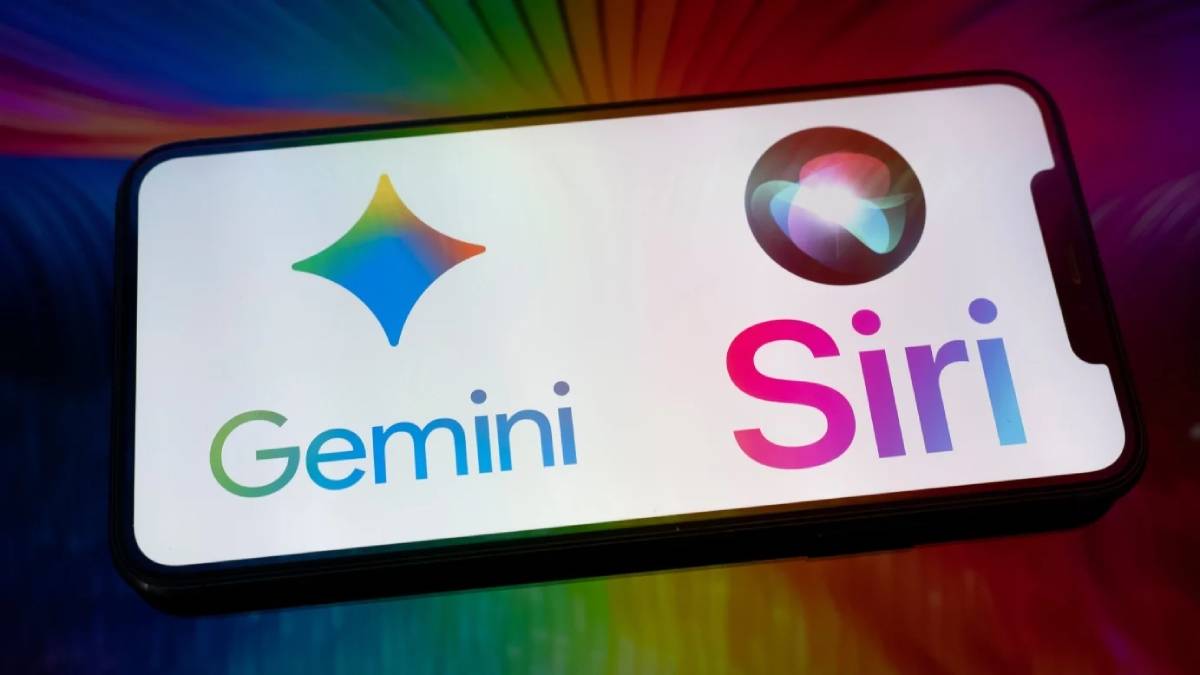
Apple Taps Gemini to Reinvent Siri, Signaling AI Reset

Apple is reportedly planning a phased AI upgrade for Siri, beginning with Gemini-powered capabilities expected as early as February. The initial release will enhance conversational intelligence.

January 27, 2026
|

A major development unfolded as Apple prepares to roll out a Gemini-powered upgrade to Siri in February, with a full AI chatbot overhaul expected at WWDC 2026. The move marks a strategic pivot in Apple’s AI roadmap, impacting consumers, developers, and global competitors in the intensifying AI assistant race.

Apple is reportedly planning a phased AI upgrade for Siri, beginning with Gemini-powered capabilities expected as early as February. The initial release will enhance conversational intelligence, contextual understanding, and task execution. A more comprehensive AI chatbot revamp is slated for unveiling at WWDC 2026.

The development highlights Apple’s deepening collaboration with Google’s Gemini AI ecosystem, reflecting a pragmatic approach to accelerating AI deployment. Key stakeholders include Apple’s global user base, iOS developers, and enterprise partners. Market watchers note the move could influence Apple’s hardware sales, services growth, and competitive standing against OpenAI-powered assistants, Amazon Alexa, and Microsoft Copilot.

The development aligns with a broader trend across global markets where Big Tech firms are racing to integrate advanced generative AI into consumer-facing products. Apple has historically prioritized privacy, on-device processing, and tightly controlled user experiences an approach that initially slowed its rollout of large-scale AI chatbots compared to rivals.

Meanwhile, competitors such as Google, Microsoft, and OpenAI have rapidly advanced AI assistants embedded across operating systems, productivity tools, and cloud platforms. Apple’s reported decision to leverage Gemini reflects a strategic recalibration, balancing speed-to-market with its core design and privacy philosophies.

The move also underscores a shifting industry dynamic where partnerships even among competitors are becoming essential to meet soaring user expectations. For CXOs and analysts, Apple’s strategy signals that AI capability is now a baseline requirement for platform relevance, not a differentiator.

Industry analysts view the Gemini-powered Siri upgrade as a calculated move to close Apple’s perceived AI gap. “This signals Apple’s willingness to partner externally to accelerate innovation rather than build everything in-house,” noted a senior technology analyst tracking consumer AI platforms.

Developers are expected to benefit from improved APIs and smarter assistant-driven workflows, though questions remain about data handling and integration boundaries. Market observers also point to Apple’s careful messaging, likely emphasizing privacy safeguards alongside performance gains.

While Apple has not officially confirmed technical specifics, executives have repeatedly stated that generative AI will be introduced “thoughtfully” and “where it adds clear user value.” Analysts interpret the WWDC 2026 timeline as a signal that Apple is preparing a platform-level AI shift rather than a superficial feature update.

For global executives, Apple’s AI reset could reshape competitive strategies across consumer tech, digital services, and app ecosystems. Businesses building on iOS may need to adapt products to AI-driven interfaces and conversational workflows.

Investors will closely monitor whether the Google Gemini partnership strengthens Apple’s services revenue and user engagement. From a policy perspective, deeper AI integration raises fresh questions around data governance, cross-border AI partnerships, and regulatory compliance particularly in Europe and Asia. Analysts warn that Apple’s choices could influence broader industry norms on privacy-first AI deployment and platform accountability.

Decision-makers should watch the February Siri rollout for real-world performance and user response, followed by Apple’s broader AI narrative at WWDC 2026. Key uncertainties include the depth of Gemini integration, Apple’s long-term AI independence, and regulatory scrutiny. One thing is clear: Apple is signaling that AI is now central to its next platform evolution.

Source & Date

Source: The Hans India
Date: January 2026

  • Featured tools
Figstack AI
Free

Figstack AI is an intelligent assistant for developers that explains code, generates docstrings, converts code between languages, and analyzes time complexity helping you work smarter, not harder.

#
Coding
Learn more
Scalenut AI
Free

Scalenut AI is an all-in-one SEO content platform that combines AI-driven writing, keyword research, competitor insights, and optimization tools to help you plan, create, and rank content.

#
SEO
Learn more

Learn more about future of AI

Join 80,000+ Ai enthusiast getting weekly updates on exciting AI tools.
Thank you! Your submission has been received!
Oops! Something went wrong while submitting the form.

Apple Taps Gemini to Reinvent Siri, Signaling AI Reset

January 27, 2026

Apple is reportedly planning a phased AI upgrade for Siri, beginning with Gemini-powered capabilities expected as early as February. The initial release will enhance conversational intelligence.

A major development unfolded as Apple prepares to roll out a Gemini-powered upgrade to Siri in February, with a full AI chatbot overhaul expected at WWDC 2026. The move marks a strategic pivot in Apple’s AI roadmap, impacting consumers, developers, and global competitors in the intensifying AI assistant race.

Apple is reportedly planning a phased AI upgrade for Siri, beginning with Gemini-powered capabilities expected as early as February. The initial release will enhance conversational intelligence, contextual understanding, and task execution. A more comprehensive AI chatbot revamp is slated for unveiling at WWDC 2026.

The development highlights Apple’s deepening collaboration with Google’s Gemini AI ecosystem, reflecting a pragmatic approach to accelerating AI deployment. Key stakeholders include Apple’s global user base, iOS developers, and enterprise partners. Market watchers note the move could influence Apple’s hardware sales, services growth, and competitive standing against OpenAI-powered assistants, Amazon Alexa, and Microsoft Copilot.

The development aligns with a broader trend across global markets where Big Tech firms are racing to integrate advanced generative AI into consumer-facing products. Apple has historically prioritized privacy, on-device processing, and tightly controlled user experiences an approach that initially slowed its rollout of large-scale AI chatbots compared to rivals.

Meanwhile, competitors such as Google, Microsoft, and OpenAI have rapidly advanced AI assistants embedded across operating systems, productivity tools, and cloud platforms. Apple’s reported decision to leverage Gemini reflects a strategic recalibration, balancing speed-to-market with its core design and privacy philosophies.

The move also underscores a shifting industry dynamic where partnerships even among competitors are becoming essential to meet soaring user expectations. For CXOs and analysts, Apple’s strategy signals that AI capability is now a baseline requirement for platform relevance, not a differentiator.

Industry analysts view the Gemini-powered Siri upgrade as a calculated move to close Apple’s perceived AI gap. “This signals Apple’s willingness to partner externally to accelerate innovation rather than build everything in-house,” noted a senior technology analyst tracking consumer AI platforms.

Developers are expected to benefit from improved APIs and smarter assistant-driven workflows, though questions remain about data handling and integration boundaries. Market observers also point to Apple’s careful messaging, likely emphasizing privacy safeguards alongside performance gains.

While Apple has not officially confirmed technical specifics, executives have repeatedly stated that generative AI will be introduced “thoughtfully” and “where it adds clear user value.” Analysts interpret the WWDC 2026 timeline as a signal that Apple is preparing a platform-level AI shift rather than a superficial feature update.

For global executives, Apple’s AI reset could reshape competitive strategies across consumer tech, digital services, and app ecosystems. Businesses building on iOS may need to adapt products to AI-driven interfaces and conversational workflows.

Investors will closely monitor whether the Google Gemini partnership strengthens Apple’s services revenue and user engagement. From a policy perspective, deeper AI integration raises fresh questions around data governance, cross-border AI partnerships, and regulatory compliance particularly in Europe and Asia. Analysts warn that Apple’s choices could influence broader industry norms on privacy-first AI deployment and platform accountability.

Decision-makers should watch the February Siri rollout for real-world performance and user response, followed by Apple’s broader AI narrative at WWDC 2026. Key uncertainties include the depth of Gemini integration, Apple’s long-term AI independence, and regulatory scrutiny. One thing is clear: Apple is signaling that AI is now central to its next platform evolution.

Source & Date

Source: The Hans India
Date: January 2026

Promote Your Tool

Copy Embed Code

Similar Blogs

January 27, 2026
|

Nvidia Expands European AI Presence Through Strategic Startup Investments 2026

Nvidia accelerated its AI expansion in Europe in 2026, backing multiple startups focused on cutting-edge chip design, generative AI, and enterprise solutions. The investments underscore the company’s strategic.
Read more
January 27, 2026
|

Google Cloud Teams with Formula E to Drive AI Racing

Formula E, as a global electric racing series, has consistently positioned itself at the intersection of motorsports, sustainability, and technology. The integration of AI through Google Cloud reflects a broader trend in sports.
Read more
January 27, 2026
|

ChatGPT’s Grokipedia Sourcing Sparks AI Reliability, Governance Questions

A report revealed that OpenAI’s ChatGPT has repeatedly cited Elon Musk’s Grokipedia as a source, sparking scrutiny over AI reliability, source validation, and content governance.
Read more
January 27, 2026
|

India Stays Structural Overweight Amid AI Growth, Investor Surge

India’s structural overweight status reflects a broader trend in emerging markets where technological adoption and demographic advantages drive sustained economic and capital market growth.
Read more
January 27, 2026
|

China Shifts AI Trade Focus from Infrastructure to High Value Applications

China’s AI trade strategy is transitioning from heavy investment in infrastructure to prioritizing application-driven technologies. The shift targets high-value sectors including healthcare, finance.
Read more
January 27, 2026
|

Malaysian Ringgit & Stocks Surge on AI Optimism

Malaysia’s recent market surge aligns with a broader Southeast Asian trend where technology adoption, particularly in AI, is reshaping economic trajectories. Regional economies are leveraging AI.
Read more