
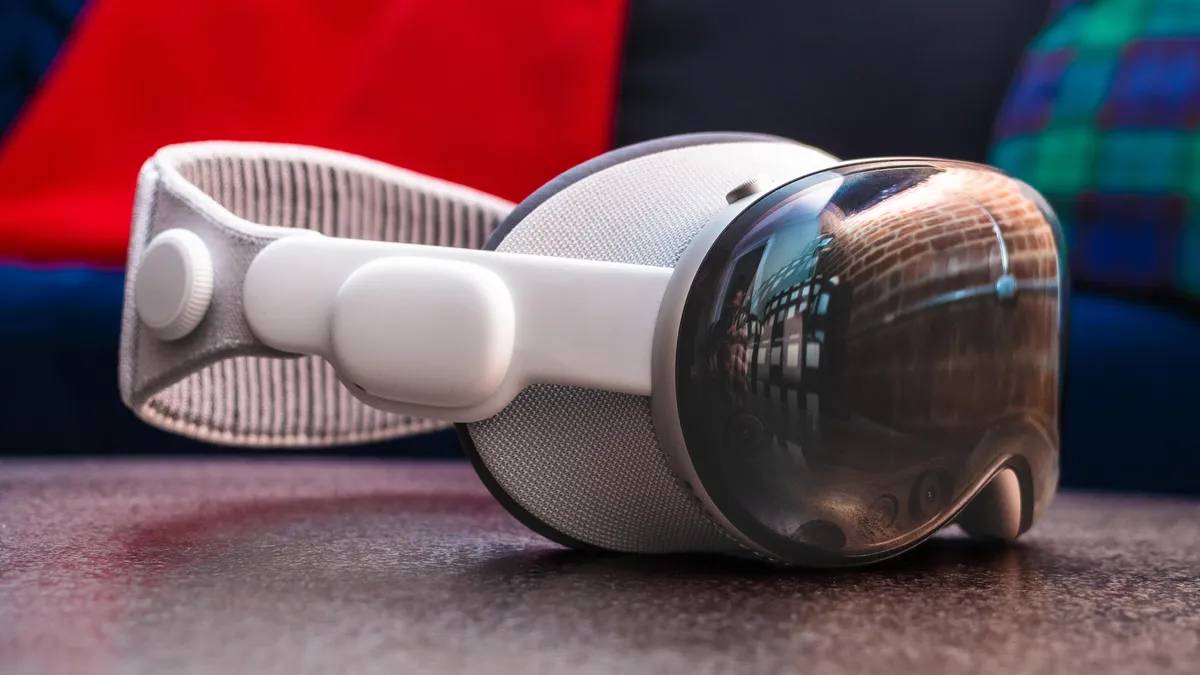
Apple Vision Pro Gets visionOS Boost

Apple is reportedly focusing on expanding visionOS capabilities to reinvigorate its spatial computing platform centered around Vision Pro.

June 3, 2026
|
Image Source: CNET

A strategic recalibration is emerging at Apple as it explores new pathways to extend the lifecycle of its spatial computing ambitions through visionOS. The move signals an effort to reposition the Vision Pro ecosystem beyond its initial launch limitations, with implications for immersive computing markets, developer ecosystems, and long-term wearable technology adoption.

Apple is reportedly focusing on expanding visionOS capabilities to reinvigorate its spatial computing platform centered around Vision Pro. The strategy emphasizes software refinement, deeper developer integration, and expanded use cases beyond early adopter scenarios.

The company is expected to enhance multitasking environments, enterprise applications, and mixed-reality workflows to improve device utility. Industry commentary suggests that rather than relying solely on hardware iteration, Apple is shifting toward ecosystem-driven value creation through operating system evolution.

This approach reflects a broader recalibration following mixed reception to early adoption patterns, with emphasis on long-term platform maturity rather than immediate hardware scale.)

The evolving strategy at Apple reflects broader challenges in the spatial computing sector, where hardware innovation alone has not yet translated into mass-market adoption. Mixed reality devices remain constrained by cost, content availability, and user experience limitations.

Since the introduction of Vision Pro, the industry has been closely watching whether spatial computing can transition from niche enterprise and developer use cases to mainstream consumer adoption. Competing ecosystems have also experimented with augmented and mixed reality platforms, but none have achieved sustained scale.

Historically, Apple has succeeded in category creation by pairing hardware breakthroughs with tightly integrated software ecosystems. The current emphasis on visionOS suggests a return to this model prioritizing operating system maturity, developer tooling, and cross-device integration across Apple’s broader ecosystem of Macs, iPads, and iPhones.

The shift also aligns with a broader industry trend where platforms, not devices, define long-term technology leadership. Industry analysts suggest that Apple is attempting to reposition Vision Pro as a platform rather than a standalone hardware product. Experts argue that visionOS could become the key differentiator, enabling sustained relevance through software-driven expansion.

Technology strategists highlight that spatial computing success will depend heavily on developer adoption and the availability of compelling applications. Improvements in APIs, enterprise integration, and immersive collaboration tools are seen as critical to unlocking broader use cases.

However, analysts also caution that high hardware costs and limited everyday utility remain structural barriers. While Apple’s ecosystem strength is widely acknowledged, observers note that category adoption typically requires a “killer application” moment, which spatial computing has yet to achieve.

Official positioning from Apple has emphasized long-term investment in immersive interfaces and productivity-centric use cases, particularly in enterprise environments, design workflows, and media production.

For businesses, the shift signals a potential expansion of spatial computing into enterprise productivity, design, healthcare visualization, and remote collaboration workflows. Companies may begin evaluating visionOS as a platform for next-generation workplace tools rather than consumer entertainment alone.

For investors, Apple’s strategy underscores the importance of ecosystem resilience over device-level sales cycles. The success of visionOS could determine whether spatial computing becomes a durable revenue stream or remains a niche category.

From a policy perspective, increased adoption of immersive computing raises questions around data privacy, biometric input handling, and digital ergonomics standards. Regulators may need to consider frameworks for extended reality environments as they become more integrated into professional and consumer digital ecosystems.

The next phase for Apple will depend on how effectively visionOS evolves into a compelling developer platform with scalable use cases. Key indicators include enterprise adoption, app ecosystem growth, and improvements in user accessibility. The long-term trajectory of Vision Pro will hinge less on hardware upgrades and more on whether spatial computing can deliver indispensable productivity and creative workflows across industries.

Source: CNET
Date: June 3, 2026

  • Featured tools
Tome AI
Free

Tome AI is an AI-powered storytelling and presentation tool designed to help users create compelling narratives and presentations quickly and efficiently. It leverages advanced AI technologies to generate content, images, and animations based on user input.

#
Presentation
#
Startup Tools
Learn more
WellSaid Ai
Free

WellSaid AI is an advanced text-to-speech platform that transforms written text into lifelike, human-quality voiceovers.

#
Text to Speech
Learn more

Learn more about future of AI

Join 80,000+ Ai enthusiast getting weekly updates on exciting AI tools.
Thank you! Your submission has been received!
Oops! Something went wrong while submitting the form.

Apple Vision Pro Gets visionOS Boost

June 3, 2026

Apple is reportedly focusing on expanding visionOS capabilities to reinvigorate its spatial computing platform centered around Vision Pro.

Image Source: CNET

A strategic recalibration is emerging at Apple as it explores new pathways to extend the lifecycle of its spatial computing ambitions through visionOS. The move signals an effort to reposition the Vision Pro ecosystem beyond its initial launch limitations, with implications for immersive computing markets, developer ecosystems, and long-term wearable technology adoption.

Apple is reportedly focusing on expanding visionOS capabilities to reinvigorate its spatial computing platform centered around Vision Pro. The strategy emphasizes software refinement, deeper developer integration, and expanded use cases beyond early adopter scenarios.

The company is expected to enhance multitasking environments, enterprise applications, and mixed-reality workflows to improve device utility. Industry commentary suggests that rather than relying solely on hardware iteration, Apple is shifting toward ecosystem-driven value creation through operating system evolution.

This approach reflects a broader recalibration following mixed reception to early adoption patterns, with emphasis on long-term platform maturity rather than immediate hardware scale.)

The evolving strategy at Apple reflects broader challenges in the spatial computing sector, where hardware innovation alone has not yet translated into mass-market adoption. Mixed reality devices remain constrained by cost, content availability, and user experience limitations.

Since the introduction of Vision Pro, the industry has been closely watching whether spatial computing can transition from niche enterprise and developer use cases to mainstream consumer adoption. Competing ecosystems have also experimented with augmented and mixed reality platforms, but none have achieved sustained scale.

Historically, Apple has succeeded in category creation by pairing hardware breakthroughs with tightly integrated software ecosystems. The current emphasis on visionOS suggests a return to this model prioritizing operating system maturity, developer tooling, and cross-device integration across Apple’s broader ecosystem of Macs, iPads, and iPhones.

The shift also aligns with a broader industry trend where platforms, not devices, define long-term technology leadership. Industry analysts suggest that Apple is attempting to reposition Vision Pro as a platform rather than a standalone hardware product. Experts argue that visionOS could become the key differentiator, enabling sustained relevance through software-driven expansion.

Technology strategists highlight that spatial computing success will depend heavily on developer adoption and the availability of compelling applications. Improvements in APIs, enterprise integration, and immersive collaboration tools are seen as critical to unlocking broader use cases.

However, analysts also caution that high hardware costs and limited everyday utility remain structural barriers. While Apple’s ecosystem strength is widely acknowledged, observers note that category adoption typically requires a “killer application” moment, which spatial computing has yet to achieve.

Official positioning from Apple has emphasized long-term investment in immersive interfaces and productivity-centric use cases, particularly in enterprise environments, design workflows, and media production.

For businesses, the shift signals a potential expansion of spatial computing into enterprise productivity, design, healthcare visualization, and remote collaboration workflows. Companies may begin evaluating visionOS as a platform for next-generation workplace tools rather than consumer entertainment alone.

For investors, Apple’s strategy underscores the importance of ecosystem resilience over device-level sales cycles. The success of visionOS could determine whether spatial computing becomes a durable revenue stream or remains a niche category.

From a policy perspective, increased adoption of immersive computing raises questions around data privacy, biometric input handling, and digital ergonomics standards. Regulators may need to consider frameworks for extended reality environments as they become more integrated into professional and consumer digital ecosystems.

The next phase for Apple will depend on how effectively visionOS evolves into a compelling developer platform with scalable use cases. Key indicators include enterprise adoption, app ecosystem growth, and improvements in user accessibility. The long-term trajectory of Vision Pro will hinge less on hardware upgrades and more on whether spatial computing can deliver indispensable productivity and creative workflows across industries.

Source: CNET
Date: June 3, 2026

Promote Your Tool

Copy Embed Code

Similar Blogs

June 10, 2026
|

Microsoft AI Claims Face Leadership Clarification

Microsoft AI executive Mustafa Suleyman has walked back previous remarks that implied AI systems could significantly reshape or replace large segments of white-collar employment in the near term.
Read more
June 10, 2026
|

Apple AI Overhaul Signals Smartphone Shift

Apple is restructuring its mobile software strategy around embedded artificial intelligence capabilities designed to operate across system functions rather than as standalone applications.
Read more
June 10, 2026
|

AI Chatbot Hack Exposes Instagram Accounts

Hackers reportedly exploited weaknesses in an AI-powered customer support chatbot linked to Instagram’s support infrastructure, tricking the system into facilitating unauthorized account access.
Read more
June 10, 2026
|

Apple’s Measured AI Strategy Pays Off

Apple’s AI strategy, showcased through recent WWDC updates and ongoing product integrations, emphasizes controlled deployment rather than rapid feature saturation.
Read more
June 10, 2026
|

GM Bets on Vehicle-to-Grid Energy Tech

General Motors is advancing plans to leverage its electric vehicle ecosystem as a distributed energy storage network through vehicle-to-grid technology.
Read more
June 10, 2026
|

Best Educational Consultants in the USA

The professionals and firms featured in this guide reflect the full breadth of what meaningful education consulting looks like in the United States today.
Read more