
AMD Powered Mini PC Drives Edge AI Shift

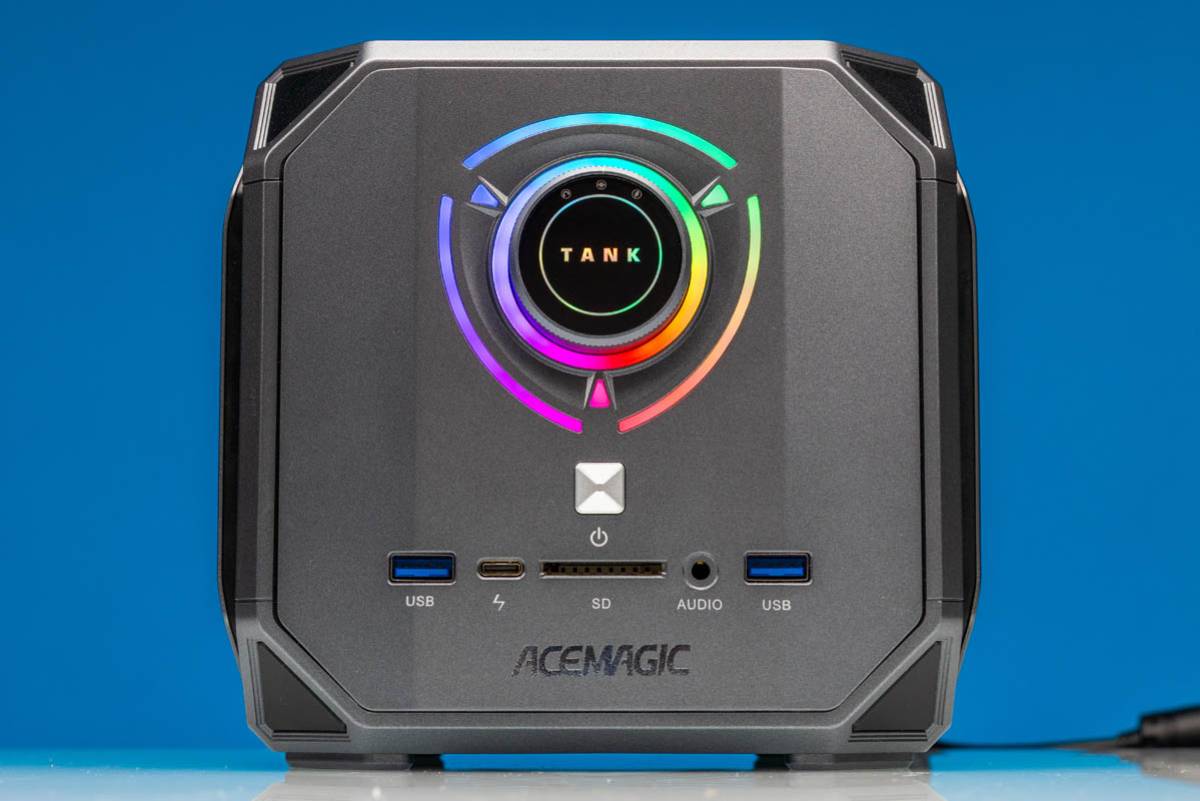
The Acemagic M1A PRO+ mini PC is positioned as a high-density AI computing system featuring up to 128GB of RAM and AMD-based processing designed for intensive workloads such as local AI model inference, virtualization, and data-heavy applications.

April 14, 2026
|
Image Source: ServeTheHome

A major development unfolded as the Acemagic M1A PRO+ AI mini PC, powered by AMD architecture, entered the spotlight with workstation-level memory capacity in a compact form factor. The system reflects a broader shift toward edge AI computing, where high-performance workloads are increasingly being executed outside traditional data centers, impacting developers, enterprises, and AI infrastructure strategies.

The Acemagic M1A PRO+ mini PC is positioned as a high-density AI computing system featuring up to 128GB of RAM and AMD-based processing designed for intensive workloads such as local AI model inference, virtualization, and data-heavy applications.

The device targets developers, AI engineers, and small enterprises seeking workstation-grade performance without full-scale server infrastructure. Key specifications highlighted include multi-core processing capability, expandable memory architecture, and support for GPU-accelerated tasks.

The product signals growing competition in compact high-performance computing, where manufacturers aim to deliver data-center-like capabilities in desktop-sized systems for enterprise and edge deployment use cases.

The development aligns with a broader trend across global markets where AI computing is shifting toward decentralization. As large language models and generative AI applications proliferate, demand is rising for local inference systems that reduce latency and cloud dependency.

Traditionally, high-performance AI workloads were restricted to hyperscale data centers operated by firms such as Microsoft and Google. However, advances in CPU/GPU integration and memory scalability are enabling powerful edge devices to perform similar tasks locally.

Mini PCs like the M1A PRO+ represent a new category of “personal AI servers,” bridging the gap between consumer desktops and enterprise infrastructure. This evolution is also driven by data sovereignty concerns, cost optimization, and the need for secure offline AI processing in industries like finance, healthcare, and software development.

Industry observers note that high-memory compact systems represent a significant shift in computing architecture. Analysts suggest that 128GB-class mini PCs could democratize access to AI development environments, allowing smaller teams to run large models without cloud dependency.

Hardware specialists emphasize that AMD’s continued focus on high-core-density processors and efficient thermal design is enabling this transition. Some experts, however, caution that performance bottlenecks may still arise in GPU-intensive training workloads, limiting these systems primarily to inference and lightweight model fine-tuning.

Technology reviewers highlight that such devices blur the line between workstation and server, creating new categories of hybrid computing infrastructure. While official commentary from manufacturers emphasizes performance-per-watt efficiency and compact design, industry sentiment points to growing competition in the edge AI hardware segment.

For global executives, this shift could redefine infrastructure planning for AI workloads. Businesses may increasingly adopt localized AI systems to reduce cloud costs and improve data control. Investors are likely to see growth opportunities in edge computing hardware, particularly as AI adoption expands beyond hyperscale environments into SMEs and independent developers.

For enterprises, the availability of workstation-grade mini PCs may accelerate prototyping cycles and reduce dependency on expensive cloud GPU rentals. Policymakers may also take interest in data governance implications, as localized AI processing could impact cross-border data flows and compliance frameworks.

Looking ahead, compact AI workstations like the M1A PRO+ are expected to evolve rapidly as demand for edge AI accelerates. Competition among hardware vendors will likely intensify, particularly around GPU integration and memory scalability.

Decision-makers should watch for improvements in power efficiency, AI optimization software, and enterprise adoption patterns. The broader trajectory suggests a future where AI computing becomes increasingly distributed, modular, and locally accessible.

Source: ServeTheHome
Date: April 2026

  • Featured tools
WellSaid Ai
Free

WellSaid AI is an advanced text-to-speech platform that transforms written text into lifelike, human-quality voiceovers.

#
Text to Speech
Learn more
Surfer AI
Free

Surfer AI is an AI-powered content creation assistant built into the Surfer SEO platform, designed to generate SEO-optimized articles from prompts, leveraging data from search results to inform tone, structure, and relevance.

#
SEO
Learn more

Learn more about future of AI

Join 80,000+ Ai enthusiast getting weekly updates on exciting AI tools.
Thank you! Your submission has been received!
Oops! Something went wrong while submitting the form.

AMD Powered Mini PC Drives Edge AI Shift

April 14, 2026

The Acemagic M1A PRO+ mini PC is positioned as a high-density AI computing system featuring up to 128GB of RAM and AMD-based processing designed for intensive workloads such as local AI model inference, virtualization, and data-heavy applications.

Image Source: ServeTheHome

A major development unfolded as the Acemagic M1A PRO+ AI mini PC, powered by AMD architecture, entered the spotlight with workstation-level memory capacity in a compact form factor. The system reflects a broader shift toward edge AI computing, where high-performance workloads are increasingly being executed outside traditional data centers, impacting developers, enterprises, and AI infrastructure strategies.

The Acemagic M1A PRO+ mini PC is positioned as a high-density AI computing system featuring up to 128GB of RAM and AMD-based processing designed for intensive workloads such as local AI model inference, virtualization, and data-heavy applications.

The device targets developers, AI engineers, and small enterprises seeking workstation-grade performance without full-scale server infrastructure. Key specifications highlighted include multi-core processing capability, expandable memory architecture, and support for GPU-accelerated tasks.

The product signals growing competition in compact high-performance computing, where manufacturers aim to deliver data-center-like capabilities in desktop-sized systems for enterprise and edge deployment use cases.

The development aligns with a broader trend across global markets where AI computing is shifting toward decentralization. As large language models and generative AI applications proliferate, demand is rising for local inference systems that reduce latency and cloud dependency.

Traditionally, high-performance AI workloads were restricted to hyperscale data centers operated by firms such as Microsoft and Google. However, advances in CPU/GPU integration and memory scalability are enabling powerful edge devices to perform similar tasks locally.

Mini PCs like the M1A PRO+ represent a new category of “personal AI servers,” bridging the gap between consumer desktops and enterprise infrastructure. This evolution is also driven by data sovereignty concerns, cost optimization, and the need for secure offline AI processing in industries like finance, healthcare, and software development.

Industry observers note that high-memory compact systems represent a significant shift in computing architecture. Analysts suggest that 128GB-class mini PCs could democratize access to AI development environments, allowing smaller teams to run large models without cloud dependency.

Hardware specialists emphasize that AMD’s continued focus on high-core-density processors and efficient thermal design is enabling this transition. Some experts, however, caution that performance bottlenecks may still arise in GPU-intensive training workloads, limiting these systems primarily to inference and lightweight model fine-tuning.

Technology reviewers highlight that such devices blur the line between workstation and server, creating new categories of hybrid computing infrastructure. While official commentary from manufacturers emphasizes performance-per-watt efficiency and compact design, industry sentiment points to growing competition in the edge AI hardware segment.

For global executives, this shift could redefine infrastructure planning for AI workloads. Businesses may increasingly adopt localized AI systems to reduce cloud costs and improve data control. Investors are likely to see growth opportunities in edge computing hardware, particularly as AI adoption expands beyond hyperscale environments into SMEs and independent developers.

For enterprises, the availability of workstation-grade mini PCs may accelerate prototyping cycles and reduce dependency on expensive cloud GPU rentals. Policymakers may also take interest in data governance implications, as localized AI processing could impact cross-border data flows and compliance frameworks.

Looking ahead, compact AI workstations like the M1A PRO+ are expected to evolve rapidly as demand for edge AI accelerates. Competition among hardware vendors will likely intensify, particularly around GPU integration and memory scalability.

Decision-makers should watch for improvements in power efficiency, AI optimization software, and enterprise adoption patterns. The broader trajectory suggests a future where AI computing becomes increasingly distributed, modular, and locally accessible.

Source: ServeTheHome
Date: April 2026

Promote Your Tool

Copy Embed Code

Similar Blogs

April 14, 2026
|

Memory Costs Pressure Microsoft Surface Pricing

Microsoft’s Surface lineup is experiencing pricing adjustments driven by increased memory (RAM) costs, affecting both Surface Pro and Surface Laptop models.
Read more
April 14, 2026
|

AI Avatar Cloning Enters Creator Economy

The new AI avatar capability allows creators to generate digital replicas that can appear in videos, effectively enabling scalable content production without continuous on-camera presence. These avatars can mimic speech patterns, gestures, and presentation styles, streamlining video creation workflows.
Read more
April 14, 2026
|

Huawei Expands Foldable Smartphone Lead

Huawei’s latest foldable smartphone introduces a wider, tablet-like display format designed to enhance multitasking, productivity, and media consumption. The device expands the company’s foldable portfolio.
Read more
April 14, 2026
|

Google Cuts Pixel 10A Price Amid Android Rivalry

The Pixel 10A, positioned as a midrange smartphone within Google’s hardware lineup, is currently being offered at a discounted price point of $50 off.
Read more
April 14, 2026
|

AT&T Design Legacy Revisited via Western Electric 500

The Western Electric 500 telephone, developed under AT&T’s Bell System ecosystem, became one of the most widely used landline devices in history.
Read more
April 14, 2026
|

Microsoft Tests Autonomous Copilot AI Agents

Microsoft is reportedly experimenting with “OpenClaw-like” AI agents designed to extend Copilot’s functionality beyond simple assistance into autonomous task execution.
Read more