
AI Political Manipulation Sparks Election Integrity Concerns

The report highlights increasing anxiety around AI-generated content, misinformation, and automated influence campaigns targeting elections.

April 22, 2026
|
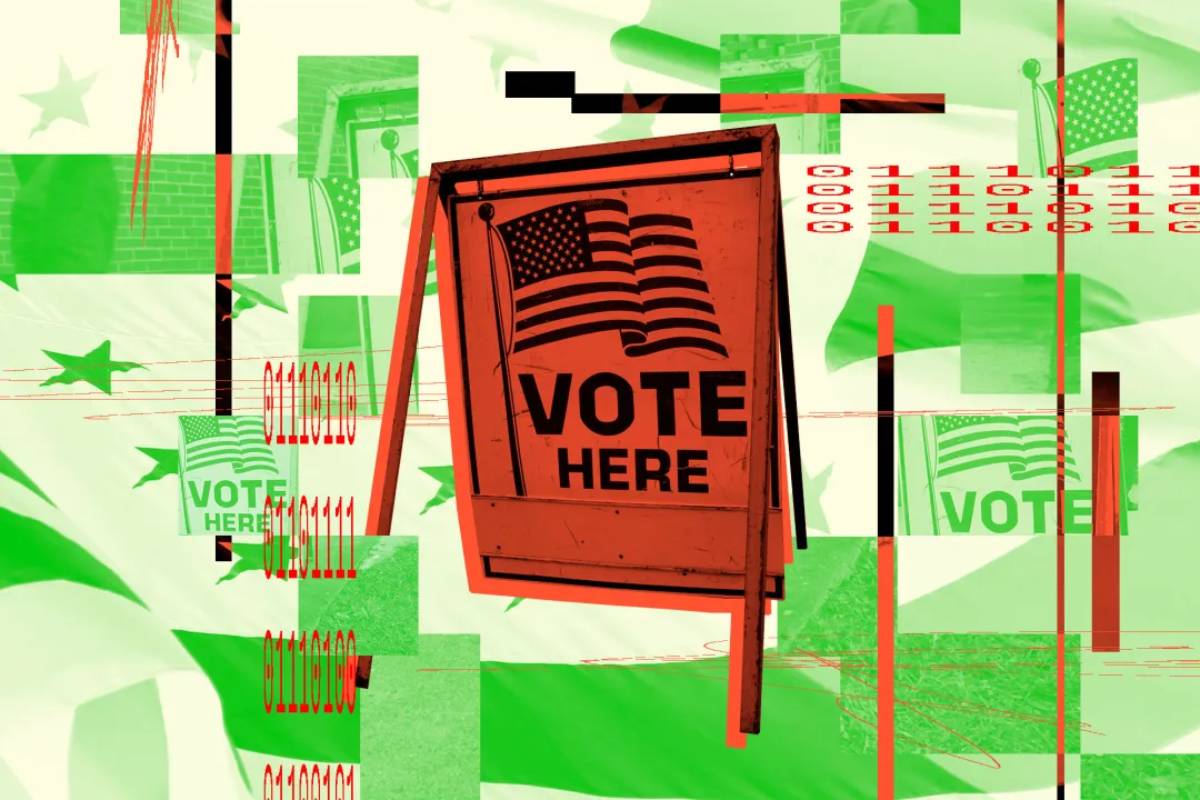
Image Source: The Verge | Photo by Stephen Morton, Getty Images

Concerns are escalating over the role of artificial intelligence in shaping electoral outcomes, as policymakers and experts warn of a growing backlash against AI-driven political manipulation. The issue signals mounting risks for democratic institutions, digital platforms, and global election integrity systems ahead of critical voting cycles worldwide.

The report highlights increasing anxiety around AI-generated content, misinformation, and automated influence campaigns targeting elections. Governments are preparing for heightened risks as generative AI tools become more accessible and capable of producing realistic political narratives, deepfakes, and targeted propaganda.

Key stakeholders include election commissions, technology platforms, AI developers, and cybersecurity agencies. The timeline reflects rising concern ahead of upcoming midterm and national elections in multiple regions.

The economic and political implications are significant, as digital platforms face pressure to strengthen content moderation systems while maintaining user engagement. The intersection of AI and political communication is becoming a central policy challenge globally.

The development reflects a broader global trend where AI is increasingly influencing information ecosystems, particularly in politically sensitive environments such as elections. The rapid advancement of generative AI has made it easier to create convincing fake content, including images, audio, and video, at scale.

Historically, misinformation has played a role in shaping public opinion, but AI has dramatically increased the speed, realism, and reach of such content. Social platforms have already faced scrutiny for their role in amplifying misleading narratives during previous election cycles.

The rise of AI introduces a new layer of complexity, as traditional fact-checking mechanisms struggle to keep pace with synthetic media. Governments across the world are now reassessing electoral integrity frameworks to address risks posed by automated influence operations and AI-driven political communication strategies.

Experts warn that AI is fundamentally reshaping the information battlefield in elections. Analysts note that deepfakes and AI-generated narratives can be deployed to influence voter perception at scale, often before verification systems can respond.

Cybersecurity researchers emphasize that election interference is no longer limited to human-driven disinformation campaigns but now includes autonomous or semi-autonomous AI systems capable of rapid content generation and distribution.

Policy specialists argue that platforms such as Meta and Google will face increasing pressure to implement stricter safeguards, including watermarking, content provenance tracking, and real-time detection tools. However, experts also caution that over-regulation could raise concerns around free speech and digital expression, creating a difficult balancing act for regulators worldwide.

For global executives, the rise of AI-driven election risks introduces new compliance, reputational, and operational challenges particularly for technology and media companies. Platforms may need to invest heavily in AI detection and content verification systems to maintain trust.

Investors are likely to assess regulatory exposure as a key risk factor for social media and AI companies.

From a policy standpoint, governments may introduce stricter transparency requirements for AI-generated political content, including labeling mandates and audit mechanisms. Election security is increasingly being treated as a critical component of national security, requiring coordination between public institutions and private technology firms.

Looking ahead, AI’s role in elections is expected to intensify, prompting stronger regulatory responses and technological countermeasures. Decision-makers should monitor developments in content authentication standards and cross-border policy coordination.

The central challenge will be preserving electoral integrity while maintaining open digital ecosystems defining a new governance framework for AI in democratic processes.

Source: The Verge
Date: April 2026

  • Featured tools
Copy Ai
Free

Copy AI is one of the most popular AI writing tools designed to help professionals create high-quality content quickly. Whether you are a product manager drafting feature descriptions or a marketer creating ad copy, Copy AI can save hours of work while maintaining creativity and tone.

#
Copywriting
Learn more
WellSaid Ai
Free

WellSaid AI is an advanced text-to-speech platform that transforms written text into lifelike, human-quality voiceovers.

#
Text to Speech
Learn more

Learn more about future of AI

Join 80,000+ Ai enthusiast getting weekly updates on exciting AI tools.
Thank you! Your submission has been received!
Oops! Something went wrong while submitting the form.

AI Political Manipulation Sparks Election Integrity Concerns

April 22, 2026

The report highlights increasing anxiety around AI-generated content, misinformation, and automated influence campaigns targeting elections.

Image Source: The Verge | Photo by Stephen Morton, Getty Images

Concerns are escalating over the role of artificial intelligence in shaping electoral outcomes, as policymakers and experts warn of a growing backlash against AI-driven political manipulation. The issue signals mounting risks for democratic institutions, digital platforms, and global election integrity systems ahead of critical voting cycles worldwide.

The report highlights increasing anxiety around AI-generated content, misinformation, and automated influence campaigns targeting elections. Governments are preparing for heightened risks as generative AI tools become more accessible and capable of producing realistic political narratives, deepfakes, and targeted propaganda.

Key stakeholders include election commissions, technology platforms, AI developers, and cybersecurity agencies. The timeline reflects rising concern ahead of upcoming midterm and national elections in multiple regions.

The economic and political implications are significant, as digital platforms face pressure to strengthen content moderation systems while maintaining user engagement. The intersection of AI and political communication is becoming a central policy challenge globally.

The development reflects a broader global trend where AI is increasingly influencing information ecosystems, particularly in politically sensitive environments such as elections. The rapid advancement of generative AI has made it easier to create convincing fake content, including images, audio, and video, at scale.

Historically, misinformation has played a role in shaping public opinion, but AI has dramatically increased the speed, realism, and reach of such content. Social platforms have already faced scrutiny for their role in amplifying misleading narratives during previous election cycles.

The rise of AI introduces a new layer of complexity, as traditional fact-checking mechanisms struggle to keep pace with synthetic media. Governments across the world are now reassessing electoral integrity frameworks to address risks posed by automated influence operations and AI-driven political communication strategies.

Experts warn that AI is fundamentally reshaping the information battlefield in elections. Analysts note that deepfakes and AI-generated narratives can be deployed to influence voter perception at scale, often before verification systems can respond.

Cybersecurity researchers emphasize that election interference is no longer limited to human-driven disinformation campaigns but now includes autonomous or semi-autonomous AI systems capable of rapid content generation and distribution.

Policy specialists argue that platforms such as Meta and Google will face increasing pressure to implement stricter safeguards, including watermarking, content provenance tracking, and real-time detection tools. However, experts also caution that over-regulation could raise concerns around free speech and digital expression, creating a difficult balancing act for regulators worldwide.

For global executives, the rise of AI-driven election risks introduces new compliance, reputational, and operational challenges particularly for technology and media companies. Platforms may need to invest heavily in AI detection and content verification systems to maintain trust.

Investors are likely to assess regulatory exposure as a key risk factor for social media and AI companies.

From a policy standpoint, governments may introduce stricter transparency requirements for AI-generated political content, including labeling mandates and audit mechanisms. Election security is increasingly being treated as a critical component of national security, requiring coordination between public institutions and private technology firms.

Looking ahead, AI’s role in elections is expected to intensify, prompting stronger regulatory responses and technological countermeasures. Decision-makers should monitor developments in content authentication standards and cross-border policy coordination.

The central challenge will be preserving electoral integrity while maintaining open digital ecosystems defining a new governance framework for AI in democratic processes.

Source: The Verge
Date: April 2026

Promote Your Tool

Copy Embed Code

Similar Blogs

April 24, 2026
|

Florida Probes AI Misuse in Criminal Case

Officials in Florida stated that an individual involved in a shooting incident may have used ChatGPT during the planning phase, according to early investigative findings.
Read more
April 24, 2026
|

Meta Expands AI Parental Controls for Teen Safety

Meta has launched a feature enabling parents to monitor the general topics their teens are पूछing its AI assistant about, without exposing full conversation details.
Read more
April 24, 2026
|

SpaceX Partners With Cursor for AI Coding Integration

SpaceX is collaborating with Cursor to deploy AI-powered coding tools across its engineering and software development operations. The integration focuses on accelerating code generation, debugging, and system optimization.
Read more
April 24, 2026
|

OpenAI Positions ChatGPT 5.5 for Enterprise, Research

OpenAI’s latest iteration of ChatGPT, version 5.5, emphasizes enhanced performance in technical domains such as mathematics, scientific research, and coding.
Read more
April 24, 2026
|

Anthropic Expands Claude Into Unified AI Platform

Anthropic has introduced app connectors for Claude, allowing it to interact directly with services such as Spotify, Uber Eats, and TurboTax. This capability enables Claude to perform tasks across multiple platforms, including managing music, ordering food.
Read more
April 24, 2026
|

Google Unifies Enterprise AI Agent Platform

Google has integrated its enterprise AI agent capabilities into a centralized platform designed to provide businesses with a cohesive development and deployment environment.
Read more