



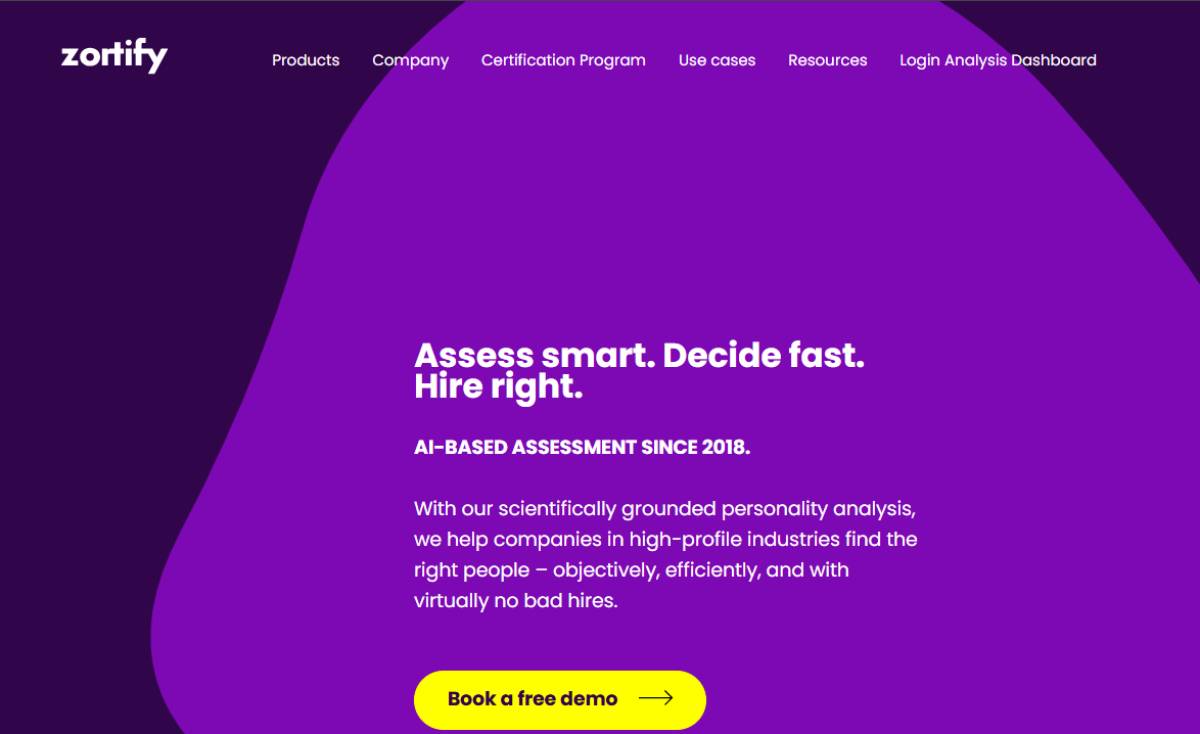
A new generation of AI-powered behavioral analytics is reshaping talent management and organizational decision-making as Luxembourg based Zortify promotes fairer, earlier, and more accurate assessments of human behavior. The initiative reflects growing demand for ethical artificial intelligence that enhances hiring, leadership development, and workforce performance while minimizing bias.
Zortify is leveraging artificial intelligence and behavioral science to help organizations better understand individual strengths, personality traits, and workplace behaviors. Its platform aims to improve recruitment, leadership development, team building, and employee engagement through evidence-based behavioral insights rather than relying solely on traditional interviews or subjective evaluations.
The company emphasizes transparency, fairness, and explainable AI in decision-making, aligning with Europe's growing focus on responsible artificial intelligence. By combining psychology with advanced analytics, Zortify seeks to support organizations in making more informed talent decisions while reducing unconscious bias and improving long-term workforce performance across diverse business environments.
Behavioral intelligence is becoming an increasingly important component of modern human capital management as organizations seek data-driven approaches to workforce development. Companies face growing pressure to improve hiring accuracy, leadership effectiveness, employee retention, and organizational culture while ensuring fairness and regulatory compliance throughout recruitment and talent management processes.
Artificial intelligence has accelerated the adoption of predictive analytics across human resources, enabling employers to identify patterns that may improve employee success and organizational performance. However, the expansion of AI in workplace decision-making has also intensified discussions around ethics, transparency, explainability, and algorithmic bias.
Europe has positioned itself as a global leader in responsible AI governance through comprehensive regulatory initiatives promoting trustworthy and human-centric artificial intelligence. Companies developing ethical AI solutions are increasingly aligning product design with these evolving standards, making behavioral analytics an emerging growth segment within enterprise technology.
Human resources experts argue that behavioral intelligence should complement not replace human judgment. While AI-driven insights can improve consistency and identify valuable patterns, final employment and leadership decisions remain most effective when supported by experienced professionals capable of evaluating broader organizational and cultural factors.
Industry analysts also note that explainable AI is becoming essential as organizations seek to build employee trust while complying with increasingly stringent regulations governing automated decision-making. Transparent algorithms and scientifically validated behavioral models are viewed as critical differentiators in the expanding HR technology market.
Company representatives emphasize that responsible AI can strengthen organizational performance by helping leaders better understand workforce dynamics and individual potential. Analysts suggest that organizations adopting evidence-based behavioral analytics may improve collaboration, reduce hiring errors, and create more inclusive workplace environments over the long term.
For businesses, behavioral intelligence platforms offer opportunities to strengthen recruitment, leadership development, succession planning, and employee engagement through objective, data-supported decision-making. Organizations investing in ethical AI solutions may improve talent outcomes while meeting evolving expectations around transparency and fairness.
Investors are likely to continue monitoring HR technology firms that combine artificial intelligence with behavioral science as demand for workforce optimization grows. Policymakers, meanwhile, are expected to encourage innovation while strengthening regulatory frameworks that ensure responsible AI deployment, protect employee rights, and maintain accountability in automated workplace decision-making across European labor markets.
Behavioral AI is expected to play an increasingly important role as organizations modernize workforce management and leadership development strategies. Success will depend on balancing technological innovation with ethical governance, transparency, and human oversight. Companies capable of delivering scientifically grounded, explainable, and bias-conscious AI solutions are likely to gain a competitive advantage as enterprises increasingly adopt intelligent talent management platforms.
Source: Silicon Luxembourg
Date: July 3, 2026


