



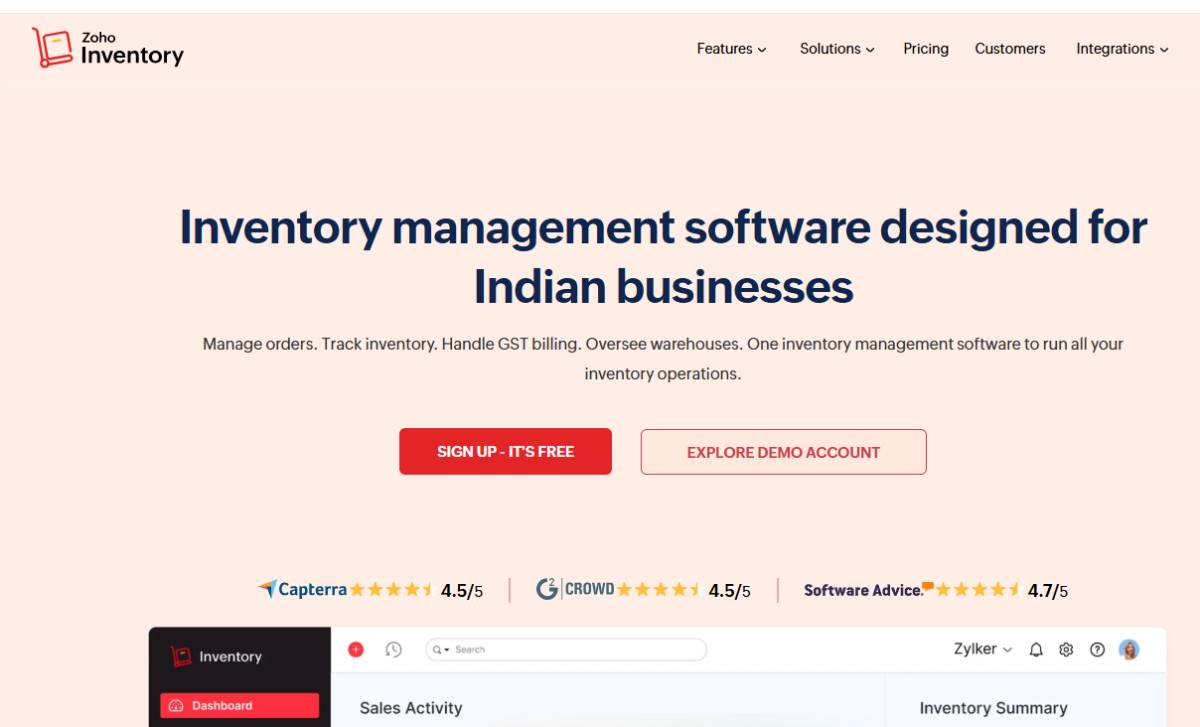
The enterprise software market continues to evolve as businesses modernize inventory operations and supply chain management through cloud-based platforms. Zoho Inventory reflects the growing demand for intelligent inventory management solutions that improve stock visibility, automate order fulfillment, and strengthen operational efficiency across increasingly complex global commerce networks.
Zoho Inventory operates within the inventory and order management software market, offering cloud-based capabilities for inventory tracking, warehouse management, order processing, shipping integration, purchasing, and multi-channel sales management. The platform enables organizations to centralize inventory operations while improving supply chain visibility and business performance.
Key stakeholders include manufacturers, wholesalers, retailers, distributors, e-commerce businesses, logistics providers, and finance teams. As digital commerce continues expanding globally, organizations are increasingly adopting integrated inventory solutions that automate workflows and provide real-time operational insights.
The broader market emphasizes cloud connectivity, automation, analytics, and seamless integration with enterprise business applications. Global supply chains have become increasingly interconnected, requiring organizations to improve inventory accuracy, operational agility, and real-time decision-making. Rising customer expectations, expanding e-commerce activity, and ongoing supply chain disruptions have accelerated investments in digital inventory management technologies.
This development aligns with a broader trend across global markets where enterprises are replacing manual inventory processes with cloud-native platforms capable of automating procurement, warehouse operations, order fulfillment, and stock optimization. Integrated inventory systems now play a critical role in broader enterprise resource planning (ERP), customer relationship management (CRM), and financial management ecosystems.
Historically, disconnected spreadsheets and legacy inventory systems limited operational visibility and responsiveness. Modern inventory management platforms provide centralized data, predictive analytics, automated replenishment, and multi-channel inventory synchronization, enabling businesses to improve operational resilience while supporting scalable growth in competitive global markets.
Supply chain analysts believe intelligent inventory management has become a strategic capability as organizations seek greater resilience, operational efficiency, and cost optimization. Experts emphasize that accurate inventory visibility enables businesses to reduce excess stock, minimize shortages, and improve customer satisfaction through more reliable fulfillment.
Industry specialists also expect artificial intelligence and predictive analytics to transform inventory management by enabling demand forecasting, automated purchasing recommendations, intelligent warehouse optimization, and proactive supply chain risk management.
Analysts further note that organizations increasingly evaluate inventory software based on scalability, cloud architecture, cybersecurity, integration capabilities, and compatibility with accounting, e-commerce, logistics, and enterprise management systems. Businesses are prioritizing unified digital ecosystems that support real-time operational intelligence and continuous process improvement.
For businesses, cloud-based inventory management improves operational efficiency, enhances supply chain visibility, reduces inventory costs, and strengthens customer service through more accurate order fulfillment. Better inventory intelligence also supports financial planning and strategic resource allocation.
Investors continue viewing supply chain technology as a resilient growth sector driven by digital commerce expansion and enterprise modernization. Governments are also encouraging greater supply chain transparency, digital trade infrastructure, and regulatory compliance across logistics and international commerce.
For executive leaders, investing in intelligent inventory management platforms has become essential for improving operational resilience, business agility, and long-term competitiveness.
The future of inventory management will increasingly rely on artificial intelligence, predictive demand planning, cloud-native supply chain platforms, and real-time operational analytics. Decision-makers should monitor advancements in automation, logistics technology, digital commerce, and supply chain resilience strategies. Organizations that successfully integrate intelligent inventory management with broader enterprise operations will be better positioned to navigate evolving market conditions and sustain long-term growth.
Source: Crozdesk
Date: August 3, 2026


