
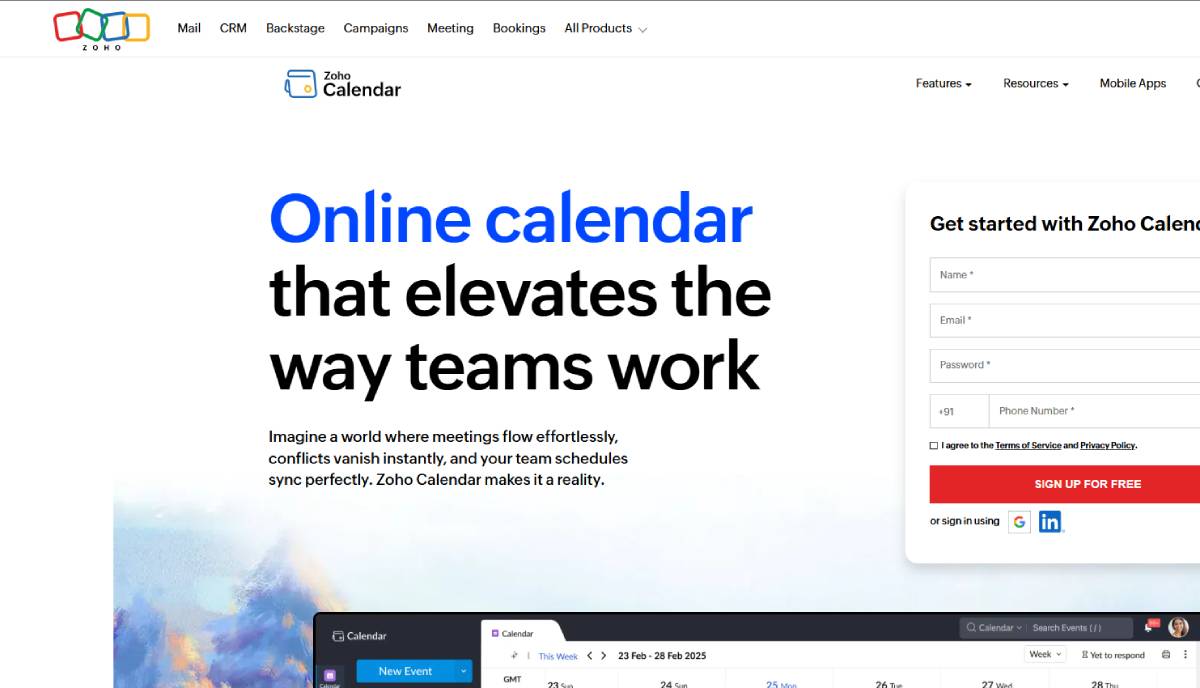
Zoho Calendar Strengthens Enterprise Scheduling

Zoho Calendar has emerged as an integral component of the broader Zoho productivity ecosystem, enabling organizations to centralize scheduling, meeting coordination, and shared calendar management.

August 5, 2026
|

A notable shift is underway in enterprise productivity as Zoho Calendar continues expanding its role within integrated workplace collaboration. Designed to simplify scheduling, event management, and team coordination, the platform reflects the growing demand for unified digital workspaces. The evolution is particularly relevant for businesses pursuing hybrid work models, improved operational efficiency, and seamless collaboration across distributed teams.

Zoho Calendar has emerged as an integral component of the broader Zoho productivity ecosystem, enabling organizations to centralize scheduling, meeting coordination, and shared calendar management. Businesses can synchronize appointments, automate reminders, manage recurring events, and coordinate resources through cloud-based workflows.

The platform supports integration with business applications, helping organizations reduce scheduling conflicts while improving employee productivity. As enterprises increasingly adopt digital collaboration technologies, calendar management has become more than an administrative function it now serves as a critical operational layer supporting communication, project execution, and workforce coordination across multiple locations and departments.

The continued development of digital workplace platforms reflects broader transformation across global enterprises. Hybrid and remote work have permanently reshaped how organizations manage meetings, employee availability, and project collaboration. Traditional standalone calendar applications are evolving into intelligent scheduling platforms integrated with communication, CRM, HR, and productivity suites.

Zoho has steadily expanded its business software portfolio to compete with major enterprise productivity providers by offering tightly connected cloud applications. Calendar management now plays a strategic role in reducing administrative overhead, improving cross-functional coordination, and supporting increasingly mobile workforces.

Organizations are also placing greater emphasis on automation, AI-assisted scheduling, and secure cloud collaboration to improve efficiency while maintaining operational flexibility. These trends continue to influence enterprise software investments worldwide as businesses modernize digital infrastructure and employee experience strategies.

Industry analysts increasingly view integrated productivity ecosystems as a competitive advantage rather than a convenience feature. Experts note that businesses adopting unified scheduling platforms experience improved meeting efficiency, stronger collaboration, and better visibility into organizational workflows.

Technology consultants also highlight that centralized calendar systems reduce communication gaps by integrating scheduling with email, video conferencing, project management, and customer engagement platforms. While no specific corporate statement accompanies this development, enterprise software specialists emphasize that vendors capable of delivering seamless interoperability are positioned to capture greater market share.

Digital transformation advisors further suggest that intelligent scheduling capabilities including automation, shared resource management, and cross-platform synchronization will become standard expectations for enterprise collaboration software as organizations continue investing in cloud-first workplace strategies.

For business leaders, modern scheduling platforms directly influence workforce productivity, operational efficiency, and customer responsiveness. Integrated calendar management reduces manual coordination while supporting faster decision-making across geographically distributed teams.

IT departments benefit from centralized administration, stronger data governance, and secure cloud-based collaboration. Investors continue monitoring enterprise productivity software as organizations expand spending on digital workplace technologies. From a policy perspective, businesses must ensure calendar platforms comply with evolving data privacy, cybersecurity, and organizational governance requirements while supporting increasingly flexible work arrangements across international operations.

Looking ahead, enterprise calendar platforms are expected to incorporate deeper artificial intelligence capabilities, predictive scheduling, workflow automation, and broader integration across business applications. Decision-makers should monitor how collaboration technologies evolve alongside hybrid work strategies and digital transformation initiatives. Organizations that successfully integrate scheduling into broader productivity ecosystems will be better positioned to improve efficiency, employee engagement, and long-term operational resilience.

Source: Crozdesk
Date:
August 5, 2026

  • Featured tools
Outplay AI
Free

Outplay AI is a dynamic sales engagement platform combining AI-powered outreach, multi-channel automation, and performance tracking to help teams optimize conversion and pipeline generation.

#
Sales
Learn more
Ai Fiesta
Paid

AI Fiesta is an all-in-one productivity platform that gives users access to multiple leading AI models through a single interface. It includes features like prompt enhancement, image generation, audio transcription and side-by-side model comparison.

#
Copywriting
#
Art Generator
Learn more

Learn more about future of AI

Join 80,000+ Ai enthusiast getting weekly updates on exciting AI tools.
Thank you! Your submission has been received!
Oops! Something went wrong while submitting the form.

Zoho Calendar Strengthens Enterprise Scheduling

August 5, 2026

Zoho Calendar has emerged as an integral component of the broader Zoho productivity ecosystem, enabling organizations to centralize scheduling, meeting coordination, and shared calendar management.

A notable shift is underway in enterprise productivity as Zoho Calendar continues expanding its role within integrated workplace collaboration. Designed to simplify scheduling, event management, and team coordination, the platform reflects the growing demand for unified digital workspaces. The evolution is particularly relevant for businesses pursuing hybrid work models, improved operational efficiency, and seamless collaboration across distributed teams.

Zoho Calendar has emerged as an integral component of the broader Zoho productivity ecosystem, enabling organizations to centralize scheduling, meeting coordination, and shared calendar management. Businesses can synchronize appointments, automate reminders, manage recurring events, and coordinate resources through cloud-based workflows.

The platform supports integration with business applications, helping organizations reduce scheduling conflicts while improving employee productivity. As enterprises increasingly adopt digital collaboration technologies, calendar management has become more than an administrative function it now serves as a critical operational layer supporting communication, project execution, and workforce coordination across multiple locations and departments.

The continued development of digital workplace platforms reflects broader transformation across global enterprises. Hybrid and remote work have permanently reshaped how organizations manage meetings, employee availability, and project collaboration. Traditional standalone calendar applications are evolving into intelligent scheduling platforms integrated with communication, CRM, HR, and productivity suites.

Zoho has steadily expanded its business software portfolio to compete with major enterprise productivity providers by offering tightly connected cloud applications. Calendar management now plays a strategic role in reducing administrative overhead, improving cross-functional coordination, and supporting increasingly mobile workforces.

Organizations are also placing greater emphasis on automation, AI-assisted scheduling, and secure cloud collaboration to improve efficiency while maintaining operational flexibility. These trends continue to influence enterprise software investments worldwide as businesses modernize digital infrastructure and employee experience strategies.

Industry analysts increasingly view integrated productivity ecosystems as a competitive advantage rather than a convenience feature. Experts note that businesses adopting unified scheduling platforms experience improved meeting efficiency, stronger collaboration, and better visibility into organizational workflows.

Technology consultants also highlight that centralized calendar systems reduce communication gaps by integrating scheduling with email, video conferencing, project management, and customer engagement platforms. While no specific corporate statement accompanies this development, enterprise software specialists emphasize that vendors capable of delivering seamless interoperability are positioned to capture greater market share.

Digital transformation advisors further suggest that intelligent scheduling capabilities including automation, shared resource management, and cross-platform synchronization will become standard expectations for enterprise collaboration software as organizations continue investing in cloud-first workplace strategies.

For business leaders, modern scheduling platforms directly influence workforce productivity, operational efficiency, and customer responsiveness. Integrated calendar management reduces manual coordination while supporting faster decision-making across geographically distributed teams.

IT departments benefit from centralized administration, stronger data governance, and secure cloud-based collaboration. Investors continue monitoring enterprise productivity software as organizations expand spending on digital workplace technologies. From a policy perspective, businesses must ensure calendar platforms comply with evolving data privacy, cybersecurity, and organizational governance requirements while supporting increasingly flexible work arrangements across international operations.

Looking ahead, enterprise calendar platforms are expected to incorporate deeper artificial intelligence capabilities, predictive scheduling, workflow automation, and broader integration across business applications. Decision-makers should monitor how collaboration technologies evolve alongside hybrid work strategies and digital transformation initiatives. Organizations that successfully integrate scheduling into broader productivity ecosystems will be better positioned to improve efficiency, employee engagement, and long-term operational resilience.

Source: Crozdesk
Date:
August 5, 2026

Promote Your Tool

Copy Embed Code

Similar Blogs

August 5, 2026
|

Fleet Platforms Drive Management Innovation

OptimoRoute, Contus Dart, and Titan GPS represent different approaches to improving transportation and fleet operations.
Read more
August 5, 2026
|

Sales Tools Shape Digital Engagement Future

Lusha, Olark, and Zoho SalesIQ serve different segments of the modern sales and customer engagement ecosystem.
Read more
August 5, 2026
|

Ellacard Advances Digital Identity Solutions

Ellacard provides digital identity solutions that enable users to create, share, and manage professional profiles through online business cards.
Read more
August 5, 2026
|

RoofScope Advances Roofing Analytics Solutions

RoofScope provides roofing companies with digital solutions designed to streamline property measurements, estimates, and project planning.
Read more
August 5, 2026
|

EHR Your Way Advances Healthcare Management

EHR Your Way provides a cloud-based electronic health record platform designed to support healthcare organizations with patient management, documentation, scheduling, and clinical workflow capabilities.
Read more
August 5, 2026
|

DbVisualizer Enhances Database Management Analytics

DbVisualizer provides a unified environment for managing, analyzing, and interacting with multiple database technologies through a single interface.
Read more