
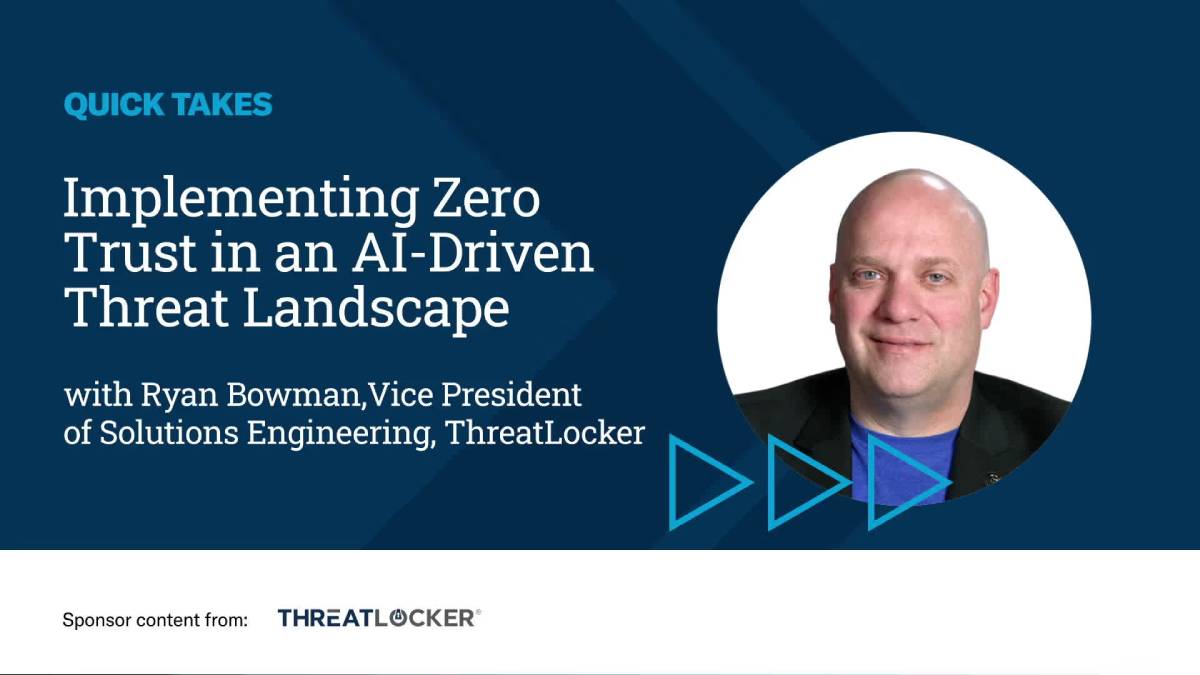
Zero Trust Becomes AI Security Imperative

Industry experts are urging enterprises to implement Zero Trust architectures as AI transforms the threat landscape. The framework operates on the principle of "never trust, always verify.

June 18, 2026
|
Image Source: Harvard Business Review

A major cybersecurity development is gaining momentum as organizations worldwide accelerate adoption of Zero Trust security frameworks to counter increasingly sophisticated AI-driven threats. The shift reflects growing concerns among business leaders, governments, and security professionals that traditional perimeter-based defenses are no longer sufficient in an era where artificial intelligence can amplify cyberattacks at unprecedented speed and scale.

Industry experts are urging enterprises to implement Zero Trust architectures as AI transforms the threat landscape. The framework operates on the principle of "never trust, always verify," requiring continuous authentication and authorization for users, devices, and applications.

The discussion comes as organizations face growing risks from AI-enhanced phishing campaigns, automated reconnaissance, credential theft, and advanced social engineering attacks. Security leaders increasingly view Zero Trust not merely as a cybersecurity initiative but as a business resilience strategy.

Stakeholders across financial services, healthcare, government, and critical infrastructure sectors are reassessing legacy security models. The conversation also reflects broader concerns about balancing rapid AI adoption with effective risk management and regulatory compliance.

The development aligns with a broader trend across global markets where cybersecurity is becoming a board-level priority. The rise of generative AI has fundamentally altered both defensive and offensive cyber capabilities, creating a technological arms race between organizations and threat actors.

Historically, enterprise security relied heavily on perimeter-based models designed for centralized networks and office-based workforces. However, cloud computing, remote work, connected devices, and AI-powered applications have expanded the attack surface dramatically. As a result, the concept of trusted internal networks has become increasingly outdated.

Governments and regulatory bodies worldwide have also emphasized stronger cybersecurity frameworks following a series of high-profile breaches affecting corporations, public institutions, and critical infrastructure operators. Zero Trust has emerged as a preferred strategy because it reduces reliance on assumptions of trust and focuses instead on continuous verification and least-privilege access.

The growing integration of AI into enterprise systems further elevates the importance of securing data, identities, and workflows against evolving threats. Cybersecurity analysts argue that AI is simultaneously creating opportunities and risks for organizations. While AI-powered tools can strengthen threat detection, automate incident response, and improve operational efficiency, they also provide attackers with new capabilities to scale malicious campaigns.

Industry experts increasingly emphasize that security architectures must evolve alongside AI deployments. Many believe Zero Trust frameworks offer a practical approach because they assume breaches can occur and focus on minimizing damage through segmentation, verification, and continuous monitoring.

Technology leaders have highlighted the need for stronger identity management, endpoint security, and real-time analytics as foundational elements of modern cybersecurity strategies. Security practitioners also stress that successful implementation requires organizational alignment, executive sponsorship, and employee awareness—not simply technology investments.

Market observers note that organizations integrating AI into critical business functions face heightened scrutiny from regulators, customers, and investors regarding security controls and data protection practices.

For global executives, the shift could redefine cybersecurity investment priorities across industries. Companies may need to reassess existing security architectures, access management policies, and third-party risk frameworks as AI adoption accelerates.

Investors increasingly view cyber resilience as a key indicator of operational strength and long-term sustainability. Organizations that fail to modernize security controls may face greater exposure to financial losses, reputational damage, and regulatory penalties.

From a policy perspective, governments are expected to continue encouraging stronger cybersecurity standards, particularly for critical infrastructure and sectors handling sensitive data. The convergence of AI and cybersecurity is also likely to influence future regulatory frameworks governing digital trust, privacy, and operational resilience.

The broader message for business leaders is clear: AI innovation must be accompanied by equally robust security modernization efforts. The next phase of cybersecurity transformation will likely focus on integrating AI-powered defenses with Zero Trust principles to create adaptive and resilient security ecosystems. Decision-makers should monitor evolving threat patterns, regulatory developments, and emerging best practices for AI governance.

As cyber risks become more intelligent and automated, organizations that successfully combine innovation with security discipline will be best positioned to maintain trust, protect assets, and sustain competitive advantage in the digital economy.

Source: Harvard Business Review
Date:
June 2026

  • Featured tools
Alli AI
Free

Alli AI is an all-in-one, AI-powered SEO automation platform that streamlines on-page optimization, site auditing, speed improvements, schema generation, internal linking, and ranking insights.

#
SEO
Learn more
Kreateable AI
Free

Kreateable AI is a white-label, AI-driven design platform that enables logo generation, social media posts, ads, and more for businesses, agencies, and service providers.

#
Logo Generator
Learn more

Learn more about future of AI

Join 80,000+ Ai enthusiast getting weekly updates on exciting AI tools.
Thank you! Your submission has been received!
Oops! Something went wrong while submitting the form.

Zero Trust Becomes AI Security Imperative

June 18, 2026

Industry experts are urging enterprises to implement Zero Trust architectures as AI transforms the threat landscape. The framework operates on the principle of "never trust, always verify.

Image Source: Harvard Business Review

A major cybersecurity development is gaining momentum as organizations worldwide accelerate adoption of Zero Trust security frameworks to counter increasingly sophisticated AI-driven threats. The shift reflects growing concerns among business leaders, governments, and security professionals that traditional perimeter-based defenses are no longer sufficient in an era where artificial intelligence can amplify cyberattacks at unprecedented speed and scale.

Industry experts are urging enterprises to implement Zero Trust architectures as AI transforms the threat landscape. The framework operates on the principle of "never trust, always verify," requiring continuous authentication and authorization for users, devices, and applications.

The discussion comes as organizations face growing risks from AI-enhanced phishing campaigns, automated reconnaissance, credential theft, and advanced social engineering attacks. Security leaders increasingly view Zero Trust not merely as a cybersecurity initiative but as a business resilience strategy.

Stakeholders across financial services, healthcare, government, and critical infrastructure sectors are reassessing legacy security models. The conversation also reflects broader concerns about balancing rapid AI adoption with effective risk management and regulatory compliance.

The development aligns with a broader trend across global markets where cybersecurity is becoming a board-level priority. The rise of generative AI has fundamentally altered both defensive and offensive cyber capabilities, creating a technological arms race between organizations and threat actors.

Historically, enterprise security relied heavily on perimeter-based models designed for centralized networks and office-based workforces. However, cloud computing, remote work, connected devices, and AI-powered applications have expanded the attack surface dramatically. As a result, the concept of trusted internal networks has become increasingly outdated.

Governments and regulatory bodies worldwide have also emphasized stronger cybersecurity frameworks following a series of high-profile breaches affecting corporations, public institutions, and critical infrastructure operators. Zero Trust has emerged as a preferred strategy because it reduces reliance on assumptions of trust and focuses instead on continuous verification and least-privilege access.

The growing integration of AI into enterprise systems further elevates the importance of securing data, identities, and workflows against evolving threats. Cybersecurity analysts argue that AI is simultaneously creating opportunities and risks for organizations. While AI-powered tools can strengthen threat detection, automate incident response, and improve operational efficiency, they also provide attackers with new capabilities to scale malicious campaigns.

Industry experts increasingly emphasize that security architectures must evolve alongside AI deployments. Many believe Zero Trust frameworks offer a practical approach because they assume breaches can occur and focus on minimizing damage through segmentation, verification, and continuous monitoring.

Technology leaders have highlighted the need for stronger identity management, endpoint security, and real-time analytics as foundational elements of modern cybersecurity strategies. Security practitioners also stress that successful implementation requires organizational alignment, executive sponsorship, and employee awareness—not simply technology investments.

Market observers note that organizations integrating AI into critical business functions face heightened scrutiny from regulators, customers, and investors regarding security controls and data protection practices.

For global executives, the shift could redefine cybersecurity investment priorities across industries. Companies may need to reassess existing security architectures, access management policies, and third-party risk frameworks as AI adoption accelerates.

Investors increasingly view cyber resilience as a key indicator of operational strength and long-term sustainability. Organizations that fail to modernize security controls may face greater exposure to financial losses, reputational damage, and regulatory penalties.

From a policy perspective, governments are expected to continue encouraging stronger cybersecurity standards, particularly for critical infrastructure and sectors handling sensitive data. The convergence of AI and cybersecurity is also likely to influence future regulatory frameworks governing digital trust, privacy, and operational resilience.

The broader message for business leaders is clear: AI innovation must be accompanied by equally robust security modernization efforts. The next phase of cybersecurity transformation will likely focus on integrating AI-powered defenses with Zero Trust principles to create adaptive and resilient security ecosystems. Decision-makers should monitor evolving threat patterns, regulatory developments, and emerging best practices for AI governance.

As cyber risks become more intelligent and automated, organizations that successfully combine innovation with security discipline will be best positioned to maintain trust, protect assets, and sustain competitive advantage in the digital economy.

Source: Harvard Business Review
Date:
June 2026

Promote Your Tool

Copy Embed Code

Similar Blogs

June 18, 2026
|

AI Paradox Deepens as Skepticism Grows

Recent survey findings indicate that while Americans are increasingly cautious about the long-term impact of artificial intelligence, actual usage of AI tools continues to expand across professional and personal contexts.
Read more
June 18, 2026
|

Illinois Restricts Smart Glasses While Driving

Illinois lawmakers are evaluating legislation that would prohibit the use of smart glasses while operating a vehicle, citing concerns over distraction and impaired driver attention.
Read more
June 18, 2026
|

Anthropic Unifies AI Coding Design Workflow

Anthropic has expanded its Claude platform to bring together AI-assisted design and coding functionalities into a more integrated developer experience.
Read more
June 18, 2026
|

Creator Camera Wars Intensify Premium Segment

The Insta360 Luna Ultra and DJI Osmo Pocket 4 represent the latest generation of compact, high-performance cameras designed for vloggers, filmmakers, and social media content creators.
Read more
June 18, 2026
|

VSCO Targets Premium Creator Economy Push

VSCO has introduced “Studio Pro,” a mobile-first photo editing application designed to provide advanced creative tools for professional photographers, content creators, and digital media teams.
Read more
June 18, 2026
|

Apple Pricing Shift on Rising RAM Costs

Apple leadership has pointed to escalating memory (RAM) costs as a key driver of financial pressure within its hardware supply chain, suggesting that future product pricing adjustments may be necessary to maintain margins.
Read more