
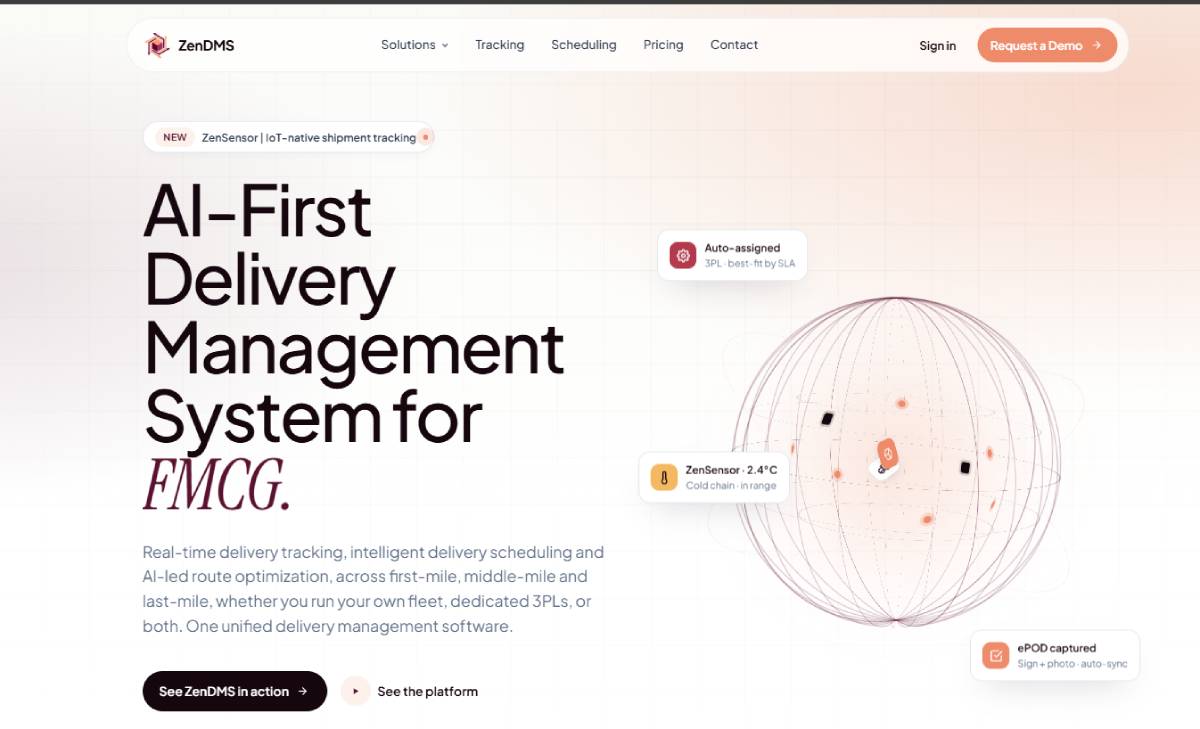
ZenDMS Advances Enterprise Document Management

ZenDMS is positioned within the document management software segment, where businesses increasingly require centralized tools to store, organize and retrieve critical information.

August 10, 2026
|

ZenDMS represents the growing shift toward centralized digital document management as organizations seek stronger control over business information, workflows and records. Its focus on organizing and managing documents reflects a wider enterprise move away from fragmented file systems toward structured, searchable and digitally accessible information environments.

ZenDMS is positioned within the document management software segment, where businesses increasingly require centralized tools to store, organize and retrieve critical information. Such platforms can support document workflows, improve accessibility and reduce dependence on scattered repositories.

The broader market is being shaped by demand for digital-first operations, remote collaboration and more efficient information handling. For enterprises, document management is no longer limited to storage; it increasingly connects with workflow automation, permissions, search, compliance and operational processes.

ZenDMS therefore sits within a technology category focused on making organizational information easier to control and use. The rise of document management platforms reflects a fundamental change in how enterprises handle information. As organizations generate increasing volumes of contracts, reports, invoices, policies and operational records, traditional folder-based systems can become difficult to manage at scale.

Cloud adoption and distributed workforces have further increased demand for centralized access to business documents. At the same time, organizations face growing expectations around information security, retention, governance and regulatory compliance.

The development of platforms such as ZenDMS aligns with this broader transformation. Document management is increasingly becoming part of an enterprise's digital operating model rather than a standalone administrative function. Integration with other business systems can also help organizations connect information with processes, enabling employees to locate relevant content faster and potentially reducing operational friction.

From an executive perspective, the importance of document management lies in the quality of information infrastructure supporting daily decision-making. Analysts across the enterprise software sector have increasingly emphasized the need for organizations to consolidate data, automate repetitive processes and improve access to business-critical information.

The value of a document management platform is therefore measured beyond simple file storage. Executives typically evaluate capabilities such as search, workflow support, access controls, collaboration, auditability and integration with existing systems.

For IT leaders, another important consideration is governance. Centralized document environments can provide organizations with greater visibility into how information is stored and accessed. However, implementation outcomes depend on configuration, user adoption, security practices and integration with existing technology.

ZenDMS highlights how document management remains an important component of broader enterprise digitization strategies. For businesses, stronger document management can contribute to more organized workflows, faster information retrieval and improved operational consistency. It may be particularly relevant for organizations managing large volumes of sensitive or frequently accessed documents.

C-suite leaders should assess document platforms based on scalability, security, integration capabilities and governance requirements rather than storage alone. Investors and technology decision-makers are also likely to monitor how efficiently enterprises convert information into operational value.

From a policy perspective, increasingly digital document environments reinforce the importance of data protection, retention policies, access controls and auditability. Organizations operating across jurisdictions may also need to account for differing regulatory requirements governing business records and sensitive information.

The document management market is likely to move toward deeper automation, intelligent search, workflow orchestration and AI-assisted information handling. Organizations will increasingly expect platforms to connect documents with broader business processes while maintaining security and governance. For ZenDMS and similar solutions, the key competitive question will be how effectively they combine usability, integration, automation and information control as enterprise requirements become more sophisticated.

Source: Crozdesk
Date: August 10, 2026

  • Featured tools
Tome AI
Free

Tome AI is an AI-powered storytelling and presentation tool designed to help users create compelling narratives and presentations quickly and efficiently. It leverages advanced AI technologies to generate content, images, and animations based on user input.

#
Presentation
#
Startup Tools
Learn more
Murf Ai
Free

Murf AI Review – Advanced AI Voice Generator for Realistic Voiceovers

#
Text to Speech
Learn more

Learn more about future of AI

Join 80,000+ Ai enthusiast getting weekly updates on exciting AI tools.
Thank you! Your submission has been received!
Oops! Something went wrong while submitting the form.

ZenDMS Advances Enterprise Document Management

August 10, 2026

ZenDMS is positioned within the document management software segment, where businesses increasingly require centralized tools to store, organize and retrieve critical information.

ZenDMS represents the growing shift toward centralized digital document management as organizations seek stronger control over business information, workflows and records. Its focus on organizing and managing documents reflects a wider enterprise move away from fragmented file systems toward structured, searchable and digitally accessible information environments.

ZenDMS is positioned within the document management software segment, where businesses increasingly require centralized tools to store, organize and retrieve critical information. Such platforms can support document workflows, improve accessibility and reduce dependence on scattered repositories.

The broader market is being shaped by demand for digital-first operations, remote collaboration and more efficient information handling. For enterprises, document management is no longer limited to storage; it increasingly connects with workflow automation, permissions, search, compliance and operational processes.

ZenDMS therefore sits within a technology category focused on making organizational information easier to control and use. The rise of document management platforms reflects a fundamental change in how enterprises handle information. As organizations generate increasing volumes of contracts, reports, invoices, policies and operational records, traditional folder-based systems can become difficult to manage at scale.

Cloud adoption and distributed workforces have further increased demand for centralized access to business documents. At the same time, organizations face growing expectations around information security, retention, governance and regulatory compliance.

The development of platforms such as ZenDMS aligns with this broader transformation. Document management is increasingly becoming part of an enterprise's digital operating model rather than a standalone administrative function. Integration with other business systems can also help organizations connect information with processes, enabling employees to locate relevant content faster and potentially reducing operational friction.

From an executive perspective, the importance of document management lies in the quality of information infrastructure supporting daily decision-making. Analysts across the enterprise software sector have increasingly emphasized the need for organizations to consolidate data, automate repetitive processes and improve access to business-critical information.

The value of a document management platform is therefore measured beyond simple file storage. Executives typically evaluate capabilities such as search, workflow support, access controls, collaboration, auditability and integration with existing systems.

For IT leaders, another important consideration is governance. Centralized document environments can provide organizations with greater visibility into how information is stored and accessed. However, implementation outcomes depend on configuration, user adoption, security practices and integration with existing technology.

ZenDMS highlights how document management remains an important component of broader enterprise digitization strategies. For businesses, stronger document management can contribute to more organized workflows, faster information retrieval and improved operational consistency. It may be particularly relevant for organizations managing large volumes of sensitive or frequently accessed documents.

C-suite leaders should assess document platforms based on scalability, security, integration capabilities and governance requirements rather than storage alone. Investors and technology decision-makers are also likely to monitor how efficiently enterprises convert information into operational value.

From a policy perspective, increasingly digital document environments reinforce the importance of data protection, retention policies, access controls and auditability. Organizations operating across jurisdictions may also need to account for differing regulatory requirements governing business records and sensitive information.

The document management market is likely to move toward deeper automation, intelligent search, workflow orchestration and AI-assisted information handling. Organizations will increasingly expect platforms to connect documents with broader business processes while maintaining security and governance. For ZenDMS and similar solutions, the key competitive question will be how effectively they combine usability, integration, automation and information control as enterprise requirements become more sophisticated.

Source: Crozdesk
Date: August 10, 2026

Promote Your Tool

Copy Embed Code

Similar Blogs

August 10, 2026
|

Content Marketing Software Accelerates Enterprise Growth

The content marketing software category encompasses platforms designed to support multiple stages of the marketing lifecycle, including content planning, creation, collaboration, distribution, optimization and performance measurement.
Read more
August 10, 2026
|

3D Printing Software Drives Manufacturing Transformation

3D printing software encompasses a broad range of capabilities designed to support the additive manufacturing lifecycle. Platforms can assist with three-dimensional modeling, file preparation, slicing, print optimization.
Read more
August 10, 2026
|

ZenDMS Advances Enterprise Document Management

ZenDMS is positioned within the document management software segment, where businesses increasingly require centralized tools to store, organize and retrieve critical information.
Read more
August 10, 2026
|

SmartSimple Cloud Advances Grant Management Automation

SmartSimple Cloud is positioned as a configurable cloud platform designed to support grant management, corporate social responsibility, scholarship programs, awards and other complex funding workflows.
Read more
August 10, 2026
|

HaloPSA Accelerates Integrated Service Management

HaloPSA brings multiple professional services automation capabilities into a centralized environment, including service desk management, ticketing, contract management, asset tracking, project management.
Read more
August 10, 2026
|

Ministry Scheduler Pro Advances Workforce Coordination

Ministry Scheduler Pro is designed to support organizations that coordinate volunteers, employees and recurring assignments across multiple activities and locations.
Read more