
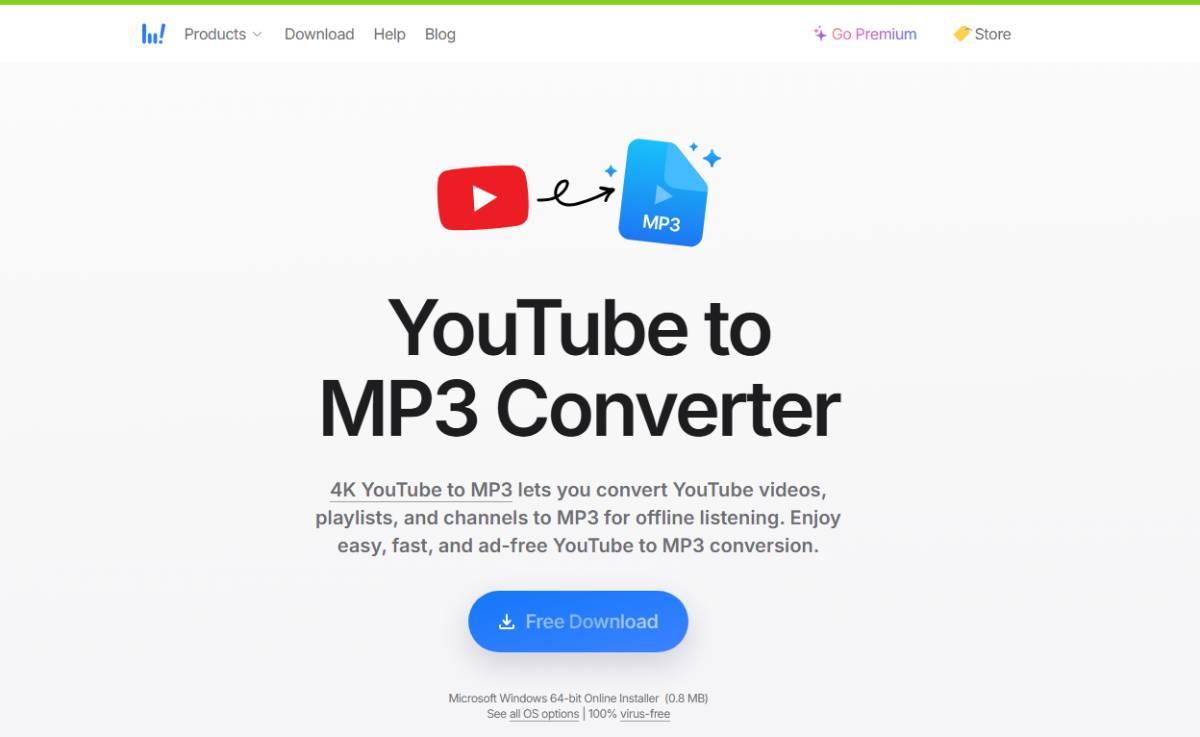
YouTube MP3 Tools Boost Offline Access

YouTube-to-MP3 converters allow users to extract audio from publicly available online videos and save it in MP3 or similar audio formats for offline listening.

July 21, 2026
|

YouTube-to-MP3 converter applications continue to attract global interest as users seek convenient ways to access audio content offline. The growing popularity of these tools underscores evolving consumer preferences for flexible media consumption while also highlighting ongoing debates surrounding copyright compliance, licensing, and digital content distribution.

YouTube-to-MP3 converters allow users to extract audio from publicly available online videos and save it in MP3 or similar audio formats for offline listening. The category includes desktop software, web-based services, and mobile applications offering varying levels of functionality.

These tools are frequently used for podcasts, educational lectures, public-domain recordings, and other legally accessible content. However, their use also raises important legal and policy considerations when applied to copyrighted material without authorization. As demand for offline access continues to grow, developers increasingly emphasize faster conversion speeds, improved audio quality, and user-friendly interfaces while navigating evolving platform restrictions.

The rapid expansion of digital streaming has transformed how consumers access music, educational content, and video. While subscription-based streaming services dominate the market, many users continue to seek offline access for convenience, limited internet connectivity, or personal archiving of authorized content. This demand has fueled the popularity of audio conversion software alongside cloud storage and media management tools.

At the same time, major content platforms and copyright holders have strengthened enforcement of licensing agreements and intellectual property protections. The broader digital media industry continues balancing consumer expectations for flexibility with creators' rights to monetize content. This ongoing tension has made media conversion technologies a recurring topic in discussions involving digital rights management, platform governance, and evolving copyright frameworks.

Digital media analysts note that offline consumption remains an important user requirement despite widespread broadband access and streaming subscriptions. Experts emphasize that media conversion technologies have legitimate applications when used with public-domain works, Creative Commons content, or material downloaded with appropriate authorization.

Legal specialists, however, caution that unauthorized extraction of copyrighted material may violate platform terms of service and applicable copyright laws in many jurisdictions. Industry observers believe future innovation will increasingly focus on licensed offline access, cloud synchronization, and integrated subscription services rather than unrestricted media downloading. Technology experts also expect artificial intelligence to improve media organization, search capabilities, and personalized offline content management within legally compliant ecosystems.

For businesses operating in digital media, content licensing and streaming infrastructure, the continued demand for offline access reinforces the importance of offering convenient, legally compliant download options. Software developers must navigate evolving regulations while designing products that respect intellectual property rights. Investors are likely to monitor opportunities in media management, cloud storage, and licensed digital distribution services.

Policymakers and regulators will continue evaluating copyright enforcement, consumer rights, and platform responsibilities as digital media consumption evolves across global markets. Companies that balance user convenience with strong compliance frameworks are expected to maintain a competitive advantage.

Demand for offline digital content is expected to remain strong as consumers seek greater flexibility across devices and environments. Future innovation will likely emphasize licensed downloads, artificial intelligence-powered media management, and stronger copyright compliance mechanisms. Business leaders should monitor changing regulations, evolving platform policies, and consumer expectations as the digital media ecosystem continues balancing accessibility, monetization, and intellectual property protection.

Source: AlternativeTo
Date: July 21, 2026

  • Featured tools
Ai Fiesta
Paid

AI Fiesta is an all-in-one productivity platform that gives users access to multiple leading AI models through a single interface. It includes features like prompt enhancement, image generation, audio transcription and side-by-side model comparison.

#
Copywriting
#
Art Generator
Learn more
Upscayl AI
Free

Upscayl AI is a free, open-source AI-powered tool that enhances and upscales images to higher resolutions. It transforms blurry or low-quality visuals into sharp, detailed versions with ease.

#
Productivity
Learn more

Learn more about future of AI

Join 80,000+ Ai enthusiast getting weekly updates on exciting AI tools.
Thank you! Your submission has been received!
Oops! Something went wrong while submitting the form.

YouTube MP3 Tools Boost Offline Access

July 21, 2026

YouTube-to-MP3 converters allow users to extract audio from publicly available online videos and save it in MP3 or similar audio formats for offline listening.

YouTube-to-MP3 converter applications continue to attract global interest as users seek convenient ways to access audio content offline. The growing popularity of these tools underscores evolving consumer preferences for flexible media consumption while also highlighting ongoing debates surrounding copyright compliance, licensing, and digital content distribution.

YouTube-to-MP3 converters allow users to extract audio from publicly available online videos and save it in MP3 or similar audio formats for offline listening. The category includes desktop software, web-based services, and mobile applications offering varying levels of functionality.

These tools are frequently used for podcasts, educational lectures, public-domain recordings, and other legally accessible content. However, their use also raises important legal and policy considerations when applied to copyrighted material without authorization. As demand for offline access continues to grow, developers increasingly emphasize faster conversion speeds, improved audio quality, and user-friendly interfaces while navigating evolving platform restrictions.

The rapid expansion of digital streaming has transformed how consumers access music, educational content, and video. While subscription-based streaming services dominate the market, many users continue to seek offline access for convenience, limited internet connectivity, or personal archiving of authorized content. This demand has fueled the popularity of audio conversion software alongside cloud storage and media management tools.

At the same time, major content platforms and copyright holders have strengthened enforcement of licensing agreements and intellectual property protections. The broader digital media industry continues balancing consumer expectations for flexibility with creators' rights to monetize content. This ongoing tension has made media conversion technologies a recurring topic in discussions involving digital rights management, platform governance, and evolving copyright frameworks.

Digital media analysts note that offline consumption remains an important user requirement despite widespread broadband access and streaming subscriptions. Experts emphasize that media conversion technologies have legitimate applications when used with public-domain works, Creative Commons content, or material downloaded with appropriate authorization.

Legal specialists, however, caution that unauthorized extraction of copyrighted material may violate platform terms of service and applicable copyright laws in many jurisdictions. Industry observers believe future innovation will increasingly focus on licensed offline access, cloud synchronization, and integrated subscription services rather than unrestricted media downloading. Technology experts also expect artificial intelligence to improve media organization, search capabilities, and personalized offline content management within legally compliant ecosystems.

For businesses operating in digital media, content licensing and streaming infrastructure, the continued demand for offline access reinforces the importance of offering convenient, legally compliant download options. Software developers must navigate evolving regulations while designing products that respect intellectual property rights. Investors are likely to monitor opportunities in media management, cloud storage, and licensed digital distribution services.

Policymakers and regulators will continue evaluating copyright enforcement, consumer rights, and platform responsibilities as digital media consumption evolves across global markets. Companies that balance user convenience with strong compliance frameworks are expected to maintain a competitive advantage.

Demand for offline digital content is expected to remain strong as consumers seek greater flexibility across devices and environments. Future innovation will likely emphasize licensed downloads, artificial intelligence-powered media management, and stronger copyright compliance mechanisms. Business leaders should monitor changing regulations, evolving platform policies, and consumer expectations as the digital media ecosystem continues balancing accessibility, monetization, and intellectual property protection.

Source: AlternativeTo
Date: July 21, 2026

Promote Your Tool

Copy Embed Code

Similar Blogs

July 21, 2026
|

Coolors Revolutionizes Digital Color Design

Coolors has emerged as a widely used color-generation and design support platform, offering tools that help users create, explore, and manage color palettes efficiently.
Read more
July 21, 2026
|

Font Squirrel Advances Open-Source Typography

Font Squirrel has become a recognized resource for designers looking for free fonts suitable for personal and commercial projects.
Read more
July 21, 2026
|

Tumlook Evolves Visual Content Sharing

Tumlook emerged as a platform associated with visual content sharing and blogging experiences, offering users a way to organize, publish, and explore creative posts.
Read more
July 21, 2026
|

Weavesilk Showcases Generative Digital Creativity

Weavesilk became known as an interactive digital art platform that allows users to create symmetrical, flowing artwork through intuitive drawing movements.
Read more
July 21, 2026
|

SpotiDown Expands Digital Music Management

SpotiDown gained attention as a tool associated with downloading or managing music content from streaming platforms, reflecting user interest in offline access and personalized media experiences.
Read more
July 21, 2026
|

Ryubing Sparks Gaming Emulation Debate

Ryubing emerged as an alternative project connected to the wider Nintendo Switch emulation ecosystem, following increased interest in open-source gaming technologies.
Read more