



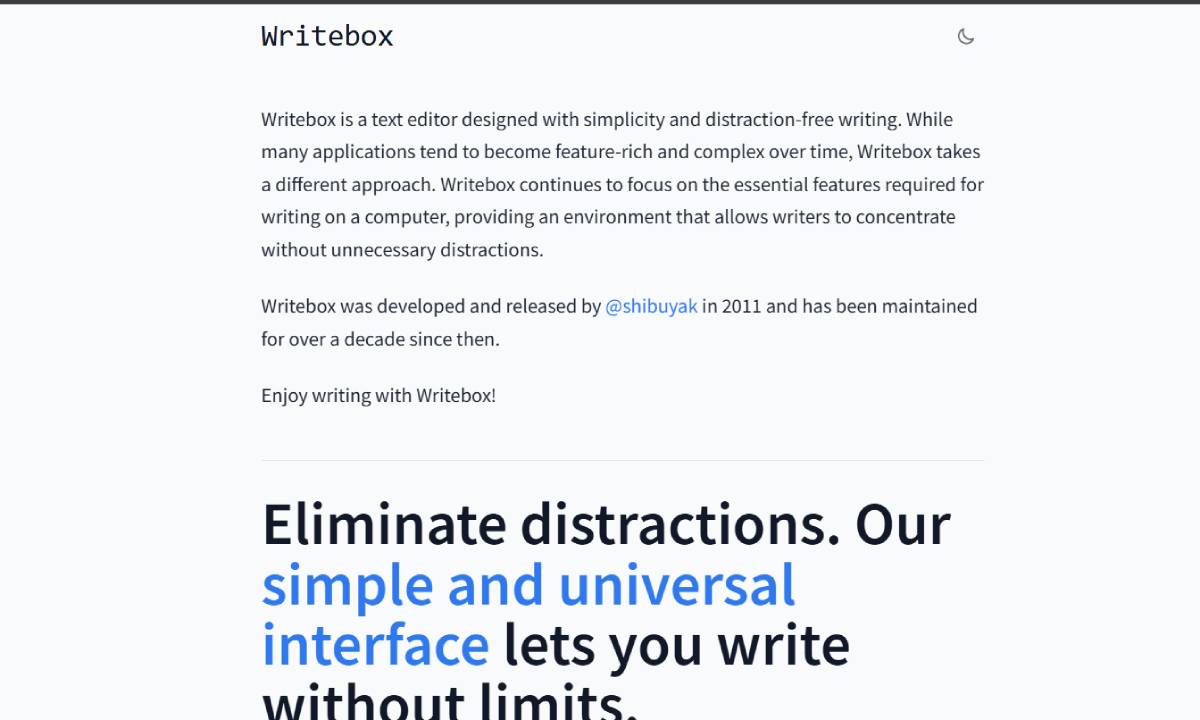
Writebox continues to represent the rising demand for distraction-free digital writing platforms designed for focused content creation. As professionals, students, and creators increasingly seek simple productivity tools, minimalist writing applications are gaining relevance within the broader digital workplace transformation, supporting efficient workflows and improved creative concentration.
Writebox is a lightweight writing application designed to provide users with a clean, distraction-free environment for creating and editing text. The platform focuses on simplicity by removing unnecessary interface elements commonly found in traditional word processors.
The tool supports writers, journalists, students, researchers, and professionals who require an efficient space for drafting documents, notes, and creative content. By emphasizing focused writing rather than complex formatting features, Writebox aligns with the growing popularity of minimalist productivity applications. Its streamlined approach appeals to users seeking faster content creation workflows while maintaining accessibility across modern digital devices and platforms.
The global productivity software market has experienced significant changes as remote work, digital collaboration, and knowledge-based industries continue expanding. While comprehensive office suites remain essential for enterprise operations, many users increasingly prefer specialized tools designed around specific tasks such as writing, note-taking, and personal organization.
Writebox reflects this broader movement toward focused productivity solutions that reduce digital distractions and improve user efficiency. The rise of the creator economy, online publishing, remote education, and professional content development has increased demand for applications that support uninterrupted creative workflows.
Minimalist writing tools have gained popularity because they prioritize user experience, simplicity, and speed over feature complexity. This trend mirrors wider technology shifts where consumers and businesses increasingly adopt modular software solutions that complement larger productivity ecosystems while addressing specific workflow challenges.
Productivity analysts note that specialized digital tools continue gaining traction as users look for technology that improves efficiency without unnecessary complexity. They suggest that focused applications can help professionals manage attention, reduce workflow interruptions, and improve productivity in increasingly digital work environments.
Writing professionals and content creators often emphasize the value of clean interfaces that allow users to concentrate on ideas rather than formatting controls. Minimalist platforms are particularly useful for early-stage drafting, brainstorming, and creative development.
Although Writebox operates as a lightweight writing solution rather than a full enterprise productivity platform, industry observers recognize its contribution to the broader movement toward simplified digital workflows. Analysts suggest future productivity tools will increasingly combine minimalist design principles with AI assistance, cloud synchronization, and intelligent automation features.
For businesses, Writebox highlights the increasing demand for productivity solutions that improve employee focus and streamline content creation processes. Organizations managing knowledge workers, writers, researchers, and creative teams may continue exploring specialized applications that complement existing workplace software.
Investors monitoring productivity technology markets may view the growth of focused digital tools as evidence of changing user expectations around software usability and efficiency. Policymakers supporting digital workforce development may also recognize the importance of accessible productivity technologies that help individuals improve professional skills.
The platform reflects a broader shift toward personalized, efficient, and user-centered digital work environments. Looking ahead, Writebox represents a continuing trend toward simplified productivity technologies designed for modern digital lifestyles. Decision-makers should monitor developments in AI-powered writing assistance, cloud-based collaboration, privacy-focused productivity tools, and changing workplace requirements. As professionals seek better ways to manage information and maintain focus, minimalist writing platforms are expected to remain valuable components of the evolving digital productivity ecosystem.
Source: AlternativeTo
Date: July 22, 2026


