



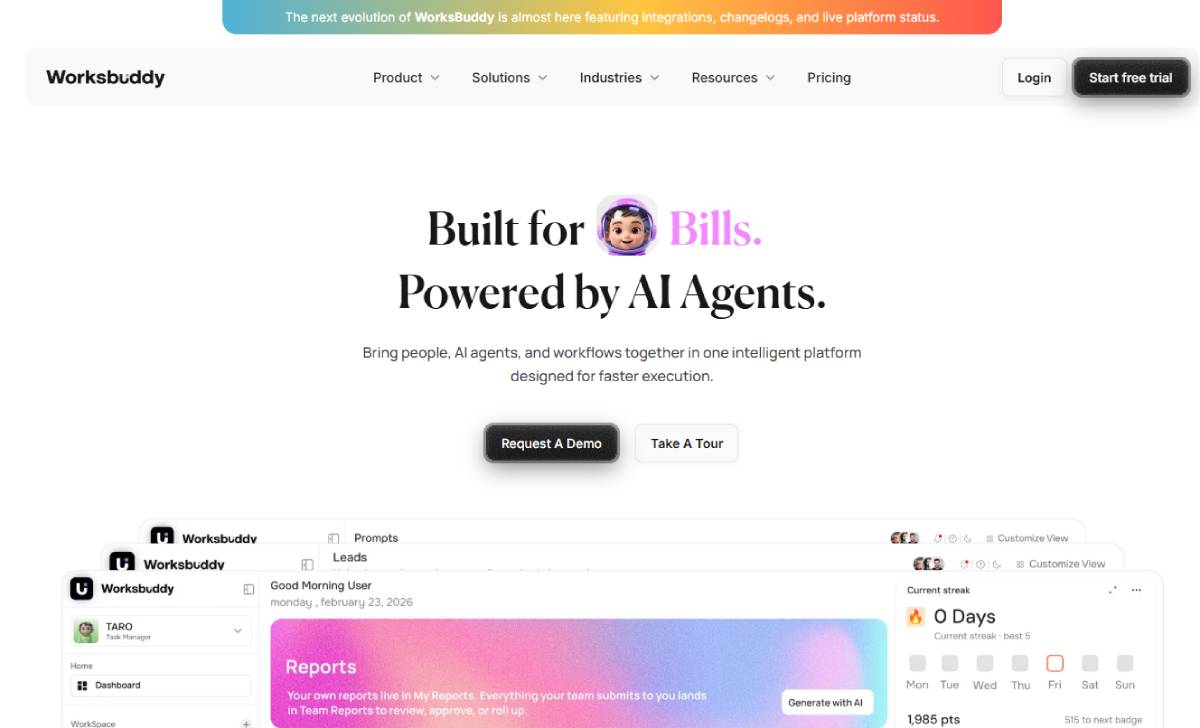
WorksBuddy is gaining attention as a digital workplace and workforce management platform designed to help organizations streamline employee operations, collaboration, and productivity tracking. The platform reflects a growing enterprise shift toward integrated workforce technology, enabling businesses to improve operational visibility, automate processes, and support more agile workforce strategies in increasingly competitive markets.
WorksBuddy provides organizations with tools focused on managing workplace activities, employee engagement, operational workflows, and productivity processes through a centralized digital platform. The solution targets businesses seeking greater efficiency in workforce coordination and management. As companies continue adopting cloud-based enterprise applications, platforms like WorksBuddy are positioned to address challenges around distributed teams, operational transparency, and employee performance monitoring.
The development highlights the increasing demand for software solutions that combine workforce management capabilities with digital collaboration features, supporting businesses as they adapt to hybrid work environments and evolving operational models.
The rise of workforce management platforms comes amid a broader transformation in how global companies organize, monitor, and optimize employee operations. Over the past decade, businesses have accelerated investments in cloud software, automation, and employee experience technologies to improve productivity and reduce administrative complexity. Hybrid work models, remote collaboration, and geographically distributed teams have increased demand for platforms that provide real-time visibility into workforce activities.
WorksBuddy aligns with this wider enterprise technology trend by focusing on digital tools that help organizations manage operational processes more efficiently. Companies across industries are increasingly looking beyond traditional HR systems toward integrated platforms that support collaboration, workflow automation, and data-driven decision-making. This shift reflects a larger movement toward intelligent workplace ecosystems designed to improve efficiency and business resilience.
Industry analysts have highlighted that workforce technology is becoming a critical component of enterprise digital transformation strategies. Experts suggest that organizations adopting centralized workforce platforms can gain improved operational insights, enhance employee coordination, and make faster data-driven decisions.
Solutions such as WorksBuddy represent the broader evolution of business software from basic management tools into intelligent operational platforms. Technology leaders continue emphasizing the importance of automation, analytics, and employee-centric digital experiences as companies navigate changing workplace expectations.
While workforce platforms offer opportunities for efficiency gains, analysts also note that successful adoption depends on factors such as integration with existing systems, user adoption, cybersecurity, and responsible data management. Enterprises are increasingly evaluating these considerations when selecting digital workplace solutions.
For global executives, workforce management platforms could play a significant role in improving operational efficiency and workforce visibility. Businesses adopting solutions like WorksBuddy may benefit from streamlined processes, improved collaboration, and stronger management oversight.
Investors and technology stakeholders are watching the workforce software sector closely as demand grows for enterprise applications that support productivity and automation. However, organizations must also address concerns related to employee privacy, data security, and regulatory compliance.
Governments and policymakers may continue focusing on digital workplace regulations as artificial intelligence, automation, and workforce analytics become more deeply integrated into business operations worldwide.
The workforce technology market is expected to continue expanding as organizations prioritize efficiency, flexibility, and digital transformation. Future developments will likely focus on deeper automation, AI-powered insights, and seamless integration with enterprise systems. Decision-makers will need to monitor how platforms like WorksBuddy evolve alongside changing workplace expectations, regulatory requirements, and the growing demand for smarter business operations.
Source: Crozdesk
Date: August 3, 2026


