



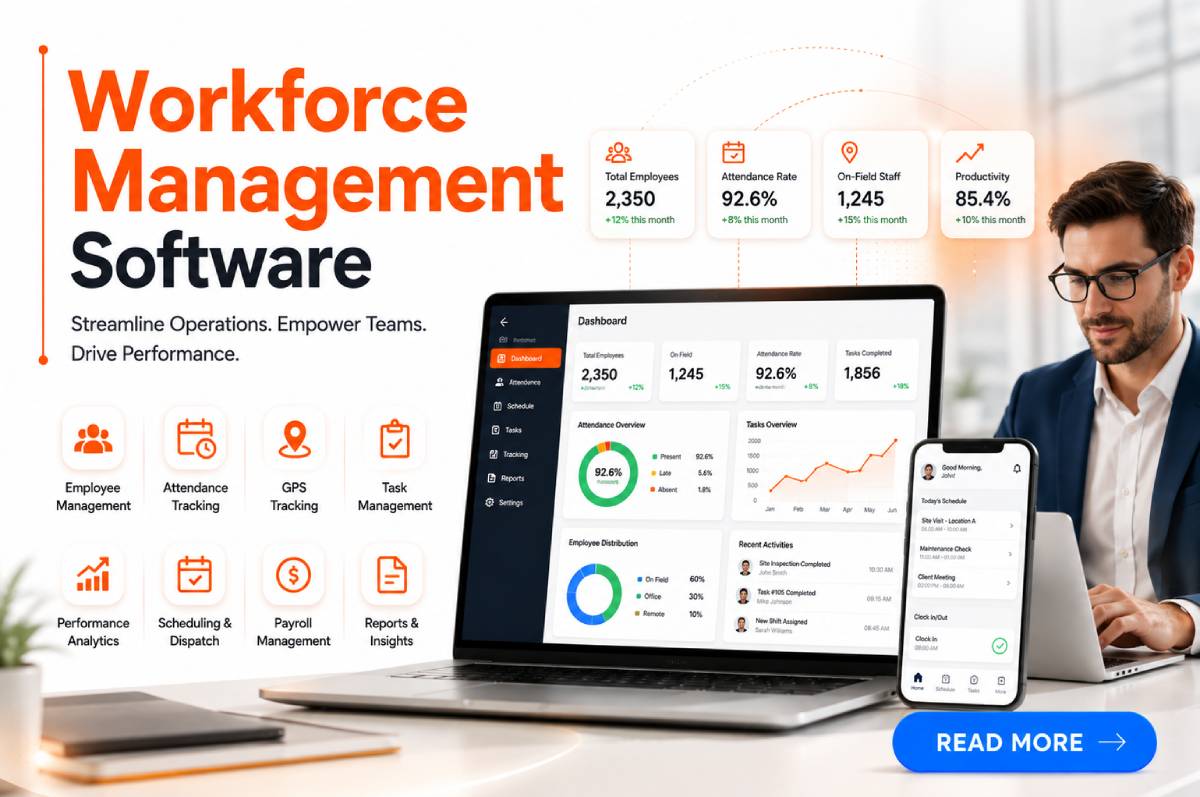
A significant transformation is reshaping enterprise workforce operations as organizations increasingly adopt workforce management software to improve labor efficiency, scheduling accuracy, and compliance. The growing reliance on cloud-based workforce platforms reflects a broader strategic shift toward data-driven human capital management, impacting businesses, employees, and policymakers across global industries.
Workforce management software continues to gain momentum as enterprises seek integrated solutions for employee scheduling, time and attendance tracking, labor forecasting, leave management, compliance monitoring, and workforce analytics. Organizations across manufacturing, healthcare, retail, logistics, hospitality, and public services are investing in digital workforce platforms to reduce operational costs while improving productivity.
The growing adoption of hybrid work models, labor shortages, and rising regulatory requirements has accelerated investment in workforce optimization technologies. Modern platforms increasingly incorporate artificial intelligence, automation, mobile accessibility, and predictive analytics, enabling businesses to improve staffing decisions while enhancing employee engagement and operational resilience.
The workforce management software market has evolved significantly as organizations navigate increasingly complex labor environments. Digital transformation initiatives, demographic workforce changes, and evolving employee expectations have made intelligent workforce planning a strategic business priority rather than simply an administrative function.
Global enterprises are also responding to stricter labor regulations, wage compliance requirements, workplace safety standards, and growing demand for flexible scheduling. These factors have encouraged organizations to replace manual workforce processes with cloud-based solutions capable of delivering real-time visibility across distributed operations.
At the same time, advances in artificial intelligence and machine learning are transforming workforce management by enabling predictive scheduling, automated shift optimization, labor demand forecasting, and workforce performance analytics. As organizations pursue greater operational efficiency, workforce management platforms have become critical components of broader human capital management and enterprise resource planning strategies.
Industry analysts consistently identify workforce management as one of the fastest-growing segments within enterprise software. Experts argue that organizations leveraging intelligent workforce planning tools often achieve improved labor utilization, reduced overtime expenses, higher compliance rates, and stronger employee satisfaction compared with businesses relying on manual scheduling processes.
Human resources consultants further emphasize that workforce management technologies are becoming increasingly important as organizations adapt to hybrid work environments and evolving labor market dynamics. Integrated analytics enable executives to make evidence-based staffing decisions while responding more effectively to changing business conditions.
Technology specialists also note that AI-powered workforce optimization is expected to become a defining competitive advantage across industries requiring large frontline workforces. While implementation strategies vary by organization, experts broadly agree that workforce intelligence will play a central role in enterprise digital transformation over the coming decade.
For business leaders, workforce management software offers opportunities to improve operational efficiency, control labor costs, strengthen compliance, and enhance employee experience through data-driven decision-making. Companies investing in intelligent workforce technologies may gain greater agility while responding to fluctuating labor demands.
Investors continue monitoring workforce technology providers as enterprises increase spending on human capital management solutions and AI-powered automation. Meanwhile, governments and regulators are expected to strengthen oversight of labor compliance, employee privacy, algorithmic transparency, and workforce data governance, requiring organizations to balance technological innovation with responsible workforce management practices.
Looking ahead, workforce management platforms are expected to integrate deeper artificial intelligence, predictive workforce planning, skills-based scheduling, and real-time analytics to support increasingly dynamic labor environments. Decision-makers should monitor advances in automation, employee experience technologies, and regulatory developments that shape workforce governance. Organizations embracing intelligent workforce management will likely strengthen resilience and long-term operational competitiveness.
Source: Crozdesk
Date: August 5, 2026


