



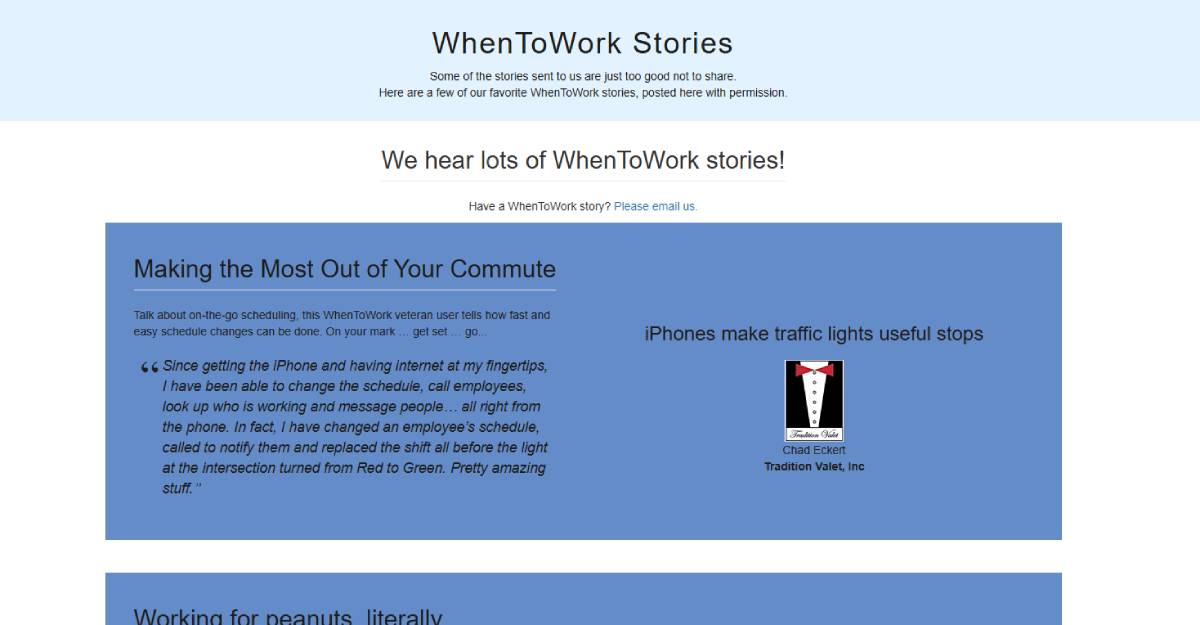
WhenToWork continues to strengthen its position in workforce scheduling by delivering a cloud-based platform that simplifies employee shift planning, time-off management, and team communication. As organizations face increasing labor shortages and rising operational costs, the solution enables businesses to improve workforce efficiency, reduce scheduling conflicts, and enhance employee engagement across multiple industries.
WhenToWork offers organizations an integrated scheduling platform designed to automate shift creation, employee availability tracking, and leave management through a centralized cloud interface. Managers can publish schedules quickly while employees receive instant notifications, request shift swaps, and submit availability updates online.
The platform serves organizations across healthcare, retail, hospitality, education, manufacturing, and public services where complex workforce coordination is essential. By reducing manual scheduling processes and improving workforce visibility, businesses can lower administrative overhead while maintaining operational continuity. Its web-based accessibility also supports distributed teams and organizations managing multiple locations with varying staffing requirements.
The workforce management software market has expanded significantly as organizations accelerate digital transformation initiatives and adapt to increasingly flexible employment models. Hybrid work environments, labor shortages, compliance requirements, and growing employee expectations have pushed organizations to replace spreadsheets and manual scheduling systems with intelligent cloud-based solutions.
Scheduling technology has become a strategic investment rather than merely an operational tool. Businesses increasingly require platforms capable of optimizing labor allocation while maintaining employee satisfaction and regulatory compliance. The growing adoption of mobile-first workforce applications also reflects broader trends toward real-time workforce collaboration and self-service employee experiences.
Within this evolving landscape, solutions such as WhenToWork address one of the most persistent operational challenges efficient workforce scheduling allowing organizations to balance staffing demands, reduce scheduling errors, and improve workforce productivity without significantly increasing administrative complexity.
Workforce management analysts consistently identify intelligent scheduling as one of the highest-return digital investments for labor-intensive organizations. Industry experts note that automated scheduling platforms can reduce scheduling conflicts, minimize overtime costs, and improve workforce transparency by giving employees greater visibility into their schedules.
Technology consultants also emphasize that cloud-based workforce solutions improve organizational agility by enabling real-time schedule adjustments during staffing shortages or unexpected operational disruptions. Features such as automated notifications, availability tracking, and employee self-service reduce the administrative burden on managers while improving communication across teams.
Although no specific executive statement accompanies this product overview, the platform reflects broader enterprise priorities focused on operational efficiency, employee experience, digital workforce transformation, and scalable workforce management across geographically distributed organizations.
For business leaders, effective workforce scheduling directly influences productivity, labor costs, customer service quality, and employee retention. Organizations adopting digital scheduling platforms can improve staffing accuracy while reducing manual administrative effort and compliance risks.
Investors continue to monitor workforce technology as enterprises prioritize operational resilience and automation initiatives. HR leaders increasingly seek solutions that combine scheduling, communication, and workforce engagement into unified platforms capable of supporting growing organizations.
From a policy perspective, stronger workforce visibility also helps organizations maintain compliance with labor regulations, working-hour requirements, and internal governance standards while supporting fair scheduling practices that enhance employee satisfaction.
Demand for cloud-based workforce scheduling solutions is expected to continue rising as organizations pursue greater operational efficiency and workforce flexibility. Future innovation will likely focus on artificial intelligence, predictive labor forecasting, mobile workforce engagement, and deeper integration with payroll and human capital management platforms. Decision-makers should monitor how workforce automation technologies continue reshaping labor planning across both public and private sector organizations.
Source: Crozdesk
Date: August 6, 2026


