



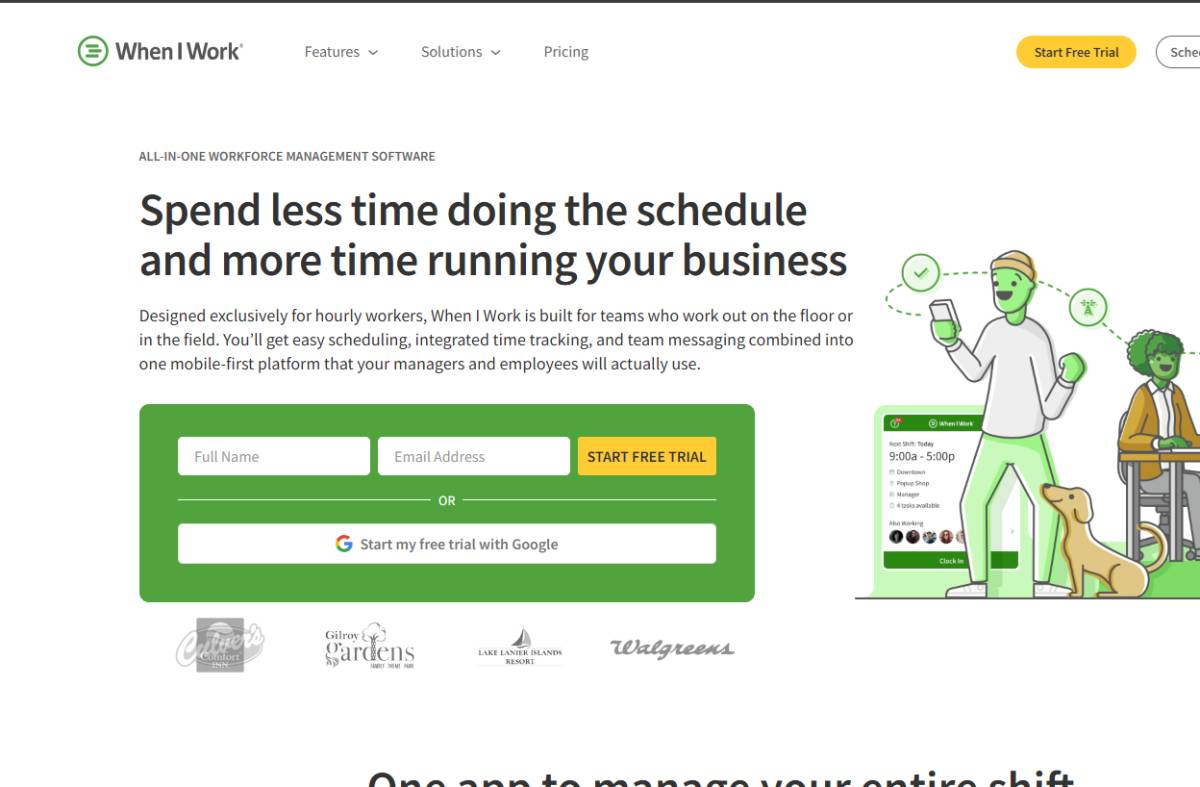
When I Work is advancing digital workforce management by helping businesses coordinate employee scheduling, time tracking and team communication through a centralized platform. The solution targets organizations with hourly and shift-based workforces, addressing growing pressure to improve labor efficiency, simplify scheduling and provide employees with greater visibility into their work arrangements.
When I Work provides workforce-management capabilities centered on employee scheduling, time tracking, attendance and workplace communication. Businesses can create and distribute schedules while employees can access shifts and communicate around their work commitments.
The platform is particularly relevant to restaurants, retail operations, healthcare organizations, hospitality businesses and other companies managing hourly employees and variable shifts.
Its centralized approach can reduce reliance on spreadsheets, paper schedules and manual communication. By bringing scheduling and workforce information together, managers can gain greater visibility into staffing requirements while employees receive clearer information about shifts and availability.
The platform reflects a broader movement toward cloud-based workforce technology designed to make frontline operations more responsive and data-driven. Workforce scheduling has become increasingly complex as businesses manage fluctuating demand, employee availability, labor costs and evolving workplace expectations. Traditional scheduling methods can create administrative burdens while making it difficult to respond quickly to changes in staffing requirements.
The rise of cloud-based workforce-management platforms has enabled businesses to digitize these processes. Instead of relying on spreadsheets, phone calls or physical schedules, managers can use centralized systems to coordinate shifts and communicate changes.
When I Work operates within this broader transformation of frontline workforce management. Its focus on scheduling, time tracking and communication addresses operational challenges that are particularly significant for businesses dependent on hourly labor.
The economic implications are substantial. Labor is one of the largest operating costs for many service businesses, making efficient workforce allocation strategically important. Overstaffing can increase costs, while understaffing can reduce service quality and employee productivity.
For executives, workforce technology is therefore increasingly viewed as an operational optimization tool rather than simply an HR application. When I Work's approach reflects the growing expectation that workforce-management systems should connect scheduling with day-to-day employee communication. A centralized platform can make it easier for managers to coordinate shifts while giving employees greater access to relevant scheduling information.
From an operational perspective, digital scheduling can help organizations respond more quickly to changes in customer demand and employee availability. Automated notifications and centralized schedules can also reduce communication gaps that occur when businesses rely on informal processes.
However, technology does not eliminate the underlying challenges of workforce management. Managers still need to consider labor regulations, employee preferences, overtime requirements and adequate staffing levels.
Industry analysts increasingly view workforce software as part of a broader operational-data ecosystem. Integration with payroll, HR, timekeeping and business systems can make scheduling information more valuable for forecasting and cost management.
For executives, the key measure is whether workforce technology improves labor utilization without compromising employee experience. For businesses, digital scheduling can reduce administrative work, improve shift visibility and help managers align staffing with operational demand. Better workforce coordination can potentially reduce scheduling conflicts and unnecessary labor costs.
Employees can benefit from easier access to schedules, shift information and workplace communications. For managers, centralized workforce data can support more informed decisions about staffing and resource allocation.
The policy dimension is particularly important for organizations operating under wage-and-hour, overtime, break and scheduling regulations. Businesses must ensure that automated workforce processes remain aligned with applicable labor requirements.
Executives should evaluate scheduling flexibility, time-tracking accuracy, integrations, employee adoption, data security and compliance capabilities before deploying workforce-management technology at scale.
Workforce-management technology is likely to move toward greater automation, AI-assisted scheduling, demand forecasting and deeper integration with payroll and HR systems. When I Work is positioned within this broader shift toward digitally coordinated frontline operations. Decision-makers should monitor scheduling intelligence, labor-cost analytics, employee engagement and regulatory compliance. The next generation of workforce platforms will increasingly be judged by their ability to balance operational efficiency with workforce flexibility and employee experience.
Source: When I Work and Crozdesk
Date: August 13, 2026


