
WhatsApp Automation Drives Zeta AI Expansion

Zeta AI is positioning itself as a global automation platform that enables businesses to manage customer engagement, marketing, and sales workflows through AI-powered interactions.

April 7, 2026
|

A major development unfolded as Zeta AI expands its AI-driven social media automation capabilities, with a strong focus on messaging platforms like WhatsApp. The move highlights a growing shift toward conversational commerce, reshaping how businesses engage customers and scale digital operations globally.

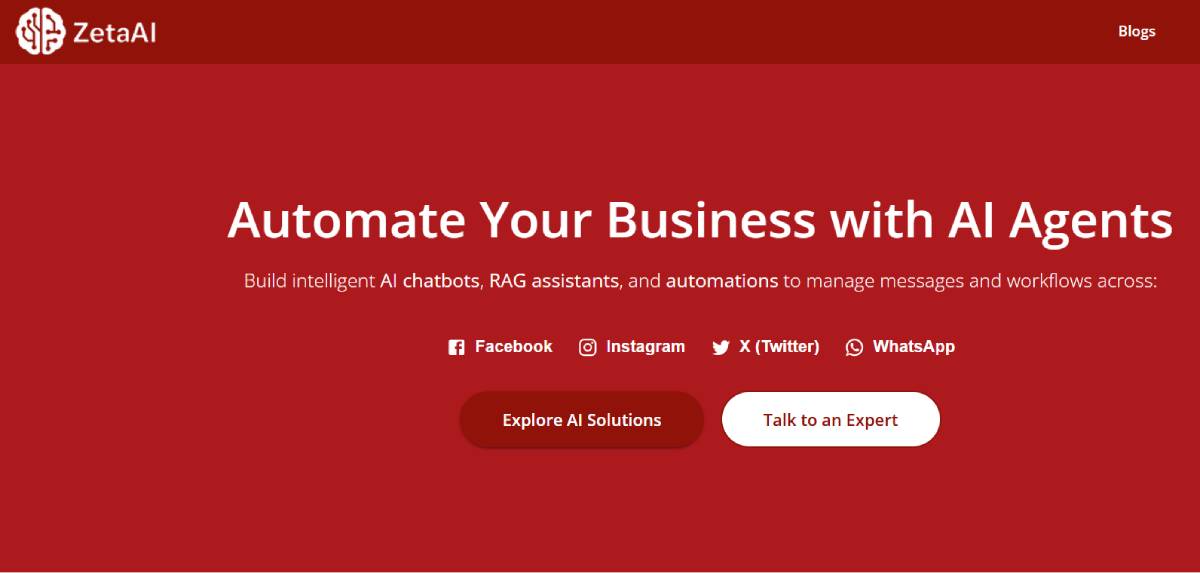
Zeta AI is positioning itself as a global automation platform that enables businesses to manage customer engagement, marketing, and sales workflows through AI-powered interactions. Its integration with WhatsApp allows companies to automate responses, run campaigns, and deliver personalized communication at scale.

The platform leverages AI to handle tasks such as lead generation, customer support, and content distribution, reducing reliance on manual processes. This aligns with increasing enterprise demand for efficiency and real-time engagement.

Zeta AI’s expansion reflects broader adoption of messaging-based business models, particularly in emerging markets where platforms like WhatsApp serve as primary digital touchpoints for consumers and enterprises alike.

The development aligns with a broader trend across global markets where conversational AI is transforming customer engagement. Messaging platforms are evolving into full-scale business ecosystems, enabling transactions, support, and marketing within a single interface.

Companies worldwide are shifting from traditional web and app-based interactions to chat-driven experiences, driven by user preferences for convenience and immediacy. This has fueled the rise of AI-powered automation tools that can operate across multiple channels.

Historically, customer relationship management (CRM) systems required significant human intervention. AI is now automating these processes, enabling businesses to scale interactions without proportional increases in workforce.

In markets like India, Southeast Asia, and Latin America, WhatsApp has become a dominant communication channel, making it a strategic platform for businesses aiming to reach large, mobile-first audiences.

Industry analysts view platforms like Zeta AI as part of a larger shift toward “AI-first customer engagement.” By embedding automation into messaging platforms, companies can achieve higher efficiency while maintaining personalized interactions.

Experts note that conversational AI can significantly improve response times and customer satisfaction, but caution that over-automation may risk diminishing human touchpoints. Striking the right balance remains critical.

From a strategic perspective, businesses adopting such platforms can gain competitive advantages through faster lead conversion and lower operational costs. However, concerns around data privacy, security, and compliance remain key considerations.

Technology leaders emphasize that the success of these systems depends on the quality of AI models and their ability to understand context, intent, and user behavior across diverse markets.

For global executives, the shift could redefine customer engagement strategies. Businesses may increasingly rely on AI-driven messaging platforms to drive sales, support, and marketing, particularly in mobile-first economies. Investors may see growth potential in companies operating at the intersection of AI and communication platforms, as demand for automation continues to rise.

From a policy standpoint, regulators may focus on data protection, consent mechanisms, and transparency in AI-driven interactions. Messaging platforms handling sensitive customer data could face stricter compliance requirements. For enterprises, the key challenge will be integrating automation while maintaining trust, personalization, and regulatory alignment.

Looking ahead, conversational AI platforms are expected to expand across industries, from retail to financial services. Decision-makers should monitor adoption rates, platform integrations, and regulatory developments.

While opportunities for efficiency and scale are significant, success will depend on balancing automation with human oversight. As digital engagement evolves, messaging-based AI could become a cornerstone of global business operations.

Source: Zeta AI
Date: April 2026

  • Featured tools
Tome AI
Free

Tome AI is an AI-powered storytelling and presentation tool designed to help users create compelling narratives and presentations quickly and efficiently. It leverages advanced AI technologies to generate content, images, and animations based on user input.

#
Presentation
#
Startup Tools
Learn more
Hostinger Website Builder
Paid

Hostinger Website Builder is a drag-and-drop website creator bundled with hosting and AI-powered tools, designed for businesses, blogs and small shops with minimal technical effort.It makes launching a site fast and affordable, with templates, responsive design and built-in hosting all in one.

#
Productivity
#
Startup Tools
#
Ecommerce
Learn more

Learn more about future of AI

Join 80,000+ Ai enthusiast getting weekly updates on exciting AI tools.
Thank you! Your submission has been received!
Oops! Something went wrong while submitting the form.

WhatsApp Automation Drives Zeta AI Expansion

April 7, 2026

Zeta AI is positioning itself as a global automation platform that enables businesses to manage customer engagement, marketing, and sales workflows through AI-powered interactions.

A major development unfolded as Zeta AI expands its AI-driven social media automation capabilities, with a strong focus on messaging platforms like WhatsApp. The move highlights a growing shift toward conversational commerce, reshaping how businesses engage customers and scale digital operations globally.

Zeta AI is positioning itself as a global automation platform that enables businesses to manage customer engagement, marketing, and sales workflows through AI-powered interactions. Its integration with WhatsApp allows companies to automate responses, run campaigns, and deliver personalized communication at scale.

The platform leverages AI to handle tasks such as lead generation, customer support, and content distribution, reducing reliance on manual processes. This aligns with increasing enterprise demand for efficiency and real-time engagement.

Zeta AI’s expansion reflects broader adoption of messaging-based business models, particularly in emerging markets where platforms like WhatsApp serve as primary digital touchpoints for consumers and enterprises alike.

The development aligns with a broader trend across global markets where conversational AI is transforming customer engagement. Messaging platforms are evolving into full-scale business ecosystems, enabling transactions, support, and marketing within a single interface.

Companies worldwide are shifting from traditional web and app-based interactions to chat-driven experiences, driven by user preferences for convenience and immediacy. This has fueled the rise of AI-powered automation tools that can operate across multiple channels.

Historically, customer relationship management (CRM) systems required significant human intervention. AI is now automating these processes, enabling businesses to scale interactions without proportional increases in workforce.

In markets like India, Southeast Asia, and Latin America, WhatsApp has become a dominant communication channel, making it a strategic platform for businesses aiming to reach large, mobile-first audiences.

Industry analysts view platforms like Zeta AI as part of a larger shift toward “AI-first customer engagement.” By embedding automation into messaging platforms, companies can achieve higher efficiency while maintaining personalized interactions.

Experts note that conversational AI can significantly improve response times and customer satisfaction, but caution that over-automation may risk diminishing human touchpoints. Striking the right balance remains critical.

From a strategic perspective, businesses adopting such platforms can gain competitive advantages through faster lead conversion and lower operational costs. However, concerns around data privacy, security, and compliance remain key considerations.

Technology leaders emphasize that the success of these systems depends on the quality of AI models and their ability to understand context, intent, and user behavior across diverse markets.

For global executives, the shift could redefine customer engagement strategies. Businesses may increasingly rely on AI-driven messaging platforms to drive sales, support, and marketing, particularly in mobile-first economies. Investors may see growth potential in companies operating at the intersection of AI and communication platforms, as demand for automation continues to rise.

From a policy standpoint, regulators may focus on data protection, consent mechanisms, and transparency in AI-driven interactions. Messaging platforms handling sensitive customer data could face stricter compliance requirements. For enterprises, the key challenge will be integrating automation while maintaining trust, personalization, and regulatory alignment.

Looking ahead, conversational AI platforms are expected to expand across industries, from retail to financial services. Decision-makers should monitor adoption rates, platform integrations, and regulatory developments.

While opportunities for efficiency and scale are significant, success will depend on balancing automation with human oversight. As digital engagement evolves, messaging-based AI could become a cornerstone of global business operations.

Source: Zeta AI
Date: April 2026

Promote Your Tool

Copy Embed Code

Similar Blogs

April 7, 2026
|

AI Generated Ads Raise Medvi Compliance Concerns

Medvi has reportedly run ad campaigns promoting weight-loss consultations using AI-generated profiles of medical professionals. Investigations suggest that some advertised doctors could be fictitious.
Read more
April 7, 2026
|

Robot Taxes Feature in OpenAI Economic Proposal

OpenAI has proposed a multi-pronged policy framework to manage the economic disruption caused by artificial intelligence.
Read more
April 7, 2026
|

Dimon Urges Human Skills Amid AI Disruption

Jamie Dimon, CEO of JPMorgan Chase, stated that AI-driven productivity gains could significantly shorten working hours over time.
Read more
April 7, 2026
|

Google Pushes On-Device AI with Dictation

Google has released a new AI-powered dictation app designed to function without an internet connection, leveraging on-device processing for speech-to-text conversion.
Read more
April 7, 2026
|

OpenAI Targets Responsible Automation with Policy

OpenAI outlined a series of recommendations targeting governments, businesses, and institutions to mitigate the impact of AI on employment.
Read more
April 7, 2026
|

Broadcom Google Alliance Deepens AI Chip Rivalry

The agreement positions Broadcom as a key partner in designing advanced custom AI accelerators for Google, extending an existing collaboration around tensor processing units (TPUs).
Read more