
Wayout Raises SEK 26.6M Funding

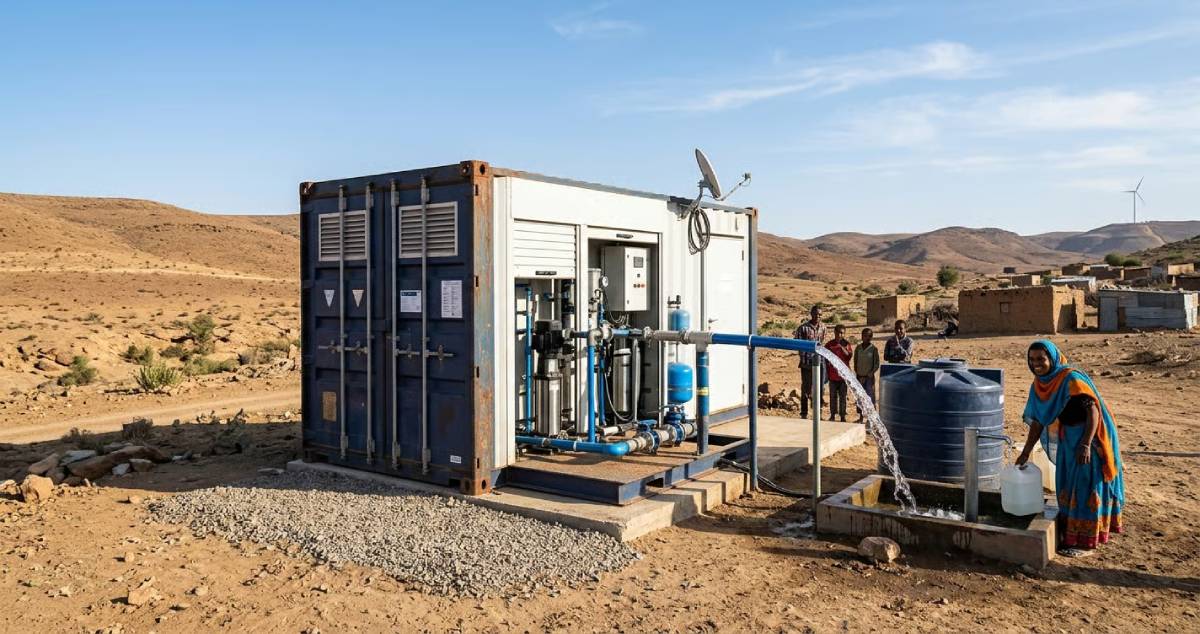
Wayout’s latest funding round of SEK 26.6 million will support the expansion of its modular water purification and distribution technology, which packages water treatment systems into standardized, container-sized units.

June 29, 2026
|
Image Source: Nordic Tech News

Wayout has raised SEK 26.6 million in a Series A extension round to expand its containerized water utility platform, designed to deliver clean water through modular, distributed infrastructure. The funding highlights rising investor interest in decentralized water solutions as global demand intensifies for resilient, scalable, and sustainable water systems.

Wayout’s latest funding round of SEK 26.6 million will support the expansion of its modular water purification and distribution technology, which packages water treatment systems into standardized, container-sized units. These units can be rapidly deployed in remote, urban, or disaster-affected regions.

The capital will be used to scale production capacity, strengthen international market expansion, and enhance system efficiency. The company aims to address growing global water stress through decentralized infrastructure that reduces reliance on traditional centralized water utilities. Investors backing the round include climate-tech-focused funds and strategic partners aligned with sustainable infrastructure development.

The move signals accelerating momentum in the distributed utility model across essential infrastructure sectors. Global water scarcity is emerging as one of the most pressing environmental and economic challenges of the 21st century. Rapid urbanization, climate change, aging infrastructure, and population growth are placing unprecedented pressure on traditional centralized water systems.

In response, distributed infrastructure models are gaining traction, enabling localized production and treatment of essential utilities such as water and energy. Containerized systems, in particular, offer flexibility, scalability, and faster deployment compared to conventional infrastructure projects that often require years of planning and construction.

The Nordic region has become a hub for climate technology innovation, particularly in water management, renewable energy, and circular economy solutions. Companies like Wayout are positioning themselves within a broader shift toward resilient infrastructure systems that can operate independently or alongside traditional utility networks, especially in regions facing water stress or infrastructure gaps.

Industry analysts view decentralized water infrastructure as a rapidly emerging segment within climate technology investment. Experts argue that traditional utility systems are increasingly insufficient to meet the combined pressures of climate variability and population growth, particularly in developing and water-stressed regions.

A water technology analyst noted that “modular infrastructure solutions represent a structural shift in how essential services can be delivered, particularly in regions lacking robust centralized systems.” Investors are increasingly focused on technologies that offer both environmental impact and scalable commercial deployment models.

Sustainability experts also highlight that distributed water systems can reduce transportation costs, lower energy consumption, and improve access to clean water in underserved regions. However, challenges remain in regulatory alignment, infrastructure integration, and long-term operational scalability across diverse geographic markets.

For businesses, Wayout’s expansion signals growing opportunities in decentralized infrastructure, particularly in water treatment, climate resilience, and emergency response solutions. Construction, utilities, and industrial sectors may increasingly explore modular systems to improve efficiency and reduce capital expenditure.

For investors, the deal reinforces strong momentum in climate-tech infrastructure, where scalable environmental solutions are attracting sustained capital inflows.

From a policy perspective, distributed water systems could support national and regional efforts to improve water security, particularly in areas vulnerable to drought or infrastructure limitations. Governments may need to adapt regulatory frameworks to accommodate modular utility deployment and cross-border climate technology adoption.

Looking ahead, Wayout is expected to accelerate international deployments and expand partnerships across municipalities, industries, and humanitarian organizations. Market attention will focus on adoption rates, operational scalability, and integration with existing water infrastructure systems. As global water stress intensifies, distributed utility models are likely to play an increasingly important role in shaping the future of sustainable infrastructure development.

Source: Nordic Tech News
Date:
June 26, 2026

  • Featured tools
Surfer AI
Free

Surfer AI is an AI-powered content creation assistant built into the Surfer SEO platform, designed to generate SEO-optimized articles from prompts, leveraging data from search results to inform tone, structure, and relevance.

#
SEO
Learn more
Tome AI
Free

Tome AI is an AI-powered storytelling and presentation tool designed to help users create compelling narratives and presentations quickly and efficiently. It leverages advanced AI technologies to generate content, images, and animations based on user input.

#
Presentation
#
Startup Tools
Learn more

Learn more about future of AI

Join 80,000+ Ai enthusiast getting weekly updates on exciting AI tools.
Thank you! Your submission has been received!
Oops! Something went wrong while submitting the form.

Wayout Raises SEK 26.6M Funding

June 29, 2026

Wayout’s latest funding round of SEK 26.6 million will support the expansion of its modular water purification and distribution technology, which packages water treatment systems into standardized, container-sized units.

Image Source: Nordic Tech News

Wayout has raised SEK 26.6 million in a Series A extension round to expand its containerized water utility platform, designed to deliver clean water through modular, distributed infrastructure. The funding highlights rising investor interest in decentralized water solutions as global demand intensifies for resilient, scalable, and sustainable water systems.

Wayout’s latest funding round of SEK 26.6 million will support the expansion of its modular water purification and distribution technology, which packages water treatment systems into standardized, container-sized units. These units can be rapidly deployed in remote, urban, or disaster-affected regions.

The capital will be used to scale production capacity, strengthen international market expansion, and enhance system efficiency. The company aims to address growing global water stress through decentralized infrastructure that reduces reliance on traditional centralized water utilities. Investors backing the round include climate-tech-focused funds and strategic partners aligned with sustainable infrastructure development.

The move signals accelerating momentum in the distributed utility model across essential infrastructure sectors. Global water scarcity is emerging as one of the most pressing environmental and economic challenges of the 21st century. Rapid urbanization, climate change, aging infrastructure, and population growth are placing unprecedented pressure on traditional centralized water systems.

In response, distributed infrastructure models are gaining traction, enabling localized production and treatment of essential utilities such as water and energy. Containerized systems, in particular, offer flexibility, scalability, and faster deployment compared to conventional infrastructure projects that often require years of planning and construction.

The Nordic region has become a hub for climate technology innovation, particularly in water management, renewable energy, and circular economy solutions. Companies like Wayout are positioning themselves within a broader shift toward resilient infrastructure systems that can operate independently or alongside traditional utility networks, especially in regions facing water stress or infrastructure gaps.

Industry analysts view decentralized water infrastructure as a rapidly emerging segment within climate technology investment. Experts argue that traditional utility systems are increasingly insufficient to meet the combined pressures of climate variability and population growth, particularly in developing and water-stressed regions.

A water technology analyst noted that “modular infrastructure solutions represent a structural shift in how essential services can be delivered, particularly in regions lacking robust centralized systems.” Investors are increasingly focused on technologies that offer both environmental impact and scalable commercial deployment models.

Sustainability experts also highlight that distributed water systems can reduce transportation costs, lower energy consumption, and improve access to clean water in underserved regions. However, challenges remain in regulatory alignment, infrastructure integration, and long-term operational scalability across diverse geographic markets.

For businesses, Wayout’s expansion signals growing opportunities in decentralized infrastructure, particularly in water treatment, climate resilience, and emergency response solutions. Construction, utilities, and industrial sectors may increasingly explore modular systems to improve efficiency and reduce capital expenditure.

For investors, the deal reinforces strong momentum in climate-tech infrastructure, where scalable environmental solutions are attracting sustained capital inflows.

From a policy perspective, distributed water systems could support national and regional efforts to improve water security, particularly in areas vulnerable to drought or infrastructure limitations. Governments may need to adapt regulatory frameworks to accommodate modular utility deployment and cross-border climate technology adoption.

Looking ahead, Wayout is expected to accelerate international deployments and expand partnerships across municipalities, industries, and humanitarian organizations. Market attention will focus on adoption rates, operational scalability, and integration with existing water infrastructure systems. As global water stress intensifies, distributed utility models are likely to play an increasingly important role in shaping the future of sustainable infrastructure development.

Source: Nordic Tech News
Date:
June 26, 2026

Promote Your Tool

Copy Embed Code

Similar Blogs

June 29, 2026
|

Cryptomathic Expands Nordic Cryptography

The acquisition of TrustSkills by Cryptomathic adds specialized cryptographic expertise to its existing security software portfolio.
Read more
June 29, 2026
|

Sweden Angels Build Self-IPO Model

The initiative known as Snöboll is being built by members of the Nordic angel ecosystem, including networks such as Nordic Angels.
Read more
June 29, 2026
|

Grundium Expands Pathology with Visiopharm

The acquisition brings together Grundium’s portable digital microscopy and Visiopharm’s AI-powered pathology software into a vertically integrated diagnostic stack.
Read more
June 29, 2026
|

Climate Petition Targets Rhône Glacier Cave

The petition argues that the constructed ice cave accelerates environmental stress on the already retreating Rhône Glacier, one of Switzerland’s most closely monitored climate indicators.
Read more
June 29, 2026
|

Shape Shifting Robot Built in Switzerland

The newly developed robot can dynamically change its structure to navigate complex environments, transition between locomotion modes, and perform multiple task functions.
Read more
June 29, 2026
|

Switzerland Unveils Open AI Model

The newly launched AI model emphasizes transparency, explainability, and open access, allowing researchers, developers, and institutions to understand its underlying architecture and decision-making processes.
Read more