



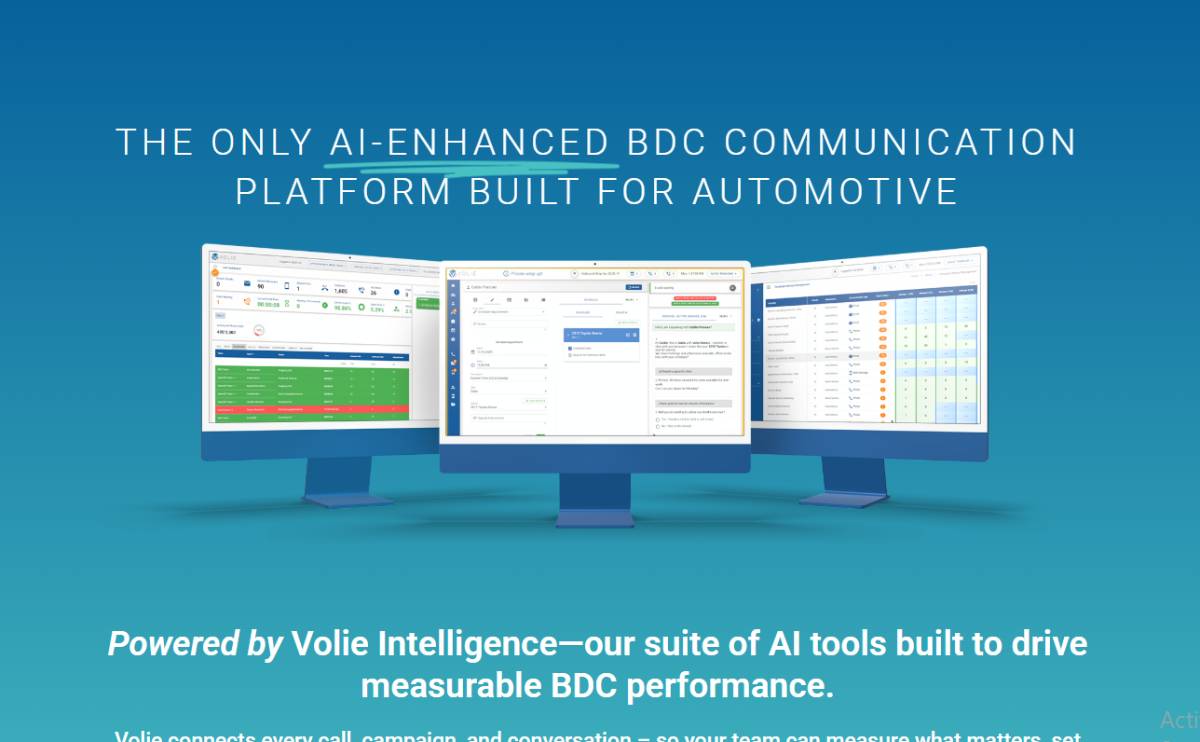
Volie is advancing digital tools for automotive dealerships by bringing customer engagement, sales communication and operational workflows into a more connected environment. The platform reflects a wider transformation in automotive retail, where dealerships are adopting technology to improve lead management, accelerate customer responses and create more consistent experiences across digital and physical sales channels.
Volie is positioned as a customer engagement and communication platform designed specifically for automotive dealerships. Its capabilities focus on helping dealership teams manage customer interactions, respond to inquiries and coordinate communication throughout the vehicle-buying journey.
The platform supports centralized communication workflows, enabling dealerships to manage conversations across multiple channels while maintaining customer context. This can help sales teams respond more efficiently to leads and reduce communication gaps.
The broader value proposition centers on connecting customer engagement with dealership operations. By providing teams with shared information and communication tools, the technology can help managers monitor interactions, improve follow-up processes and create more structured sales workflows.
Automotive retail is undergoing a significant digital transformation as consumers increasingly research vehicles, compare pricing and communicate with dealerships online before entering a showroom. This shift has increased pressure on dealerships to respond quickly and provide consistent experiences across digital channels.
Historically, customer interactions were often distributed across phone calls, emails, spreadsheets and dealership management systems. Such fragmentation can make it difficult for sales managers to understand the complete customer journey or ensure that leads receive timely follow-up.
Customer engagement platforms are emerging as an important layer between dealership employees and increasingly digital consumers. Automation, centralized messaging and customer data can help sales teams prioritize opportunities while reducing repetitive administrative work.
For executives, the strategic issue is not simply adopting another communications tool. The larger opportunity is to connect customer engagement with sales performance, improve lead conversion and build stronger long-term relationships in an increasingly competitive automotive marketplace.
Industry analysts increasingly emphasize responsiveness and personalization as critical factors in modern automotive retail. Consumers expect businesses to communicate through the channels they already use and increasingly value quick, relevant responses throughout the buying process.
Volie's dealership-focused positioning reflects this trend by concentrating on communication and customer engagement rather than treating automotive sales as a purely transactional process.
Centralized customer conversations can give dealership managers greater visibility into lead activity and employee follow-up. This can make it easier to identify missed opportunities, evaluate sales-team performance and standardize customer engagement practices.
However, technology adoption also creates operational challenges. Dealerships must ensure employees actually use new platforms consistently and that customer information remains synchronized across other systems.
Looking ahead, industry experts are likely to focus increasingly on AI-assisted communication, automated lead qualification and predictive customer engagement. The competitive advantage will come from using automation to strengthen human relationships rather than simply increasing the volume of digital interactions.
For dealership groups, customer engagement technology can improve lead response times, organize communications and provide managers with greater visibility into sales activity. Better follow-up processes may contribute to stronger conversion rates and customer retention.
For investors and automotive executives, the technology highlights a broader opportunity to modernize dealership operations and reduce inefficiencies caused by fragmented customer data.
Consumers can benefit from faster responses, more consistent communication and fewer repetitive interactions when engaging with dealerships. At the same time, dealerships must carefully manage customer data, consent, privacy and cybersecurity.
Executives should assess platforms based on integration capabilities, employee adoption, measurable sales outcomes and customer experience improvements. The strongest solutions will be those that connect communication with broader dealership workflows without creating additional operational complexity.
Automotive retail technology is likely to move toward increasingly intelligent customer engagement, with AI-assisted conversations, automated follow-ups, lead prioritization and predictive analytics becoming more prominent. Dealership leaders should monitor how effectively these tools improve conversion, response times and customer satisfaction. The next competitive advantage will come from combining digital efficiency with personalized human engagement across the automotive buying journey.
Source: Crozdesk
Date: August 10, 2026


