
Visier Expands AI Workforce Analytics

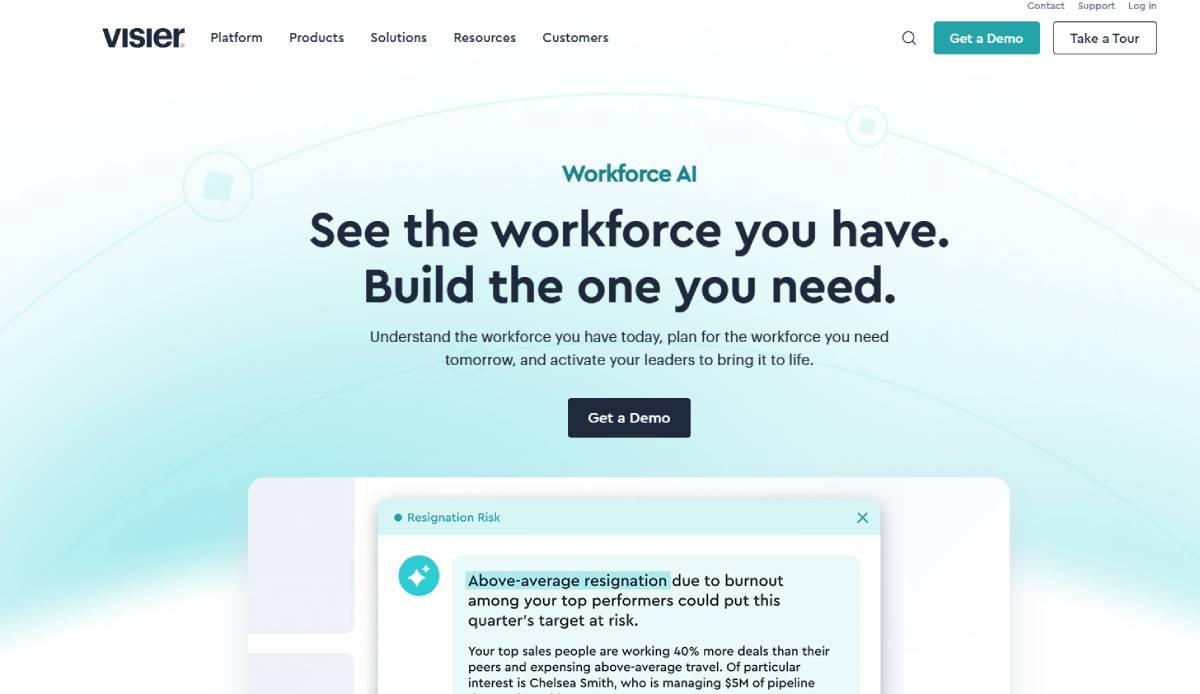
Visier provides cloud-based workforce analytics that consolidates employee data from multiple HR systems into a unified platform. Organizations use the solution to analyze hiring trends, employee retention, workforce productivity.

August 5, 2026
|

A major advancement is reshaping enterprise workforce strategy as Visier strengthens AI-powered people analytics and workforce intelligence capabilities. The platform reflects the growing importance of data-driven human capital management, enabling organizations to make faster, evidence-based decisions on talent, productivity, workforce planning, and long-term business performance.

Visier provides cloud-based workforce analytics that consolidates employee data from multiple HR systems into a unified platform. Organizations use the solution to analyze hiring trends, employee retention, workforce productivity, compensation, diversity, succession planning, and organizational performance through advanced dashboards and predictive insights.

Artificial intelligence and machine learning enhance the platform's ability to identify workforce risks, forecast talent needs, and support strategic planning. As enterprises continue investing in digital HR transformation, integrated people analytics solutions are becoming increasingly valuable for executives seeking greater workforce visibility, operational efficiency, and measurable business outcomes.

Human capital has become one of the most significant competitive assets for modern enterprises. Organizations increasingly recognize that workforce decisions require the same level of analytical rigor traditionally applied to finance, operations, and customer management.

The widespread adoption of hybrid work models, growing skills shortages, demographic shifts, and evolving employee expectations have increased demand for sophisticated workforce intelligence platforms. Companies now require real-time insights into employee engagement, productivity, turnover, diversity, and organizational effectiveness to remain competitive.

Artificial intelligence has accelerated this transformation by enabling predictive workforce analytics, automated reporting, and data-driven talent recommendations. At the same time, enterprises continue expanding investments in cloud-based human capital management systems that integrate workforce planning, performance management, recruitment, and learning into comprehensive digital ecosystems capable of supporting long-term strategic growth.

Industry analysts consider workforce analytics one of the fastest-growing segments within enterprise software as organizations increasingly prioritize evidence-based talent management. Experts argue that predictive analytics enables executives to anticipate workforce challenges before they affect productivity or financial performance.

HR technology specialists emphasize that successful workforce intelligence depends not only on analytics capabilities but also on high-quality data integration, governance, and user adoption. Corporate leaders increasingly expect workforce platforms to provide actionable recommendations rather than simply reporting historical metrics.

Analysts also highlight artificial intelligence as an important differentiator, while stressing the need for transparent algorithms, responsible AI governance, and protection of employee privacy. Organizations are encouraged to combine advanced analytics with ethical oversight to maintain workforce trust and regulatory compliance.

For enterprise leaders, workforce analytics platforms offer opportunities to improve hiring decisions, strengthen employee retention, optimize workforce planning, and increase organizational agility through real-time insights. Businesses can align talent strategies more closely with financial and operational objectives.

Investors continue monitoring the expanding human capital technology market as organizations accelerate AI adoption across HR operations. Meanwhile, regulators remain focused on employee privacy, responsible use of AI, workplace fairness, and data governance. Organizations implementing advanced analytics platforms must ensure transparency, security, and compliance while maximizing the strategic value of workforce intelligence.

Demand for AI-powered workforce analytics is expected to increase as organizations continue investing in intelligent human capital management. Decision-makers should monitor developments in predictive analytics, generative AI, workforce planning technologies, cybersecurity, and evolving labor regulations. Enterprises that effectively leverage workforce intelligence will be better positioned to strengthen productivity, improve talent retention, and build resilient organizations capable of adapting to future business challenges.

Source: Crozdesk
Date:
August 5, 2026

  • Featured tools
Neuron AI
Free

Neuron AI is an AI-driven content optimization platform that helps creators produce SEO-friendly content by combining semantic SEO, competitor analysis, and AI-assisted writing workflows.

#
SEO
Learn more
Figstack AI
Free

Figstack AI is an intelligent assistant for developers that explains code, generates docstrings, converts code between languages, and analyzes time complexity helping you work smarter, not harder.

#
Coding
Learn more

Learn more about future of AI

Join 80,000+ Ai enthusiast getting weekly updates on exciting AI tools.
Thank you! Your submission has been received!
Oops! Something went wrong while submitting the form.

Visier Expands AI Workforce Analytics

August 5, 2026

Visier provides cloud-based workforce analytics that consolidates employee data from multiple HR systems into a unified platform. Organizations use the solution to analyze hiring trends, employee retention, workforce productivity.

A major advancement is reshaping enterprise workforce strategy as Visier strengthens AI-powered people analytics and workforce intelligence capabilities. The platform reflects the growing importance of data-driven human capital management, enabling organizations to make faster, evidence-based decisions on talent, productivity, workforce planning, and long-term business performance.

Visier provides cloud-based workforce analytics that consolidates employee data from multiple HR systems into a unified platform. Organizations use the solution to analyze hiring trends, employee retention, workforce productivity, compensation, diversity, succession planning, and organizational performance through advanced dashboards and predictive insights.

Artificial intelligence and machine learning enhance the platform's ability to identify workforce risks, forecast talent needs, and support strategic planning. As enterprises continue investing in digital HR transformation, integrated people analytics solutions are becoming increasingly valuable for executives seeking greater workforce visibility, operational efficiency, and measurable business outcomes.

Human capital has become one of the most significant competitive assets for modern enterprises. Organizations increasingly recognize that workforce decisions require the same level of analytical rigor traditionally applied to finance, operations, and customer management.

The widespread adoption of hybrid work models, growing skills shortages, demographic shifts, and evolving employee expectations have increased demand for sophisticated workforce intelligence platforms. Companies now require real-time insights into employee engagement, productivity, turnover, diversity, and organizational effectiveness to remain competitive.

Artificial intelligence has accelerated this transformation by enabling predictive workforce analytics, automated reporting, and data-driven talent recommendations. At the same time, enterprises continue expanding investments in cloud-based human capital management systems that integrate workforce planning, performance management, recruitment, and learning into comprehensive digital ecosystems capable of supporting long-term strategic growth.

Industry analysts consider workforce analytics one of the fastest-growing segments within enterprise software as organizations increasingly prioritize evidence-based talent management. Experts argue that predictive analytics enables executives to anticipate workforce challenges before they affect productivity or financial performance.

HR technology specialists emphasize that successful workforce intelligence depends not only on analytics capabilities but also on high-quality data integration, governance, and user adoption. Corporate leaders increasingly expect workforce platforms to provide actionable recommendations rather than simply reporting historical metrics.

Analysts also highlight artificial intelligence as an important differentiator, while stressing the need for transparent algorithms, responsible AI governance, and protection of employee privacy. Organizations are encouraged to combine advanced analytics with ethical oversight to maintain workforce trust and regulatory compliance.

For enterprise leaders, workforce analytics platforms offer opportunities to improve hiring decisions, strengthen employee retention, optimize workforce planning, and increase organizational agility through real-time insights. Businesses can align talent strategies more closely with financial and operational objectives.

Investors continue monitoring the expanding human capital technology market as organizations accelerate AI adoption across HR operations. Meanwhile, regulators remain focused on employee privacy, responsible use of AI, workplace fairness, and data governance. Organizations implementing advanced analytics platforms must ensure transparency, security, and compliance while maximizing the strategic value of workforce intelligence.

Demand for AI-powered workforce analytics is expected to increase as organizations continue investing in intelligent human capital management. Decision-makers should monitor developments in predictive analytics, generative AI, workforce planning technologies, cybersecurity, and evolving labor regulations. Enterprises that effectively leverage workforce intelligence will be better positioned to strengthen productivity, improve talent retention, and build resilient organizations capable of adapting to future business challenges.

Source: Crozdesk
Date:
August 5, 2026

Promote Your Tool

Copy Embed Code

Similar Blogs

August 14, 2026
|

Benefitfocus Expands Digital Benefits Administration

Benefitfocus provides cloud-based technology covering benefits enrollment, administration, communications, billing, payments and data exchange.
Read more
August 14, 2026
|

Travel Agent Revenue Models Evolve Digitally

Travel agencies can earn commissions when customers book hotels, cruises, tours, vacation packages and other travel products through them. Suppliers may pay agents for generating bookings, making commissions a traditional component of agency revenue.
Read more
August 14, 2026
|

Sofon Advances Guided Selling CPQ Automation

Sofon's platform combines guided selling, product configuration, pricing, quotation and sales-management capabilities. Guided questionnaires help sales teams identify customer requirements and translate them into suitable product configurations.
Read more
August 14, 2026
|

WellRyde Advances Medical Transportation Management

WellRyde provides technology for managing non-emergency medical transportation operations, including trip scheduling, dispatch coordination, transportation-provider management and reporting.
Read more
August 14, 2026
|

Review WAVE Advances Digital Patient Engagement

Review WAVE provides healthcare practices with tools for online appointment scheduling, two-way texting, automated appointment reminders, digital forms, web chat, marketing campaigns and online review generation.
Read more
August 14, 2026
|

Edgenuity Expands Digital Virtual Education

Edgenuity provides digital curriculum and learning solutions covering core academic subjects, electives, Advanced Placement and career-oriented education.
Read more