



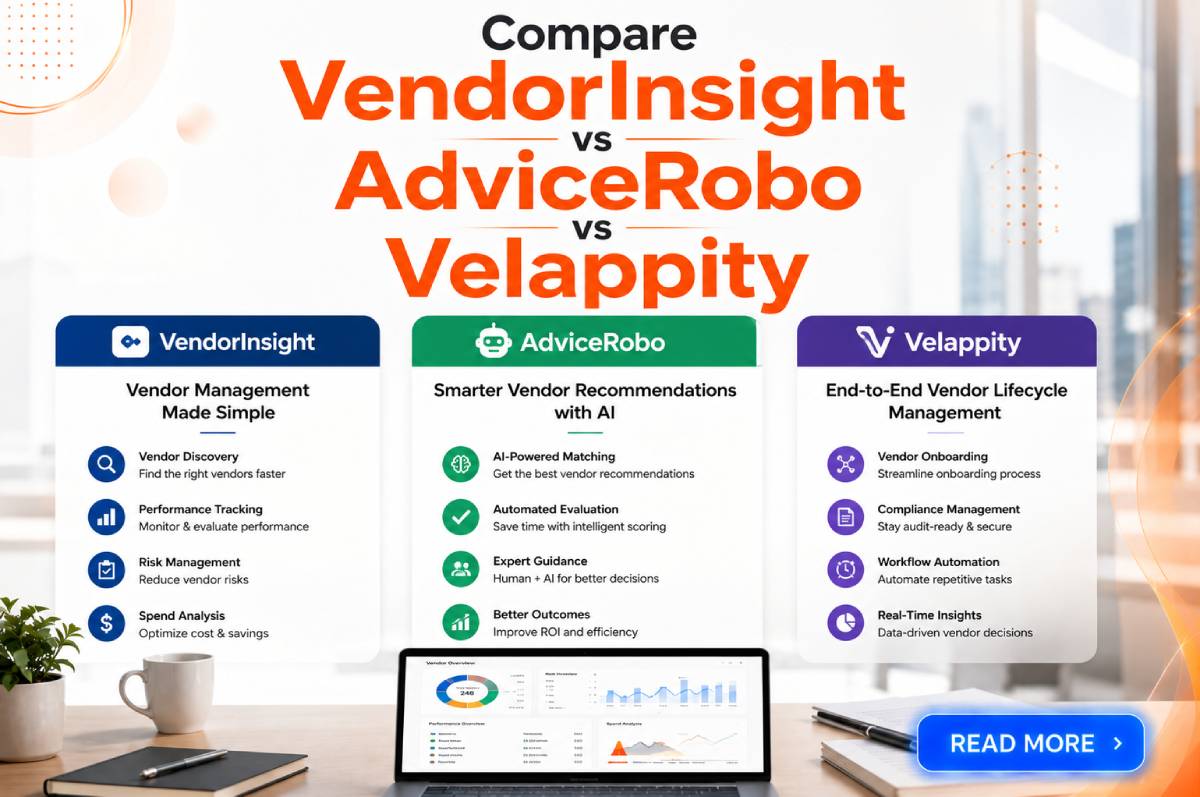
Enterprise software is increasingly shifting toward specialized platforms that automate risk, compliance and operational workflows. The comparison of VendorInsight, AdviceRobo and Velappity reflects this broader transformation, as organizations seek technology capable of improving oversight, streamlining complex processes and turning operational data into faster, more informed executive decisions.
The three platforms represent different approaches to enterprise process management. VendorInsight focuses on vendor governance, compliance oversight, due diligence and third-party risk management, areas that are becoming increasingly important for regulated organizations.
AdviceRobo represents an advisory-oriented technology model, emphasizing structured digital workflows and data-driven support for business decision-making. Velappity, meanwhile, is positioned around inspections, risk assessments, compliance activities and field operations.
The comparison highlights an increasingly competitive software environment in which buyers are evaluating platforms based on automation, reporting capabilities, workflow flexibility, integration and the ability to create centralized operational visibility. For enterprise leaders, the distinction between specialized capabilities can directly influence technology investment priorities.
The rise of specialized enterprise platforms comes as organizations face growing operational complexity, tighter compliance expectations and expanding third-party ecosystems. Traditional processes built around spreadsheets, email exchanges and disconnected databases can create delays, inconsistent documentation and limited visibility for senior management.
Vendor governance has become particularly important as companies increasingly depend on external suppliers, contractors and technology providers. Effective oversight requires organizations to monitor relationships, documentation, risk indicators and compliance obligations continuously rather than through occasional reviews.
At the same time, organizations operating in field environments need reliable digital tools for inspections, assessments, documentation and reporting. Platforms such as Velappity illustrate how mobile-first technology can bring operational information directly to employees working outside traditional office environments.
The wider trend points toward software that connects frontline activity with centralized management intelligence, allowing executives to move from reactive administration toward proactive risk management.
Industry analysts increasingly view workflow automation as a strategic capability rather than simply an efficiency tool. When repetitive compliance and documentation processes are automated, organizations can potentially redirect employee time toward higher-value analysis, relationship management and risk mitigation.
For vendor-management teams, the priority is establishing consistent processes for onboarding, monitoring and reviewing third parties. Centralized information can also help executives identify unresolved risks and improve accountability across departments.
In field operations, digital inspection platforms provide a different but related advantage. Capturing information electronically can reduce manual transcription, accelerate reporting and create a more accessible record of operational activity.
The comparison also reinforces an important technology-buying principle: organizations should assess software according to their specific operational environment. A platform designed primarily for vendor governance may offer limited value to a business whose most pressing challenge is field inspection management, while a highly specialized field platform may not address complex third-party governance requirements.
For businesses, the growing availability of specialized platforms could improve operational efficiency while strengthening compliance and risk controls. Executives should evaluate how effectively each system integrates with existing enterprise applications, reporting structures and governance processes.
For investors, the trend highlights continued demand for software addressing highly specific business problems. Specialized platforms can become strategically important when they sit directly within mission-critical workflows.
Consumers and employees may also benefit indirectly from better documentation, faster service processes and improved accountability. From a policy perspective, stronger expectations around cybersecurity, third-party risk, workplace safety and regulatory reporting are likely to encourage further adoption of digital governance tools. Organizations that continue relying heavily on fragmented manual processes may face increasing operational and compliance pressures.
The enterprise software market is likely to move toward deeper automation, artificial intelligence, real-time analytics and broader system integration. Buyers will increasingly expect specialized applications to exchange data seamlessly with core business platforms. The key question for executives will be whether technology investments deliver measurable improvements in risk visibility, productivity and governance while remaining adaptable to changing regulatory and operational requirements.
Source: Crozdesk
Date: August 10, 2026


