
US China Frictions Rise Over Iran, AI Talks

Diplomatic friction between Washington and Beijing has intensified as disagreements deepen over Iran-related policy coordination and global AI leadership.

April 29, 2026
|
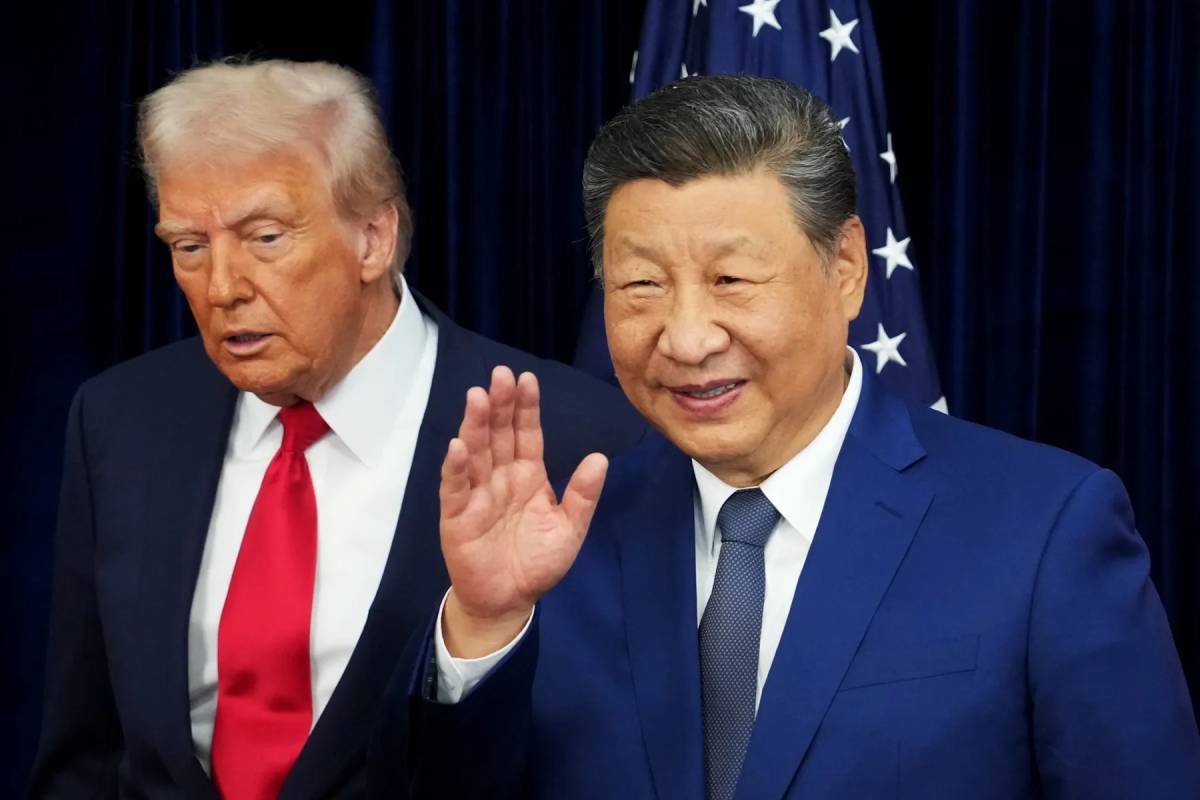
Image Source: Bloomberg

Geopolitical tensions between the United States and China are escalating ahead of anticipated talks between Donald Trump and Xi Jinping, driven by disputes over Iran policy and artificial intelligence leadership. The developments signal heightened strategic rivalry with implications for global markets, technology governance, and energy security frameworks.

Diplomatic friction between Washington and Beijing has intensified as disagreements deepen over Iran-related policy coordination and global AI leadership. The timing is significant, coming just before a planned meeting between Donald Trump and Chinese President Xi Jinping.

The two sides are also increasingly at odds over technological competition, particularly in artificial intelligence development, semiconductor access, and regulatory frameworks governing advanced computing systems.

The overlapping tensions in geopolitics and emerging technology underscore broader strategic competition, with both nations seeking to shape global standards in energy security, AI governance, and digital infrastructure control.

The development aligns with a broader trend across global markets where geopolitical rivalry between the US and China increasingly intersects with advanced technology and energy policy. Artificial intelligence has emerged as a central strategic domain, alongside semiconductors and critical infrastructure.

Historically, US–China relations have oscillated between cooperation and competition, but recent years have marked a structural shift toward strategic decoupling in key technological sectors. Parallel tensions over Middle East policy, particularly regarding Iran, add an additional layer of diplomatic complexity.

Global institutions and multinational corporations are closely watching these developments, as regulatory fragmentation could reshape supply chains, investment flows, and technology governance standards. The convergence of AI competition and energy geopolitics reflects a more multipolar global order in formation.

Analysts suggest that the dual pressure points of artificial intelligence and Iran policy represent a broader struggle for strategic influence rather than isolated disputes. Experts highlight that AI leadership is increasingly viewed as a determinant of long-term economic and military competitiveness.

Geopolitical strategists note that both Washington and Beijing are attempting to secure technological sovereignty while maintaining leverage in critical energy corridors. This has led to a more complex negotiation environment ahead of high-level leadership talks.

Policy observers also emphasize that while diplomatic engagement continues, structural competition between the two powers is unlikely to ease in the near term. Some analysts warn that escalating friction could spill over into trade restrictions and tighter controls on technology exports.

For businesses, rising geopolitical tensions could increase supply chain uncertainty, particularly in technology manufacturing and energy markets. Firms operating across both jurisdictions may face heightened regulatory fragmentation.

For investors, volatility in AI and semiconductor sectors may intensify as policy risks become more prominent in valuation models. Governments may also accelerate efforts to localize critical technology ecosystems.

For global executives, the situation underscores the importance of geopolitical risk management in strategic planning, particularly in AI development, cloud infrastructure, and advanced manufacturing sectors.

Looking ahead, market attention will focus on the outcome of the Trump–Xi meeting and whether it leads to any de-escalation in technology and energy-related disputes. However, structural competition between the US and China is expected to persist.

Decision-makers should monitor policy signals around AI governance, export controls, and Iran-related diplomatic coordination. These factors will shape global risk sentiment and investment flows in the coming months.

Source: Bloomberg
Date: April 2026

  • Featured tools
Beautiful AI
Free

Beautiful AI is an AI-powered presentation platform that automates slide design and formatting, enabling users to create polished, on-brand presentations quickly.

#
Presentation
Learn more
Ai Fiesta
Paid

AI Fiesta is an all-in-one productivity platform that gives users access to multiple leading AI models through a single interface. It includes features like prompt enhancement, image generation, audio transcription and side-by-side model comparison.

#
Copywriting
#
Art Generator
Learn more

Learn more about future of AI

Join 80,000+ Ai enthusiast getting weekly updates on exciting AI tools.
Thank you! Your submission has been received!
Oops! Something went wrong while submitting the form.

US China Frictions Rise Over Iran, AI Talks

April 29, 2026

Diplomatic friction between Washington and Beijing has intensified as disagreements deepen over Iran-related policy coordination and global AI leadership.

Image Source: Bloomberg

Geopolitical tensions between the United States and China are escalating ahead of anticipated talks between Donald Trump and Xi Jinping, driven by disputes over Iran policy and artificial intelligence leadership. The developments signal heightened strategic rivalry with implications for global markets, technology governance, and energy security frameworks.

Diplomatic friction between Washington and Beijing has intensified as disagreements deepen over Iran-related policy coordination and global AI leadership. The timing is significant, coming just before a planned meeting between Donald Trump and Chinese President Xi Jinping.

The two sides are also increasingly at odds over technological competition, particularly in artificial intelligence development, semiconductor access, and regulatory frameworks governing advanced computing systems.

The overlapping tensions in geopolitics and emerging technology underscore broader strategic competition, with both nations seeking to shape global standards in energy security, AI governance, and digital infrastructure control.

The development aligns with a broader trend across global markets where geopolitical rivalry between the US and China increasingly intersects with advanced technology and energy policy. Artificial intelligence has emerged as a central strategic domain, alongside semiconductors and critical infrastructure.

Historically, US–China relations have oscillated between cooperation and competition, but recent years have marked a structural shift toward strategic decoupling in key technological sectors. Parallel tensions over Middle East policy, particularly regarding Iran, add an additional layer of diplomatic complexity.

Global institutions and multinational corporations are closely watching these developments, as regulatory fragmentation could reshape supply chains, investment flows, and technology governance standards. The convergence of AI competition and energy geopolitics reflects a more multipolar global order in formation.

Analysts suggest that the dual pressure points of artificial intelligence and Iran policy represent a broader struggle for strategic influence rather than isolated disputes. Experts highlight that AI leadership is increasingly viewed as a determinant of long-term economic and military competitiveness.

Geopolitical strategists note that both Washington and Beijing are attempting to secure technological sovereignty while maintaining leverage in critical energy corridors. This has led to a more complex negotiation environment ahead of high-level leadership talks.

Policy observers also emphasize that while diplomatic engagement continues, structural competition between the two powers is unlikely to ease in the near term. Some analysts warn that escalating friction could spill over into trade restrictions and tighter controls on technology exports.

For businesses, rising geopolitical tensions could increase supply chain uncertainty, particularly in technology manufacturing and energy markets. Firms operating across both jurisdictions may face heightened regulatory fragmentation.

For investors, volatility in AI and semiconductor sectors may intensify as policy risks become more prominent in valuation models. Governments may also accelerate efforts to localize critical technology ecosystems.

For global executives, the situation underscores the importance of geopolitical risk management in strategic planning, particularly in AI development, cloud infrastructure, and advanced manufacturing sectors.

Looking ahead, market attention will focus on the outcome of the Trump–Xi meeting and whether it leads to any de-escalation in technology and energy-related disputes. However, structural competition between the US and China is expected to persist.

Decision-makers should monitor policy signals around AI governance, export controls, and Iran-related diplomatic coordination. These factors will shape global risk sentiment and investment flows in the coming months.

Source: Bloomberg
Date: April 2026

Promote Your Tool

Copy Embed Code

Similar Blogs

April 29, 2026
|

Dell XPS 16 Balances Performance Pricing Trade-Off

The Dell XPS 16 positions itself as a flagship large-screen laptop offering strong performance, premium design, and advanced display capabilities.
Read more
April 29, 2026
|

Logitech Redefines Gaming Hybrid Keyboard Innovation

The Logitech G512 X gaming keyboard integrates a hybrid switch architecture combining mechanical responsiveness with analog-level input control.
Read more
April 29, 2026
|

Acer Predator Deal Signals Gaming Hardware Shift

The Acer Predator Helios Neo 16 AI gaming laptop is currently available at a discount of approximately $560, positioning it as a competitively priced high-end device.
Read more
April 29, 2026
|

Elgato 4K Webcam Redefines Video Standards

The Elgato Facecam 4K webcam is currently being offered at approximately $160, positioning it competitively within the premium webcam segment.
Read more
April 29, 2026
|

Musk Altman Clash Exposes Global AI Faultlines

The opening day of the legal confrontation between Musk and Altman centered on disputes tied to the origins and direction of OpenAI.
Read more
April 29, 2026
|

Viture Beast Signals Breakthrough in AR Displays

The Viture Beast display glasses introduce a high-resolution virtual screen experience, enabling users to project large-format displays through lightweight wearable hardware.
Read more