
US China Explore AI Risk Guardrails

The discussions focus on creating basic frameworks to manage risks associated with frontier AI systems, including military applications, cyber capabilities, and model safety protocols.

May 7, 2026
|
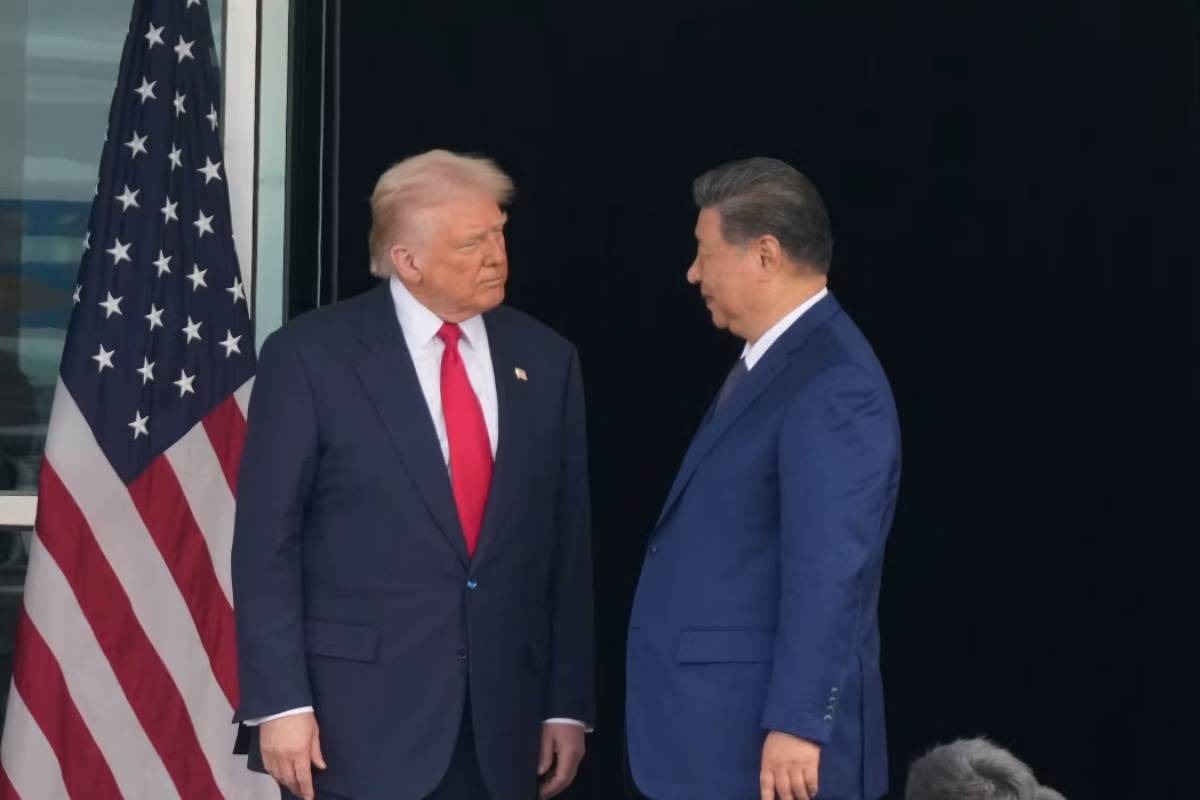
Image Source: The Wall Street Journal

The United States and China are reportedly engaging in early-stage discussions to establish guardrails around artificial intelligence development amid rising geopolitical tensions. The initiative aims to prevent escalation in strategic AI competition, signaling growing recognition that unchecked rivalry could introduce systemic risks to global stability, markets, and critical infrastructure governance.

The discussions focus on creating basic frameworks to manage risks associated with frontier AI systems, including military applications, cyber capabilities, and model safety protocols. While no binding agreements have been reached, both sides are reportedly exploring confidence-building measures.

Key stakeholders include U.S. and Chinese government agencies, national security advisors, and leading AI developers indirectly affected by policy direction. The talks reflect concerns over rapid advancements in generative AI and autonomous systems. Timing remains fluid, but the engagement signals a cautious diplomatic channel opening amid broader geopolitical competition in semiconductors, AI infrastructure, and digital governance standards.

The initiative emerges against a backdrop of intensifying technological rivalry between Washington and Beijing, particularly in artificial intelligence, semiconductors, and data infrastructure. Over the past few years, export controls, sanctions, and supply chain restrictions have deepened the strategic divide.

AI has become a central domain of competition due to its dual-use nature, spanning commercial innovation and military applications. Both countries are investing heavily in frontier model development, raising concerns about escalation risks in cyber warfare, autonomous decision systems, and misinformation capabilities.

Historically, similar “guardrail” mechanisms were explored during nuclear and cyber arms control discussions, where communication channels were established to prevent miscalculation. The current AI dialogue reflects an attempt to adapt those risk-management principles to a rapidly evolving digital intelligence landscape with global spillover effects.

Security analysts argue that the emergence of informal AI governance channels is a pragmatic response to accelerating technological uncertainty. Experts suggest that even limited coordination could reduce risks of unintended escalation in cyber or autonomous systems.

Policy researchers note that both nations face internal pressure to maintain technological leadership while managing systemic risk, creating a delicate balancing act. Some analysts caution that without enforceable mechanisms, any guardrails may remain symbolic rather than operational.

While official statements remain limited, diplomatic observers emphasize that backchannel discussions often precede formal frameworks in strategic domains. Technology governance specialists highlight that AI, unlike previous technologies, evolves rapidly enough to outpace traditional treaty structures, making flexible coordination mechanisms more likely than rigid agreements.

For global businesses, the emergence of AI risk dialogues between the U.S. and China may signal reduced regulatory unpredictability in the long term, particularly for multinational AI developers and cloud infrastructure providers. However, near-term fragmentation in standards and compliance regimes is likely to persist.

Investors may interpret the development as a stabilizing signal in an otherwise volatile geopolitical technology environment. For governments, the talks could lay the groundwork for broader AI governance frameworks covering safety, military use, and data security.

Regulators may increasingly focus on cross-border AI risk coordination, particularly as frontier models become more capable and widely deployed across critical sectors. Future progress will depend on whether both sides can translate exploratory dialogue into structured mechanisms for risk mitigation. Key areas to watch include military AI restrictions, incident communication channels, and model safety standards. While a comprehensive agreement remains unlikely in the near term, incremental coordination could help reduce systemic risks associated with rapid AI advancement in an increasingly fragmented geopolitical environment.

Source: The Wall Street Journal
Date: May 2026

  • Featured tools
Beautiful AI
Free

Beautiful AI is an AI-powered presentation platform that automates slide design and formatting, enabling users to create polished, on-brand presentations quickly.

#
Presentation
Learn more
Hostinger Horizons
Freemium

Hostinger Horizons is an AI-powered platform that allows users to build and deploy custom web applications without writing code. It packs hosting, domain management and backend integration into a unified tool for rapid app creation.

#
Startup Tools
#
Coding
#
Project Management
Learn more

Learn more about future of AI

Join 80,000+ Ai enthusiast getting weekly updates on exciting AI tools.
Thank you! Your submission has been received!
Oops! Something went wrong while submitting the form.

US China Explore AI Risk Guardrails

May 7, 2026

The discussions focus on creating basic frameworks to manage risks associated with frontier AI systems, including military applications, cyber capabilities, and model safety protocols.

Image Source: The Wall Street Journal

The United States and China are reportedly engaging in early-stage discussions to establish guardrails around artificial intelligence development amid rising geopolitical tensions. The initiative aims to prevent escalation in strategic AI competition, signaling growing recognition that unchecked rivalry could introduce systemic risks to global stability, markets, and critical infrastructure governance.

The discussions focus on creating basic frameworks to manage risks associated with frontier AI systems, including military applications, cyber capabilities, and model safety protocols. While no binding agreements have been reached, both sides are reportedly exploring confidence-building measures.

Key stakeholders include U.S. and Chinese government agencies, national security advisors, and leading AI developers indirectly affected by policy direction. The talks reflect concerns over rapid advancements in generative AI and autonomous systems. Timing remains fluid, but the engagement signals a cautious diplomatic channel opening amid broader geopolitical competition in semiconductors, AI infrastructure, and digital governance standards.

The initiative emerges against a backdrop of intensifying technological rivalry between Washington and Beijing, particularly in artificial intelligence, semiconductors, and data infrastructure. Over the past few years, export controls, sanctions, and supply chain restrictions have deepened the strategic divide.

AI has become a central domain of competition due to its dual-use nature, spanning commercial innovation and military applications. Both countries are investing heavily in frontier model development, raising concerns about escalation risks in cyber warfare, autonomous decision systems, and misinformation capabilities.

Historically, similar “guardrail” mechanisms were explored during nuclear and cyber arms control discussions, where communication channels were established to prevent miscalculation. The current AI dialogue reflects an attempt to adapt those risk-management principles to a rapidly evolving digital intelligence landscape with global spillover effects.

Security analysts argue that the emergence of informal AI governance channels is a pragmatic response to accelerating technological uncertainty. Experts suggest that even limited coordination could reduce risks of unintended escalation in cyber or autonomous systems.

Policy researchers note that both nations face internal pressure to maintain technological leadership while managing systemic risk, creating a delicate balancing act. Some analysts caution that without enforceable mechanisms, any guardrails may remain symbolic rather than operational.

While official statements remain limited, diplomatic observers emphasize that backchannel discussions often precede formal frameworks in strategic domains. Technology governance specialists highlight that AI, unlike previous technologies, evolves rapidly enough to outpace traditional treaty structures, making flexible coordination mechanisms more likely than rigid agreements.

For global businesses, the emergence of AI risk dialogues between the U.S. and China may signal reduced regulatory unpredictability in the long term, particularly for multinational AI developers and cloud infrastructure providers. However, near-term fragmentation in standards and compliance regimes is likely to persist.

Investors may interpret the development as a stabilizing signal in an otherwise volatile geopolitical technology environment. For governments, the talks could lay the groundwork for broader AI governance frameworks covering safety, military use, and data security.

Regulators may increasingly focus on cross-border AI risk coordination, particularly as frontier models become more capable and widely deployed across critical sectors. Future progress will depend on whether both sides can translate exploratory dialogue into structured mechanisms for risk mitigation. Key areas to watch include military AI restrictions, incident communication channels, and model safety standards. While a comprehensive agreement remains unlikely in the near term, incremental coordination could help reduce systemic risks associated with rapid AI advancement in an increasingly fragmented geopolitical environment.

Source: The Wall Street Journal
Date: May 2026

Promote Your Tool

Copy Embed Code

Similar Blogs

June 24, 2026
|

Cybersecurity 2030 Strategic Pillars

The “Cybersecurity 2030” outlook identifies four foundational pillars designed to help organizations navigate increasingly complex cyber risks.
Read more
June 24, 2026
|

Luxembourg Elevates Cybersecurity Leadership Profile

Forum INCYBER 2026 brought together government representatives, cybersecurity experts, technology companies, investors, and policymakers from across Europe and beyond.
Read more
June 24, 2026
|

Luxembourg Strengthens Cybersecurity Innovation Ecosystem

The Startup Apéro event served as a networking and knowledge-sharing platform for cybersecurity enthusiasts, startup founders, technology professionals, and ecosystem stakeholders.
Read more
June 24, 2026
|

Startup Founders Face Hidden Risks

The discussion centers on the realities of launching a business, particularly for first-time founders navigating complex regulatory, financial, and market environments.
Read more
June 24, 2026
|

AI Powers Fashion Retail Transformation

Engelhorn’s experience with AI underscores the growing adoption of intelligent technologies across the fashion retail value chain.
Read more
June 24, 2026
|

Foyer Accelerates Claims With AI

Foyer has integrated Tractable’s AI-based vehicle damage assessment platform into its automotive claims operations. The technology uses computer vision and machine learning to analyze vehicle damage from submitted photographs.
Read more