
Undetectable AI Tools Raise New Trust Risks

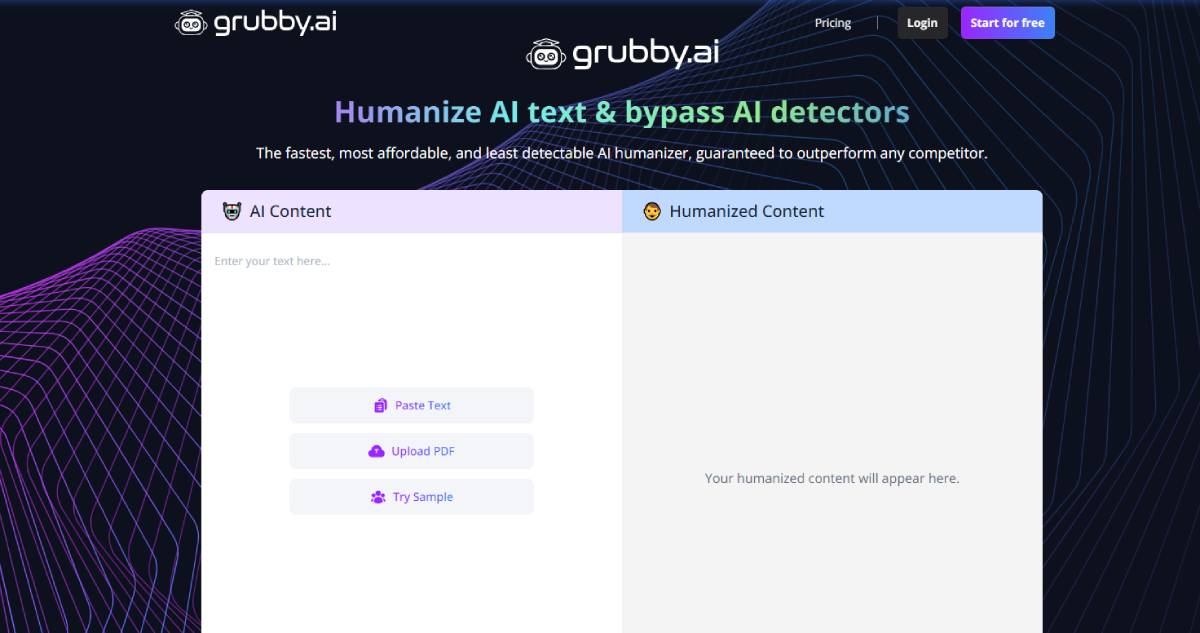
Grubby AI markets itself as an “undetectable AI humanizer,” designed to convert machine-generated text into content that appears indistinguishable from human writing.

July 29, 2026
|

The emergence of platforms like Grubby AI highlights a growing shift in the generative AI landscape, where users are not only creating content with AI but actively modifying it to evade detection. This trend is raising new concerns around digital trust, compliance, and content authenticity across industries.

Grubby AI markets itself as an “undetectable AI humanizer,” designed to convert machine-generated text into content that appears indistinguishable from human writing. Its core functionality focuses on improving tone, readability, and variability while reducing the likelihood of detection by AI-checking systems.

The tool reflects increasing demand among content creators, marketers, and students seeking to refine outputs from generative AI platforms. At the same time, it underscores a broader competitive dynamic between AI generation tools and AI detection systems.

Key stakeholders include SaaS providers, enterprises managing digital content, and educational institutions grappling with academic integrity, all of whom are directly impacted by evolving capabilities in AI text manipulation.

The development aligns with a broader trend across global markets where generative AI adoption has rapidly expanded, transforming how content is produced at scale. As AI-generated outputs become more sophisticated, the challenge of distinguishing between human and machine-created content has intensified.

In response, AI detection tools have emerged to safeguard authenticity in areas such as education, journalism, and compliance. However, the rise of humanization tools like Grubby AI introduces a new layer of complexity, effectively challenging the reliability of detection mechanisms.

This dynamic resembles an evolving “arms race” between content generation, detection, and obfuscation technologies. The issue carries significant implications for trust in digital ecosystems, particularly as AI-generated content becomes embedded in critical domains such as financial reporting, legal documentation, and public communication.

Experts are increasingly divided on the implications of undetectable AI tools. Some argue that humanization technologies improve usability by refining raw AI outputs into more natural and engaging content, enhancing productivity for businesses and individuals alike.

Others warn that such tools could undermine transparency and accountability, particularly in regulated or high-stakes environments. Analysts note that widespread adoption may erode confidence in AI detection systems, making it harder to enforce standards in academic and professional settings.

Policy experts suggest that the focus may shift from detection toward disclosure, emphasizing the need for clear labeling of AI-generated content. Industry leaders are also exploring watermarking and traceability solutions as potential safeguards against misuse.

The debate underscores the tension between innovation and governance in the evolving AI content ecosystem. For businesses, tools like Grubby AI offer opportunities to scale content production while maintaining a human-like tone. However, they also introduce risks related to brand credibility, compliance, and ethical use of AI-generated material.

Investors may see increased activity in both AI content creation and verification markets, as demand grows for solutions that balance efficiency with trust. Enterprises may need to implement stricter internal policies governing AI-assisted content workflows.

From a regulatory perspective, governments face mounting pressure to define standards for AI transparency and accountability. This could lead to new frameworks requiring disclosure of AI-generated content, particularly in sectors where authenticity is critical.

The evolution of AI humanization tools is expected to accelerate, further blurring the line between human and machine-generated content. Decision-makers should monitor advancements in detection technologies, regulatory responses, and enterprise adoption patterns. As the ecosystem matures, maintaining trust and transparency will become central to sustaining the value of AI-driven content in global markets.

Source: Grubby.ai
Date: April 2026

  • Featured tools
Ai Fiesta
Paid

AI Fiesta is an all-in-one productivity platform that gives users access to multiple leading AI models through a single interface. It includes features like prompt enhancement, image generation, audio transcription and side-by-side model comparison.

#
Copywriting
#
Art Generator
Learn more
Alli AI
Free

Alli AI is an all-in-one, AI-powered SEO automation platform that streamlines on-page optimization, site auditing, speed improvements, schema generation, internal linking, and ranking insights.

#
SEO
Learn more

Learn more about future of AI

Join 80,000+ Ai enthusiast getting weekly updates on exciting AI tools.
Thank you! Your submission has been received!
Oops! Something went wrong while submitting the form.

Undetectable AI Tools Raise New Trust Risks

July 29, 2026

Grubby AI markets itself as an “undetectable AI humanizer,” designed to convert machine-generated text into content that appears indistinguishable from human writing.

The emergence of platforms like Grubby AI highlights a growing shift in the generative AI landscape, where users are not only creating content with AI but actively modifying it to evade detection. This trend is raising new concerns around digital trust, compliance, and content authenticity across industries.

Grubby AI markets itself as an “undetectable AI humanizer,” designed to convert machine-generated text into content that appears indistinguishable from human writing. Its core functionality focuses on improving tone, readability, and variability while reducing the likelihood of detection by AI-checking systems.

The tool reflects increasing demand among content creators, marketers, and students seeking to refine outputs from generative AI platforms. At the same time, it underscores a broader competitive dynamic between AI generation tools and AI detection systems.

Key stakeholders include SaaS providers, enterprises managing digital content, and educational institutions grappling with academic integrity, all of whom are directly impacted by evolving capabilities in AI text manipulation.

The development aligns with a broader trend across global markets where generative AI adoption has rapidly expanded, transforming how content is produced at scale. As AI-generated outputs become more sophisticated, the challenge of distinguishing between human and machine-created content has intensified.

In response, AI detection tools have emerged to safeguard authenticity in areas such as education, journalism, and compliance. However, the rise of humanization tools like Grubby AI introduces a new layer of complexity, effectively challenging the reliability of detection mechanisms.

This dynamic resembles an evolving “arms race” between content generation, detection, and obfuscation technologies. The issue carries significant implications for trust in digital ecosystems, particularly as AI-generated content becomes embedded in critical domains such as financial reporting, legal documentation, and public communication.

Experts are increasingly divided on the implications of undetectable AI tools. Some argue that humanization technologies improve usability by refining raw AI outputs into more natural and engaging content, enhancing productivity for businesses and individuals alike.

Others warn that such tools could undermine transparency and accountability, particularly in regulated or high-stakes environments. Analysts note that widespread adoption may erode confidence in AI detection systems, making it harder to enforce standards in academic and professional settings.

Policy experts suggest that the focus may shift from detection toward disclosure, emphasizing the need for clear labeling of AI-generated content. Industry leaders are also exploring watermarking and traceability solutions as potential safeguards against misuse.

The debate underscores the tension between innovation and governance in the evolving AI content ecosystem. For businesses, tools like Grubby AI offer opportunities to scale content production while maintaining a human-like tone. However, they also introduce risks related to brand credibility, compliance, and ethical use of AI-generated material.

Investors may see increased activity in both AI content creation and verification markets, as demand grows for solutions that balance efficiency with trust. Enterprises may need to implement stricter internal policies governing AI-assisted content workflows.

From a regulatory perspective, governments face mounting pressure to define standards for AI transparency and accountability. This could lead to new frameworks requiring disclosure of AI-generated content, particularly in sectors where authenticity is critical.

The evolution of AI humanization tools is expected to accelerate, further blurring the line between human and machine-generated content. Decision-makers should monitor advancements in detection technologies, regulatory responses, and enterprise adoption patterns. As the ecosystem matures, maintaining trust and transparency will become central to sustaining the value of AI-driven content in global markets.

Source: Grubby.ai
Date: April 2026

Promote Your Tool

Copy Embed Code

Similar Blogs

July 29, 2026
|

EmulationStation Enhances Retro Gaming Experience

EmulationStation is a front-end interface designed to organize and present video game emulation libraries through a streamlined user experience.
Read more
July 29, 2026
|

Tomoson Expands Influencer Marketing Collaboration

Tomoson operates as an influencer marketing platform designed to help brands collaborate with content creators and manage promotional campaigns.
Read more
July 29, 2026
|

ZeroBin.net Advances Secure Data Sharing

ZeroBin.net operates as a privacy-oriented platform that allows users to share encrypted information through temporary digital channels.
Read more
July 29, 2026
|

Gaia Expands Digital Knowledge Access

Gaia operates within the broader category of digital platforms focused on information discovery, organization, and knowledge accessibility.
Read more
July 29, 2026
|

MailDrop Expands Privacy Email Solutions

MailDrop operates as a temporary email service designed to help users create disposable email addresses for online registrations and digital interactions.
Read more
July 29, 2026
|

MacX YouTube Downloader Enhances Video Management

MacX YouTube Downloader is a multimedia software solution designed to support video downloading, conversion, and management from online platforms.
Read more