
Turtle Beach Launches Touchscreen Gaming Mouse

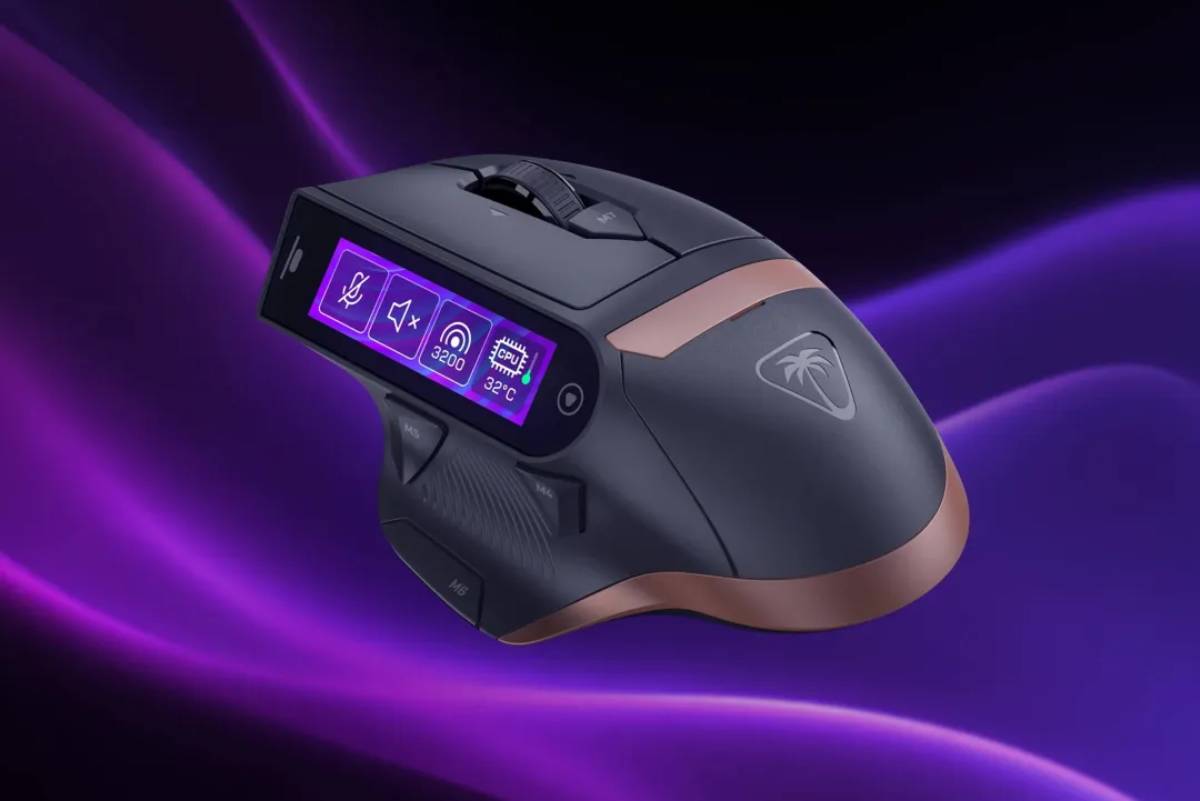
The new Turtle Beach mouse, part of its Command Series, integrates a built-in touchscreen alongside traditional input controls. The device is designed to offer customizable commands and interface shortcuts for gamers.

July 29, 2026
|
Image Source: The Verge

Turtle Beach has introduced a new touchscreen-enabled gaming mouse that is drawing mixed reactions for its complex design approach. The product highlights ongoing experimentation in PC peripherals, with implications for user experience design, gaming hardware innovation, and the broader consumer electronics market.

The new Turtle Beach mouse, part of its Command Series, integrates a built-in touchscreen alongside traditional input controls. The device is designed to offer customizable commands and interface shortcuts for gamers, aiming to enhance functionality and control precision.

However, early impressions suggest the product may be overly complex for mainstream users, with critics questioning its practicality. The design reflects a broader push in gaming hardware toward feature-rich, multi-functional devices.

The launch comes as peripheral manufacturers compete to differentiate products in a saturated market, where innovation often blurs the line between utility and excessive engineering complexity.

The development aligns with a broader trend across global markets where gaming hardware manufacturers are increasingly integrating advanced digital interfaces into traditional input devices. As gaming ecosystems become more sophisticated, companies are experimenting with hybrid control systems that combine hardware and software customization.

Brands such as Razer, Logitech, and Corsair have also introduced high-performance mice with programmable features, macro systems, and OLED displays. Historically, gaming mice have evolved from simple input devices to highly configurable tools tailored for competitive gaming and professional use. However, this evolution has also raised concerns about usability, learning curves, and diminishing returns in design complexity. The introduction of touchscreen functionality represents a further step in this experimentation cycle.

Industry analysts suggest that the integration of touchscreen controls into a gaming mouse reflects a broader trend of “feature inflation” in consumer hardware. While such innovations aim to enhance customization, experts caution that they may not always translate into improved user experience.

Gaming hardware reviewers note that professional gamers typically prioritize reliability, ergonomics, and responsiveness over additional features. As a result, overly complex designs risk appealing only to niche segments.

From a market perspective, analysts argue that manufacturers are under pressure to innovate in a mature peripherals market, where incremental improvements are no longer sufficient to drive sales growth. This often leads to experimental designs that push boundaries but may lack mainstream practicality.

For businesses, the launch highlights the challenge of balancing innovation with usability in competitive hardware markets. Companies may need to better segment products between professional-grade tools and mainstream consumer devices.

Investors in gaming peripherals could see continued experimentation as brands attempt to capture premium pricing through differentiated features. However, adoption risks remain if products are perceived as unnecessarily complex.

For consumers, the trend may lead to greater customization options but also increased learning curves. In policy terms, there are limited regulatory implications, though consumer protection standards around usability and product clarity may gain indirect attention.

Looking ahead, market reception will determine whether touchscreen-integrated peripherals gain traction or remain niche experiments. User adoption, especially among competitive gamers, will be a key indicator of success.

Decision-makers should monitor whether the industry continues toward multi-layered input devices or reverts to simpler, performance-focused designs. The outcome will shape the future direction of innovation in gaming hardware ecosystems.

Source: The Verge
Date: April 2026

  • Featured tools
Ai Fiesta
Paid

AI Fiesta is an all-in-one productivity platform that gives users access to multiple leading AI models through a single interface. It includes features like prompt enhancement, image generation, audio transcription and side-by-side model comparison.

#
Copywriting
#
Art Generator
Learn more
Kreateable AI
Free

Kreateable AI is a white-label, AI-driven design platform that enables logo generation, social media posts, ads, and more for businesses, agencies, and service providers.

#
Logo Generator
Learn more

Learn more about future of AI

Join 80,000+ Ai enthusiast getting weekly updates on exciting AI tools.
Thank you! Your submission has been received!
Oops! Something went wrong while submitting the form.

Turtle Beach Launches Touchscreen Gaming Mouse

July 29, 2026

The new Turtle Beach mouse, part of its Command Series, integrates a built-in touchscreen alongside traditional input controls. The device is designed to offer customizable commands and interface shortcuts for gamers.

Image Source: The Verge

Turtle Beach has introduced a new touchscreen-enabled gaming mouse that is drawing mixed reactions for its complex design approach. The product highlights ongoing experimentation in PC peripherals, with implications for user experience design, gaming hardware innovation, and the broader consumer electronics market.

The new Turtle Beach mouse, part of its Command Series, integrates a built-in touchscreen alongside traditional input controls. The device is designed to offer customizable commands and interface shortcuts for gamers, aiming to enhance functionality and control precision.

However, early impressions suggest the product may be overly complex for mainstream users, with critics questioning its practicality. The design reflects a broader push in gaming hardware toward feature-rich, multi-functional devices.

The launch comes as peripheral manufacturers compete to differentiate products in a saturated market, where innovation often blurs the line between utility and excessive engineering complexity.

The development aligns with a broader trend across global markets where gaming hardware manufacturers are increasingly integrating advanced digital interfaces into traditional input devices. As gaming ecosystems become more sophisticated, companies are experimenting with hybrid control systems that combine hardware and software customization.

Brands such as Razer, Logitech, and Corsair have also introduced high-performance mice with programmable features, macro systems, and OLED displays. Historically, gaming mice have evolved from simple input devices to highly configurable tools tailored for competitive gaming and professional use. However, this evolution has also raised concerns about usability, learning curves, and diminishing returns in design complexity. The introduction of touchscreen functionality represents a further step in this experimentation cycle.

Industry analysts suggest that the integration of touchscreen controls into a gaming mouse reflects a broader trend of “feature inflation” in consumer hardware. While such innovations aim to enhance customization, experts caution that they may not always translate into improved user experience.

Gaming hardware reviewers note that professional gamers typically prioritize reliability, ergonomics, and responsiveness over additional features. As a result, overly complex designs risk appealing only to niche segments.

From a market perspective, analysts argue that manufacturers are under pressure to innovate in a mature peripherals market, where incremental improvements are no longer sufficient to drive sales growth. This often leads to experimental designs that push boundaries but may lack mainstream practicality.

For businesses, the launch highlights the challenge of balancing innovation with usability in competitive hardware markets. Companies may need to better segment products between professional-grade tools and mainstream consumer devices.

Investors in gaming peripherals could see continued experimentation as brands attempt to capture premium pricing through differentiated features. However, adoption risks remain if products are perceived as unnecessarily complex.

For consumers, the trend may lead to greater customization options but also increased learning curves. In policy terms, there are limited regulatory implications, though consumer protection standards around usability and product clarity may gain indirect attention.

Looking ahead, market reception will determine whether touchscreen-integrated peripherals gain traction or remain niche experiments. User adoption, especially among competitive gamers, will be a key indicator of success.

Decision-makers should monitor whether the industry continues toward multi-layered input devices or reverts to simpler, performance-focused designs. The outcome will shape the future direction of innovation in gaming hardware ecosystems.

Source: The Verge
Date: April 2026

Promote Your Tool

Copy Embed Code

Similar Blogs

August 14, 2026
|

Benefitfocus Expands Digital Benefits Administration

Benefitfocus provides cloud-based technology covering benefits enrollment, administration, communications, billing, payments and data exchange.
Read more
August 14, 2026
|

Travel Agent Revenue Models Evolve Digitally

Travel agencies can earn commissions when customers book hotels, cruises, tours, vacation packages and other travel products through them. Suppliers may pay agents for generating bookings, making commissions a traditional component of agency revenue.
Read more
August 14, 2026
|

Sofon Advances Guided Selling CPQ Automation

Sofon's platform combines guided selling, product configuration, pricing, quotation and sales-management capabilities. Guided questionnaires help sales teams identify customer requirements and translate them into suitable product configurations.
Read more
August 14, 2026
|

WellRyde Advances Medical Transportation Management

WellRyde provides technology for managing non-emergency medical transportation operations, including trip scheduling, dispatch coordination, transportation-provider management and reporting.
Read more
August 14, 2026
|

Review WAVE Advances Digital Patient Engagement

Review WAVE provides healthcare practices with tools for online appointment scheduling, two-way texting, automated appointment reminders, digital forms, web chat, marketing campaigns and online review generation.
Read more
August 14, 2026
|

Edgenuity Expands Digital Virtual Education

Edgenuity provides digital curriculum and learning solutions covering core academic subjects, electives, Advanced Placement and career-oriented education.
Read more