
TubeNinja Reshapes Media Download Tools

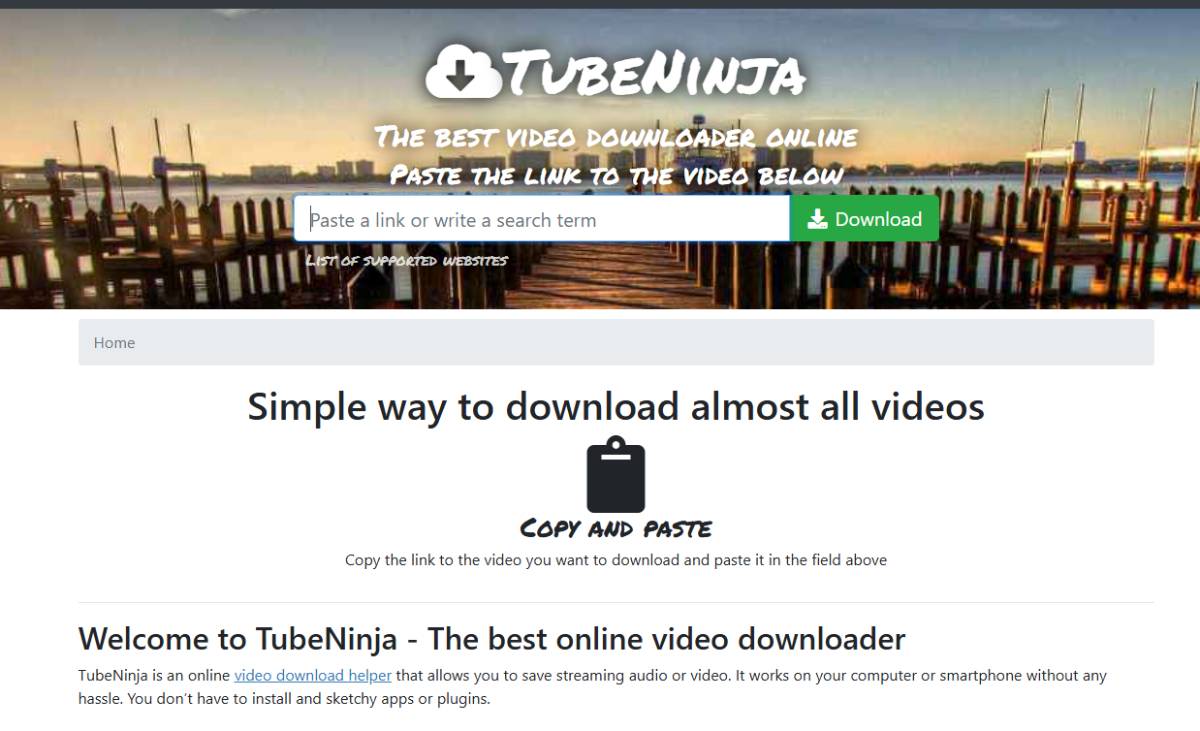
TubeNinja operates as an online media downloading service that enables users to save supported online videos and audio without requiring software installation.

July 22, 2026
|

TubeNinja continues to reflect growing consumer demand for flexible online media access by providing browser-based tools that facilitate video and audio downloads from supported platforms. As digital content consumption expands worldwide, web-based download utilities remain part of a broader conversation surrounding accessibility, convenience, and copyright compliance for users and businesses alike.

TubeNinja operates as an online media downloading service that enables users to save supported online videos and audio without requiring software installation. Its browser-based approach appeals to users seeking lightweight, cross-platform accessibility across desktops and mobile devices.

The platform reflects broader market demand for flexible media consumption beyond continuous internet connectivity. As streaming platforms dominate digital entertainment, complementary services that support offline viewing continue attracting interest. At the same time, businesses and consumers must navigate platform policies, licensing agreements, and intellectual property considerations when using such technologies, highlighting the balance between convenience and responsible digital content management.

The global digital entertainment industry has shifted dramatically toward streaming-first consumption across video, music, education, and social media platforms. However, demand for offline access remains significant, particularly in regions with inconsistent internet connectivity or limited mobile bandwidth. Browser-based download services have emerged to address these practical needs while offering simple, installation-free user experiences.

This trend aligns with the broader evolution of cloud-based utilities that prioritize accessibility and device compatibility. At the same time, digital platforms continue strengthening content protection mechanisms and licensing frameworks to safeguard creators' intellectual property and subscription-based business models.

For executives and technology leaders, the growth of online media utilities underscores the ongoing challenge of balancing consumer convenience, copyright protection, and evolving digital distribution strategies in an increasingly competitive content economy.

Technology analysts note that browser-based media utilities remain popular because they reduce software installation requirements and simplify access across multiple operating systems. Experts also observe that consumer demand for offline functionality continues despite the widespread availability of streaming services, particularly in emerging markets and enterprise learning environments.

Industry observers emphasize that media download technologies should be evaluated within applicable copyright laws and the terms of service established by content platforms. Digital rights specialists argue that content creators, distributors, and platform operators increasingly rely on licensing agreements and technological safeguards to protect intellectual property while expanding legitimate offline viewing options.

Many analysts believe future innovation will focus on authorized offline access, stronger rights management systems, and improved integration between streaming platforms and legitimate download capabilities.

For businesses operating in media, education, and digital publishing, offline accessibility remains an important consideration for improving user engagement and expanding audience reach. Organizations should evaluate solutions that comply with licensing requirements while meeting customer expectations for flexible content consumption.

Investors monitoring digital media infrastructure may view browser-based utility platforms as indicators of persistent demand for accessible web services. Meanwhile, regulators and policymakers continue balancing consumer interests with stronger enforcement of copyright protections and digital rights management standards.

Executives should closely monitor evolving regulations governing online content distribution, intellectual property, and platform accountability across global markets. As streaming ecosystems mature, future innovation is likely to emphasize authorized offline viewing, cloud synchronization, and AI-powered media management rather than unrestricted downloading. Decision-makers should monitor developments in copyright policy, platform licensing models, and digital rights technologies, as these factors will shape the next generation of online media accessibility and content distribution worldwide.

Source: AlternativeTo‍
Date: July 2026

  • Featured tools
Beautiful AI
Free

Beautiful AI is an AI-powered presentation platform that automates slide design and formatting, enabling users to create polished, on-brand presentations quickly.

#
Presentation
Learn more
WellSaid Ai
Free

WellSaid AI is an advanced text-to-speech platform that transforms written text into lifelike, human-quality voiceovers.

#
Text to Speech
Learn more

Learn more about future of AI

Join 80,000+ Ai enthusiast getting weekly updates on exciting AI tools.
Thank you! Your submission has been received!
Oops! Something went wrong while submitting the form.

TubeNinja Reshapes Media Download Tools

July 22, 2026

TubeNinja operates as an online media downloading service that enables users to save supported online videos and audio without requiring software installation.

TubeNinja continues to reflect growing consumer demand for flexible online media access by providing browser-based tools that facilitate video and audio downloads from supported platforms. As digital content consumption expands worldwide, web-based download utilities remain part of a broader conversation surrounding accessibility, convenience, and copyright compliance for users and businesses alike.

TubeNinja operates as an online media downloading service that enables users to save supported online videos and audio without requiring software installation. Its browser-based approach appeals to users seeking lightweight, cross-platform accessibility across desktops and mobile devices.

The platform reflects broader market demand for flexible media consumption beyond continuous internet connectivity. As streaming platforms dominate digital entertainment, complementary services that support offline viewing continue attracting interest. At the same time, businesses and consumers must navigate platform policies, licensing agreements, and intellectual property considerations when using such technologies, highlighting the balance between convenience and responsible digital content management.

The global digital entertainment industry has shifted dramatically toward streaming-first consumption across video, music, education, and social media platforms. However, demand for offline access remains significant, particularly in regions with inconsistent internet connectivity or limited mobile bandwidth. Browser-based download services have emerged to address these practical needs while offering simple, installation-free user experiences.

This trend aligns with the broader evolution of cloud-based utilities that prioritize accessibility and device compatibility. At the same time, digital platforms continue strengthening content protection mechanisms and licensing frameworks to safeguard creators' intellectual property and subscription-based business models.

For executives and technology leaders, the growth of online media utilities underscores the ongoing challenge of balancing consumer convenience, copyright protection, and evolving digital distribution strategies in an increasingly competitive content economy.

Technology analysts note that browser-based media utilities remain popular because they reduce software installation requirements and simplify access across multiple operating systems. Experts also observe that consumer demand for offline functionality continues despite the widespread availability of streaming services, particularly in emerging markets and enterprise learning environments.

Industry observers emphasize that media download technologies should be evaluated within applicable copyright laws and the terms of service established by content platforms. Digital rights specialists argue that content creators, distributors, and platform operators increasingly rely on licensing agreements and technological safeguards to protect intellectual property while expanding legitimate offline viewing options.

Many analysts believe future innovation will focus on authorized offline access, stronger rights management systems, and improved integration between streaming platforms and legitimate download capabilities.

For businesses operating in media, education, and digital publishing, offline accessibility remains an important consideration for improving user engagement and expanding audience reach. Organizations should evaluate solutions that comply with licensing requirements while meeting customer expectations for flexible content consumption.

Investors monitoring digital media infrastructure may view browser-based utility platforms as indicators of persistent demand for accessible web services. Meanwhile, regulators and policymakers continue balancing consumer interests with stronger enforcement of copyright protections and digital rights management standards.

Executives should closely monitor evolving regulations governing online content distribution, intellectual property, and platform accountability across global markets. As streaming ecosystems mature, future innovation is likely to emphasize authorized offline viewing, cloud synchronization, and AI-powered media management rather than unrestricted downloading. Decision-makers should monitor developments in copyright policy, platform licensing models, and digital rights technologies, as these factors will shape the next generation of online media accessibility and content distribution worldwide.

Source: AlternativeTo‍
Date: July 2026

Promote Your Tool

Copy Embed Code

Similar Blogs

July 22, 2026
|

iPiccy Powers Modern Visual Creation

iPiccy offers an online photo editing platform featuring tools for image enhancement, filters, retouching, collage creation, and basic graphic design.
Read more
July 22, 2026
|

InvisiProxy LTS Supports Secure Web Access

InvisiProxy LTS is associated with proxy-based web access technology that enables users to route internet requests through intermediary systems.
Read more
July 22, 2026
|

Gibiru Promotes Private Web Searching

Gibiru operates as a privacy-focused search engine designed to provide web search capabilities while emphasizing reduced user tracking compared with traditional search platforms.
Read more
July 22, 2026
|

WhatsMyName Powers Open-Source Intelligence

WhatsMyName enables investigators to search for publicly available usernames across a broad range of websites and online services, supporting open-source intelligence (OSINT) workflows used in cybersecurity, digital investigations, and threat analysis.
Read more
July 22, 2026
|

DrPython Powers Modern Python Coding

DrPython provides a dedicated Python development environment featuring syntax highlighting, code completion, integrated debugging support, project management.
Read more
July 22, 2026
|

AnimeOwl.net Powers Digital Anime Discovery

AnimeOwl.net functions as an online platform designed to help users browse and discover anime titles through searchable catalogs and organized content listings.
Read more