



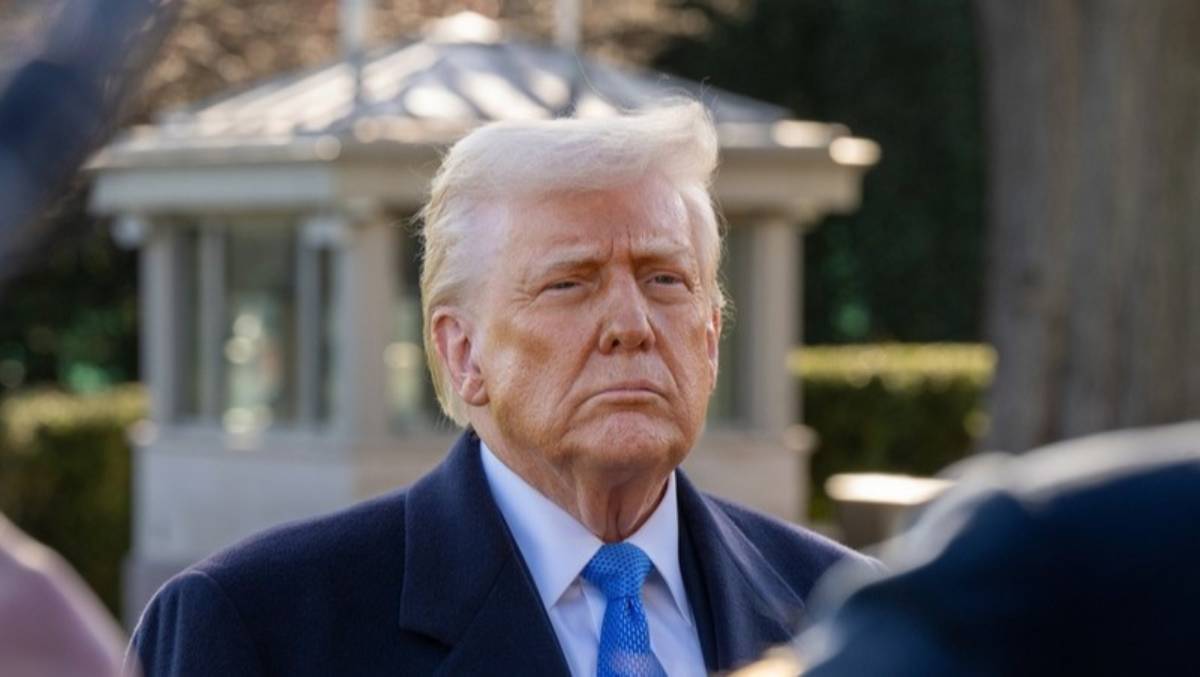
The Trump administration is preparing a new executive directive focused on artificial intelligence and cybersecurity, signaling a stronger federal push to secure advanced AI systems against emerging digital threats. The move highlights growing concern over national security risks tied to AI infrastructure, critical networks, and rapidly evolving cyber capabilities.
According to reports, President Donald Trump is expected to sign an executive directive aimed at strengthening cybersecurity protections surrounding advanced AI technologies and federal digital systems. The order is likely to emphasize coordination between government agencies, technology providers, and national-security officials.
The directive reportedly includes measures tied to AI system resilience, vulnerability testing, infrastructure security, and early access protocols for advanced models within government operations. Officials are also expected to focus on defending critical infrastructure from AI-enabled cyberattacks and foreign adversarial threats.
The policy initiative comes amid escalating geopolitical competition over AI leadership and increasing concern over the use of generative AI in cyber warfare, disinformation, and espionage operations. Artificial intelligence has rapidly become a strategic national-security priority for governments worldwide. As AI systems gain the ability to automate analysis, generate code, and enhance cyber operations, policymakers are increasingly treating AI infrastructure as a critical security asset.
The United States has intensified efforts over the past several years to maintain technological leadership while reducing vulnerabilities tied to foreign cyber threats. Concerns have expanded beyond conventional hacking to include AI-generated phishing campaigns, automated malware development, and attacks targeting critical infrastructure.
At the same time, governments are racing to define regulatory frameworks for frontier AI systems without slowing innovation. Washington’s approach has increasingly combined industrial policy, export controls, and national-security directives aimed at safeguarding domestic technological advantages.
The proposed executive action reflects a broader global shift where cybersecurity and AI governance are becoming deeply interconnected policy domains. Cybersecurity analysts argue that AI introduces both defensive and offensive capabilities at unprecedented scale. Security researchers note that generative AI systems can strengthen threat detection and incident response while simultaneously enabling more sophisticated cyberattacks by malicious actors.
National-security experts have warned that adversarial states could exploit frontier AI systems to accelerate intelligence gathering, infrastructure disruption, and information warfare. Some analysts believe governments will increasingly seek privileged access to advanced AI models for defense and emergency-response purposes.
Technology policy observers also point out that executive directives alone may not fully address long-term governance challenges without legislative support and international coordination. Industry leaders continue to advocate for balanced regulation that protects innovation while reducing systemic risks.
Overall, experts view the administration’s move as part of a wider transition toward AI being treated as a core strategic infrastructure sector. For businesses, the directive could increase cybersecurity compliance expectations for companies developing or deploying advanced AI systems. Cloud providers, defense contractors, semiconductor firms, and enterprise software companies may face tighter federal security coordination requirements.
Investors are likely to interpret the move as further evidence that AI security spending will become a long-term growth segment across both public and private sectors. Cybersecurity firms focused on AI threat detection and infrastructure protection could benefit from rising demand.
From a policy perspective, the directive may accelerate debate around government access to AI systems, data governance, and national-security oversight. Regulators and lawmakers will likely face pressure to define clearer accountability standards for frontier AI deployment.
The executive directive is expected to mark the beginning of broader federal AI security initiatives rather than a standalone action. Policymakers will likely pursue additional measures tied to infrastructure resilience, AI auditing, and public-private coordination. Business leaders and investors will closely monitor how aggressively Washington expands oversight while attempting to preserve US competitiveness in the global AI race.
Source: Bloomberg
Date: 21 May 2026


