



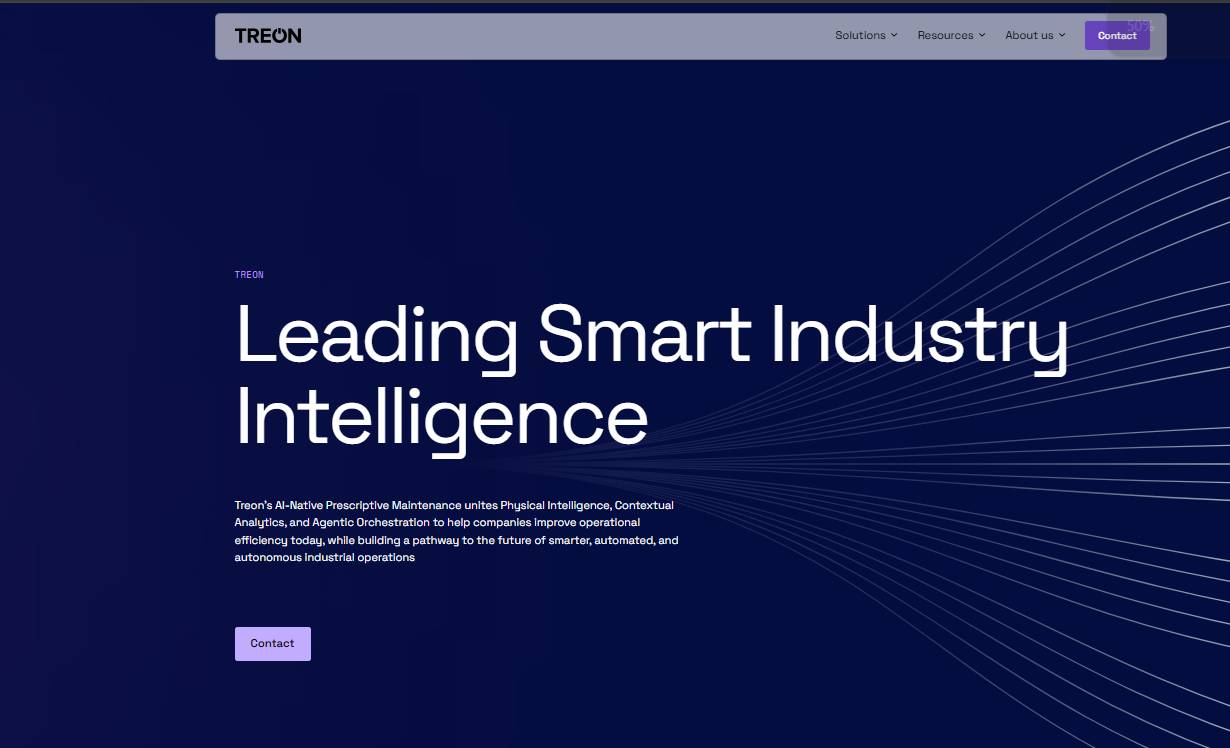
A major development is accelerating the industrial AI revolution as Finnish technology company Treon secures €6.8 million from ACME Capital to advance its factory intelligence platform. The funding highlights growing demand for AI-powered industrial solutions that help manufacturers optimize operations, improve efficiency, and transition toward smarter, data-driven production environments.
Treon has raised €6.8 million in funding led by ACME Capital to expand its industrial AI capabilities and strengthen its position in the smart manufacturing market. The company focuses on helping factories collect, analyze, and act on real-time operational data through AI-driven monitoring and intelligence solutions. The investment will support product development, market expansion, and partnerships with industrial customers.
Treon’s technology targets manufacturers seeking greater efficiency, predictive insights, and improved decision-making across production environments. The funding comes as industrial companies worldwide accelerate digital transformation initiatives and invest in automation technologies to remain competitive.
Manufacturing is entering a new era where artificial intelligence, automation, and connected systems are becoming essential components of industrial competitiveness. Traditional factories are increasingly adopting digital technologies to improve productivity, reduce downtime, and respond more quickly to market changes.
Industrial AI differs from consumer-focused AI applications by requiring highly reliable systems capable of operating in complex environments with strict performance requirements. Companies are investing in technologies that can transform large amounts of machine-generated data into actionable insights.
Treon’s growth reflects a broader movement toward Industry 4.0, where smart factories use sensors, analytics, and artificial intelligence to optimize every stage of production. Across Europe, manufacturers are also prioritizing digital resilience as they face supply chain disruptions, rising costs, and global competition.
Industry analysts see industrial AI as one of the next major growth areas within enterprise technology. While many organizations have adopted automation, experts believe the next competitive advantage will come from AI systems capable of understanding operational data and recommending real-time improvements.
Treon’s investment from ACME Capital signals investor confidence in technologies that bridge the gap between physical infrastructure and artificial intelligence. Unlike traditional software platforms, industrial AI solutions must deliver measurable outcomes, including reduced equipment failures, improved efficiency, and lower operational costs.
Technology leaders emphasize that successful industrial AI adoption will depend on integration with existing factory systems, cybersecurity protections, and workforce adaptation. Companies that can successfully combine AI intelligence with manufacturing expertise are expected to play a significant role in shaping future production models.
For manufacturers, Treon’s platform represents an opportunity to improve operational performance through predictive analytics and smarter decision-making. Businesses adopting industrial AI could achieve higher productivity, reduced maintenance costs, and improved resource efficiency.
Investors are increasingly focused on AI companies addressing real-world enterprise challenges rather than experimental applications. Industrial technology providers with measurable business impact may attract significant market interest.
From a policy perspective, industrial AI adoption supports broader goals around manufacturing competitiveness, digital transformation, and technological independence. Governments may continue encouraging smart factory initiatives while addressing challenges related to data security, workforce skills, and responsible AI deployment.
Treon’s latest funding provides momentum for expanding its industrial AI platform and strengthening partnerships with manufacturers. The company’s future success will depend on scaling adoption across global factories and demonstrating clear operational benefits. As industries move toward more intelligent production systems, AI-powered manufacturing platforms are expected to become critical infrastructure for companies seeking efficiency, resilience, and long-term competitiveness.
Source: Nordic Tech News
Date: July 2026


