
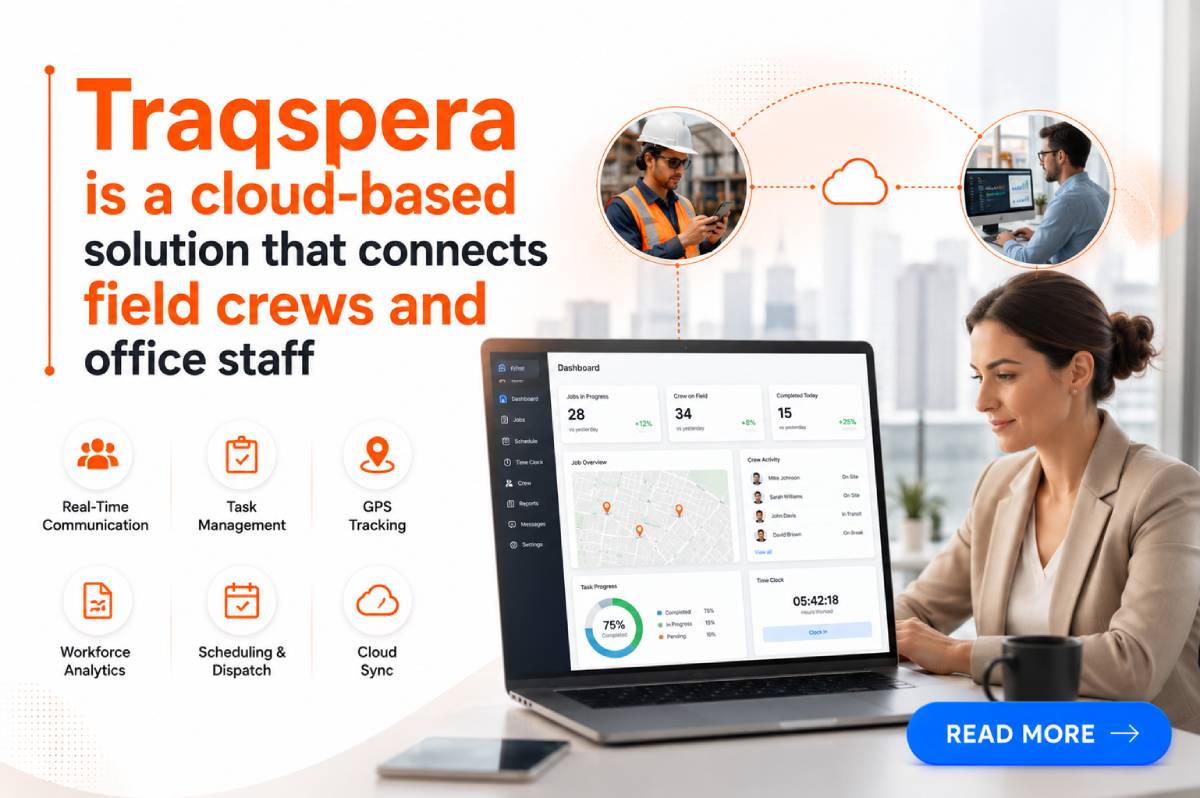
Traqspera Advances Cloud Workforce Management

Traqspera offers a comprehensive human capital management platform that integrates attendance tracking, leave administration, payroll processing, employee onboarding, performance management, expense claims, and workforce analytics within a unified cloud environment.

August 5, 2026
|

A significant development is reshaping workforce operations as Traqspera strengthens cloud-based workforce management through integrated attendance, payroll, leave, and employee lifecycle automation. The platform reflects the accelerating enterprise shift toward digital workforce management, enabling organizations to improve operational efficiency, compliance, and employee engagement across distributed business environments.

Traqspera offers a comprehensive human capital management platform that integrates attendance tracking, leave administration, payroll processing, employee onboarding, performance management, expense claims, and workforce analytics within a unified cloud environment. The platform supports automation of routine HR operations while improving visibility across the employee lifecycle.

Organizations are increasingly adopting centralized workforce management systems to reduce administrative workloads, enhance compliance, and improve employee self-service capabilities. Mobile accessibility, workflow automation, configurable approval processes, and real-time reporting enable enterprises to manage geographically dispersed teams more efficiently while supporting hybrid and remote work models.

Global enterprises continue accelerating digital transformation initiatives as workforce management becomes increasingly strategic to organizational performance. Human resources departments are moving beyond manual administrative functions toward intelligent platforms that integrate employee data, payroll, compliance, recruitment, and performance management within a single ecosystem.

Growing workforce mobility, hybrid work adoption, evolving labor regulations, and rising employee expectations have increased demand for cloud-native HR technologies. Organizations also require real-time workforce insights to improve planning, productivity, and employee retention while maintaining regulatory compliance.

Artificial intelligence, predictive analytics, and automation are becoming central components of modern workforce platforms, enabling businesses to optimize scheduling, automate repetitive tasks, identify workforce trends, and support data-driven decision-making. These broader industry developments position cloud workforce management as a critical component of enterprise digital modernization strategies.

Industry analysts believe integrated workforce management platforms are becoming essential infrastructure for organizations seeking operational agility and long-term talent competitiveness. Experts emphasize that unified HR ecosystems reduce administrative complexity while improving employee experience, workforce visibility, and executive decision-making.

Technology consultants increasingly recommend cloud-native solutions capable of integrating payroll, attendance, learning, performance management, and analytics into a single digital environment. Corporate HR leaders also view automation as a key enabler for reducing manual processes and allowing HR teams to focus on strategic workforce initiatives.

Although implementation priorities vary by industry, analysts consistently identify cybersecurity, regulatory compliance, interoperability, workforce analytics, and user adoption as the primary factors influencing successful HR technology investments. These capabilities are expected to define the next generation of enterprise workforce platforms.

For business executives, integrated workforce management platforms provide opportunities to improve productivity, reduce operational costs, strengthen compliance, and enhance employee satisfaction through automation and real-time workforce insights. Organizations can make faster strategic decisions while simplifying complex HR operations.

Investors continue monitoring the expanding human capital management market as enterprises increase technology spending on workforce modernization. Meanwhile, policymakers remain focused on labor compliance, employee privacy, AI governance, and responsible handling of workforce data. Organizations implementing advanced HR platforms must ensure transparency, security, and regulatory alignment alongside digital innovation.

Demand for cloud-based workforce management platforms is expected to grow as organizations accelerate digital transformation and adopt AI-driven HR technologies. Decision-makers should monitor advances in predictive workforce analytics, intelligent automation, cybersecurity standards, and changing labor regulations. Enterprises that successfully modernize workforce operations will be better positioned to improve productivity, strengthen employee engagement, and sustain long-term organizational resilience.

Source: Crozdesk
Date:
August 5, 2026

  • Featured tools
Hostinger Horizons
Freemium

Hostinger Horizons is an AI-powered platform that allows users to build and deploy custom web applications without writing code. It packs hosting, domain management and backend integration into a unified tool for rapid app creation.

#
Startup Tools
#
Coding
#
Project Management
Learn more
Outplay AI
Free

Outplay AI is a dynamic sales engagement platform combining AI-powered outreach, multi-channel automation, and performance tracking to help teams optimize conversion and pipeline generation.

#
Sales
Learn more

Learn more about future of AI

Join 80,000+ Ai enthusiast getting weekly updates on exciting AI tools.
Thank you! Your submission has been received!
Oops! Something went wrong while submitting the form.

Traqspera Advances Cloud Workforce Management

August 5, 2026

Traqspera offers a comprehensive human capital management platform that integrates attendance tracking, leave administration, payroll processing, employee onboarding, performance management, expense claims, and workforce analytics within a unified cloud environment.

A significant development is reshaping workforce operations as Traqspera strengthens cloud-based workforce management through integrated attendance, payroll, leave, and employee lifecycle automation. The platform reflects the accelerating enterprise shift toward digital workforce management, enabling organizations to improve operational efficiency, compliance, and employee engagement across distributed business environments.

Traqspera offers a comprehensive human capital management platform that integrates attendance tracking, leave administration, payroll processing, employee onboarding, performance management, expense claims, and workforce analytics within a unified cloud environment. The platform supports automation of routine HR operations while improving visibility across the employee lifecycle.

Organizations are increasingly adopting centralized workforce management systems to reduce administrative workloads, enhance compliance, and improve employee self-service capabilities. Mobile accessibility, workflow automation, configurable approval processes, and real-time reporting enable enterprises to manage geographically dispersed teams more efficiently while supporting hybrid and remote work models.

Global enterprises continue accelerating digital transformation initiatives as workforce management becomes increasingly strategic to organizational performance. Human resources departments are moving beyond manual administrative functions toward intelligent platforms that integrate employee data, payroll, compliance, recruitment, and performance management within a single ecosystem.

Growing workforce mobility, hybrid work adoption, evolving labor regulations, and rising employee expectations have increased demand for cloud-native HR technologies. Organizations also require real-time workforce insights to improve planning, productivity, and employee retention while maintaining regulatory compliance.

Artificial intelligence, predictive analytics, and automation are becoming central components of modern workforce platforms, enabling businesses to optimize scheduling, automate repetitive tasks, identify workforce trends, and support data-driven decision-making. These broader industry developments position cloud workforce management as a critical component of enterprise digital modernization strategies.

Industry analysts believe integrated workforce management platforms are becoming essential infrastructure for organizations seeking operational agility and long-term talent competitiveness. Experts emphasize that unified HR ecosystems reduce administrative complexity while improving employee experience, workforce visibility, and executive decision-making.

Technology consultants increasingly recommend cloud-native solutions capable of integrating payroll, attendance, learning, performance management, and analytics into a single digital environment. Corporate HR leaders also view automation as a key enabler for reducing manual processes and allowing HR teams to focus on strategic workforce initiatives.

Although implementation priorities vary by industry, analysts consistently identify cybersecurity, regulatory compliance, interoperability, workforce analytics, and user adoption as the primary factors influencing successful HR technology investments. These capabilities are expected to define the next generation of enterprise workforce platforms.

For business executives, integrated workforce management platforms provide opportunities to improve productivity, reduce operational costs, strengthen compliance, and enhance employee satisfaction through automation and real-time workforce insights. Organizations can make faster strategic decisions while simplifying complex HR operations.

Investors continue monitoring the expanding human capital management market as enterprises increase technology spending on workforce modernization. Meanwhile, policymakers remain focused on labor compliance, employee privacy, AI governance, and responsible handling of workforce data. Organizations implementing advanced HR platforms must ensure transparency, security, and regulatory alignment alongside digital innovation.

Demand for cloud-based workforce management platforms is expected to grow as organizations accelerate digital transformation and adopt AI-driven HR technologies. Decision-makers should monitor advances in predictive workforce analytics, intelligent automation, cybersecurity standards, and changing labor regulations. Enterprises that successfully modernize workforce operations will be better positioned to improve productivity, strengthen employee engagement, and sustain long-term organizational resilience.

Source: Crozdesk
Date:
August 5, 2026

Promote Your Tool

Copy Embed Code

Similar Blogs

August 5, 2026
|

DbVisualizer Enhances Database Management Analytics

DbVisualizer provides a unified environment for managing, analyzing, and interacting with multiple database technologies through a single interface.
Read more
August 5, 2026
|

Zoho Voice Advances Cloud Communication

Zoho Voice provides cloud-based business calling capabilities that enable organizations to manage voice communications through internet-powered infrastructure.
Read more
August 5, 2026
|

Grasshopper Strengthens Cloud Business Communication

Grasshopper provides virtual phone services that help small businesses establish professional communication channels through cloud-based calling, messaging, and business numbers.
Read more
August 5, 2026
|

LiveBinders Advances Digital Knowledge Management

LiveBinders continues expanding its role as a cloud-based platform that enables users to organize documents, web resources, multimedia, and presentations into structured digital binders.
Read more
August 5, 2026
|

Botdog Expands AI Customer Engagement

Botdog continues advancing intelligent chatbot technology designed to automate customer conversations across websites and digital platforms.
Read more
August 5, 2026
|

Zoho Calendar Strengthens Enterprise Scheduling

Zoho Calendar has emerged as an integral component of the broader Zoho productivity ecosystem, enabling organizations to centralize scheduling, meeting coordination, and shared calendar management.
Read more