
Tim Cook’s Legacy: AirPods and Touch Bar Era

The Verge podcast discussion examines Tim Cook’s legacy through major Apple product and design decisions, including AirPods expansion, the controversial Touch Bar era, and broader hardware evolution across Mac, iPhone, and services.

July 29, 2026
|
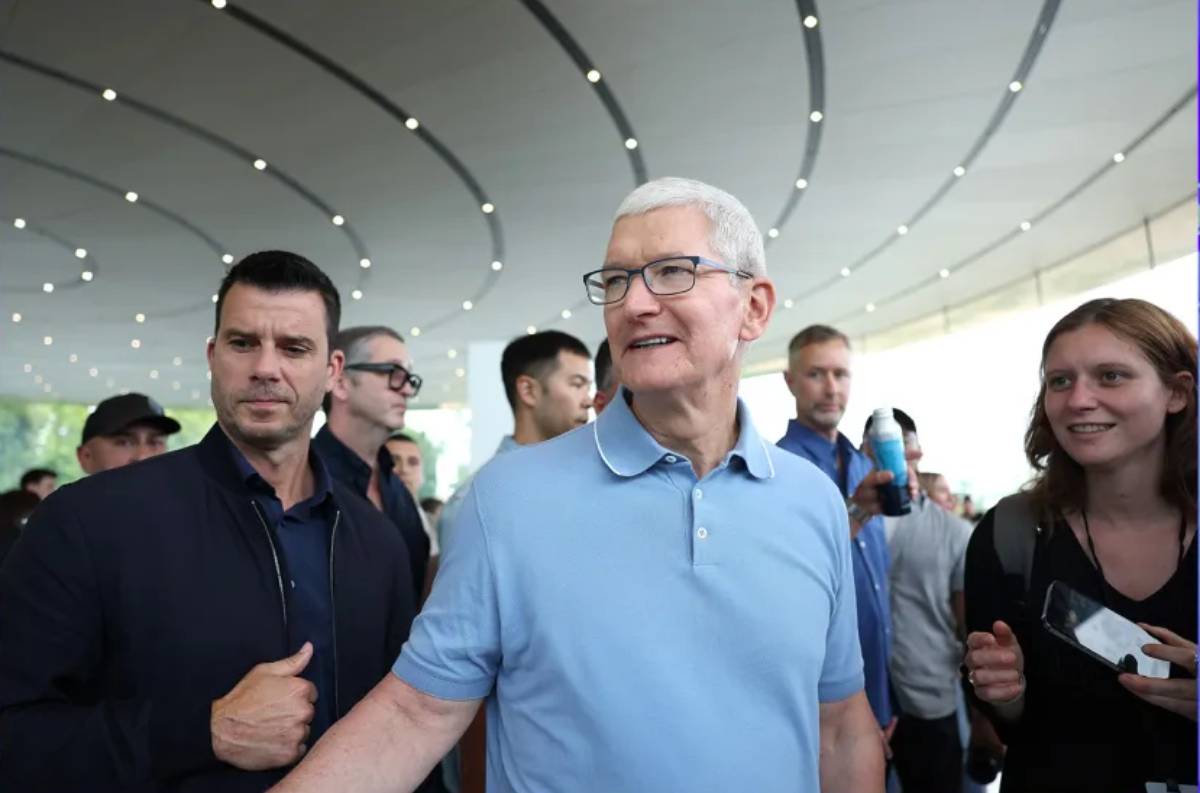
Image Source: The Verge Podcast

A strategic reflection is emerging on Tim Cook’s tenure at Apple as the company evaluates its long-term leadership transition and product legacy. The discussion highlights how key product decisions under Cook have reshaped Apple’s hardware strategy, global supply chain dominance, and ecosystem expansion, influencing both industry direction and executive succession planning.

The Verge podcast discussion examines Tim Cook’s legacy through major Apple product and design decisions, including AirPods expansion, the controversial Touch Bar era, and broader hardware evolution across Mac, iPhone, and services. It also frames potential leadership transition scenarios involving senior hardware executives such as John Ternus.

Cook’s tenure is characterized by operational excellence, supply chain optimization, and significant growth in Apple’s services business. However, some product experiments—such as the MacBook Touch Bar have been widely debated. The conversation also highlights how Apple’s product roadmap has shifted toward ecosystem integration, wearables, and services-driven recurring revenue models.

Tim Cook’s leadership era represents a structural transformation in Apple’s business model, moving from a primarily hardware-centric company under Steve Jobs to a deeply integrated hardware-services ecosystem. This shift has redefined Apple’s global market valuation and strategic positioning.

Under Cook, Apple expanded into wearables with AirPods and Apple Watch, while reinforcing its services division as a major revenue driver. At the same time, certain design and hardware decisions such as the butterfly keyboard and Touch Bar have been viewed as experimental departures from Apple’s traditional design conservatism.

The broader industry context includes intensifying competition in smartphones, regulatory scrutiny over platform ecosystems, and rising importance of subscription-based revenue. Apple’s leadership continuity is therefore not just a corporate matter but a key signal for global technology markets, supply chains, and consumer electronics innovation cycles.

Industry analysts generally view Tim Cook’s tenure as one of the most financially successful leadership periods in corporate technology history, marked by record market capitalization and strong operational scaling. However, they also note a more incremental innovation style compared to the disruptive product launches of earlier Apple eras.

Technology commentators emphasize that AirPods and Apple Watch represent some of the most successful category expansions in consumer electronics, reinforcing Apple’s dominance in wearable ecosystems. Conversely, product missteps like the Touch Bar are often cited as examples of experimental UI decisions that lacked long-term adoption.

While Apple executives rarely frame leadership transitions publicly, governance experts suggest that succession planning involving senior hardware leadership reflects a structured long-term continuity strategy. Analysts also highlight that Apple’s ecosystem strength reduces dependency on individual leadership cycles, though executive vision remains central to product direction.

For global businesses, Apple’s leadership narrative underscores the importance of ecosystem-driven strategy over single-product innovation. Companies increasingly prioritize integrated hardware, software, and services models to build long-term user retention and revenue stability.

For investors, Cook’s legacy reinforces Apple’s positioning as a mature but highly resilient growth platform, where incremental innovation and services expansion drive valuation. However, leadership transition risk remains a long-term strategic variable.

From a policy perspective, Apple’s ecosystem dominance continues to attract regulatory scrutiny in areas such as App Store governance, competition policy, and device interoperability. Leadership continuity will play a role in how Apple navigates these global regulatory pressures.

Looking ahead, attention will increasingly focus on Apple’s leadership succession planning and the next phase of product evolution in wearables, spatial computing, and AI-integrated devices. While Tim Cook’s legacy is firmly established, future strategy will depend on how Apple balances incremental innovation with potential category-defining breakthroughs. Investors and industry leaders will closely watch any signals regarding executive transition timelines.

Source: The Verge Podcast
Date: April 2026

  • Featured tools
Murf Ai
Free

Murf AI Review – Advanced AI Voice Generator for Realistic Voiceovers

#
Text to Speech
Learn more
Copy Ai
Free

Copy AI is one of the most popular AI writing tools designed to help professionals create high-quality content quickly. Whether you are a product manager drafting feature descriptions or a marketer creating ad copy, Copy AI can save hours of work while maintaining creativity and tone.

#
Copywriting
Learn more

Learn more about future of AI

Join 80,000+ Ai enthusiast getting weekly updates on exciting AI tools.
Thank you! Your submission has been received!
Oops! Something went wrong while submitting the form.

Tim Cook’s Legacy: AirPods and Touch Bar Era

July 29, 2026

The Verge podcast discussion examines Tim Cook’s legacy through major Apple product and design decisions, including AirPods expansion, the controversial Touch Bar era, and broader hardware evolution across Mac, iPhone, and services.

Image Source: The Verge Podcast

A strategic reflection is emerging on Tim Cook’s tenure at Apple as the company evaluates its long-term leadership transition and product legacy. The discussion highlights how key product decisions under Cook have reshaped Apple’s hardware strategy, global supply chain dominance, and ecosystem expansion, influencing both industry direction and executive succession planning.

The Verge podcast discussion examines Tim Cook’s legacy through major Apple product and design decisions, including AirPods expansion, the controversial Touch Bar era, and broader hardware evolution across Mac, iPhone, and services. It also frames potential leadership transition scenarios involving senior hardware executives such as John Ternus.

Cook’s tenure is characterized by operational excellence, supply chain optimization, and significant growth in Apple’s services business. However, some product experiments—such as the MacBook Touch Bar have been widely debated. The conversation also highlights how Apple’s product roadmap has shifted toward ecosystem integration, wearables, and services-driven recurring revenue models.

Tim Cook’s leadership era represents a structural transformation in Apple’s business model, moving from a primarily hardware-centric company under Steve Jobs to a deeply integrated hardware-services ecosystem. This shift has redefined Apple’s global market valuation and strategic positioning.

Under Cook, Apple expanded into wearables with AirPods and Apple Watch, while reinforcing its services division as a major revenue driver. At the same time, certain design and hardware decisions such as the butterfly keyboard and Touch Bar have been viewed as experimental departures from Apple’s traditional design conservatism.

The broader industry context includes intensifying competition in smartphones, regulatory scrutiny over platform ecosystems, and rising importance of subscription-based revenue. Apple’s leadership continuity is therefore not just a corporate matter but a key signal for global technology markets, supply chains, and consumer electronics innovation cycles.

Industry analysts generally view Tim Cook’s tenure as one of the most financially successful leadership periods in corporate technology history, marked by record market capitalization and strong operational scaling. However, they also note a more incremental innovation style compared to the disruptive product launches of earlier Apple eras.

Technology commentators emphasize that AirPods and Apple Watch represent some of the most successful category expansions in consumer electronics, reinforcing Apple’s dominance in wearable ecosystems. Conversely, product missteps like the Touch Bar are often cited as examples of experimental UI decisions that lacked long-term adoption.

While Apple executives rarely frame leadership transitions publicly, governance experts suggest that succession planning involving senior hardware leadership reflects a structured long-term continuity strategy. Analysts also highlight that Apple’s ecosystem strength reduces dependency on individual leadership cycles, though executive vision remains central to product direction.

For global businesses, Apple’s leadership narrative underscores the importance of ecosystem-driven strategy over single-product innovation. Companies increasingly prioritize integrated hardware, software, and services models to build long-term user retention and revenue stability.

For investors, Cook’s legacy reinforces Apple’s positioning as a mature but highly resilient growth platform, where incremental innovation and services expansion drive valuation. However, leadership transition risk remains a long-term strategic variable.

From a policy perspective, Apple’s ecosystem dominance continues to attract regulatory scrutiny in areas such as App Store governance, competition policy, and device interoperability. Leadership continuity will play a role in how Apple navigates these global regulatory pressures.

Looking ahead, attention will increasingly focus on Apple’s leadership succession planning and the next phase of product evolution in wearables, spatial computing, and AI-integrated devices. While Tim Cook’s legacy is firmly established, future strategy will depend on how Apple balances incremental innovation with potential category-defining breakthroughs. Investors and industry leaders will closely watch any signals regarding executive transition timelines.

Source: The Verge Podcast
Date: April 2026

Promote Your Tool

Copy Embed Code

Similar Blogs

July 29, 2026
|

EmulationStation Enhances Retro Gaming Experience

EmulationStation is a front-end interface designed to organize and present video game emulation libraries through a streamlined user experience.
Read more
July 29, 2026
|

Tomoson Expands Influencer Marketing Collaboration

Tomoson operates as an influencer marketing platform designed to help brands collaborate with content creators and manage promotional campaigns.
Read more
July 29, 2026
|

ZeroBin.net Advances Secure Data Sharing

ZeroBin.net operates as a privacy-oriented platform that allows users to share encrypted information through temporary digital channels.
Read more
July 29, 2026
|

Gaia Expands Digital Knowledge Access

Gaia operates within the broader category of digital platforms focused on information discovery, organization, and knowledge accessibility.
Read more
July 29, 2026
|

MailDrop Expands Privacy Email Solutions

MailDrop operates as a temporary email service designed to help users create disposable email addresses for online registrations and digital interactions.
Read more
July 29, 2026
|

MacX YouTube Downloader Enhances Video Management

MacX YouTube Downloader is a multimedia software solution designed to support video downloading, conversion, and management from online platforms.
Read more