
Switzerland Leads Circular Economy Push

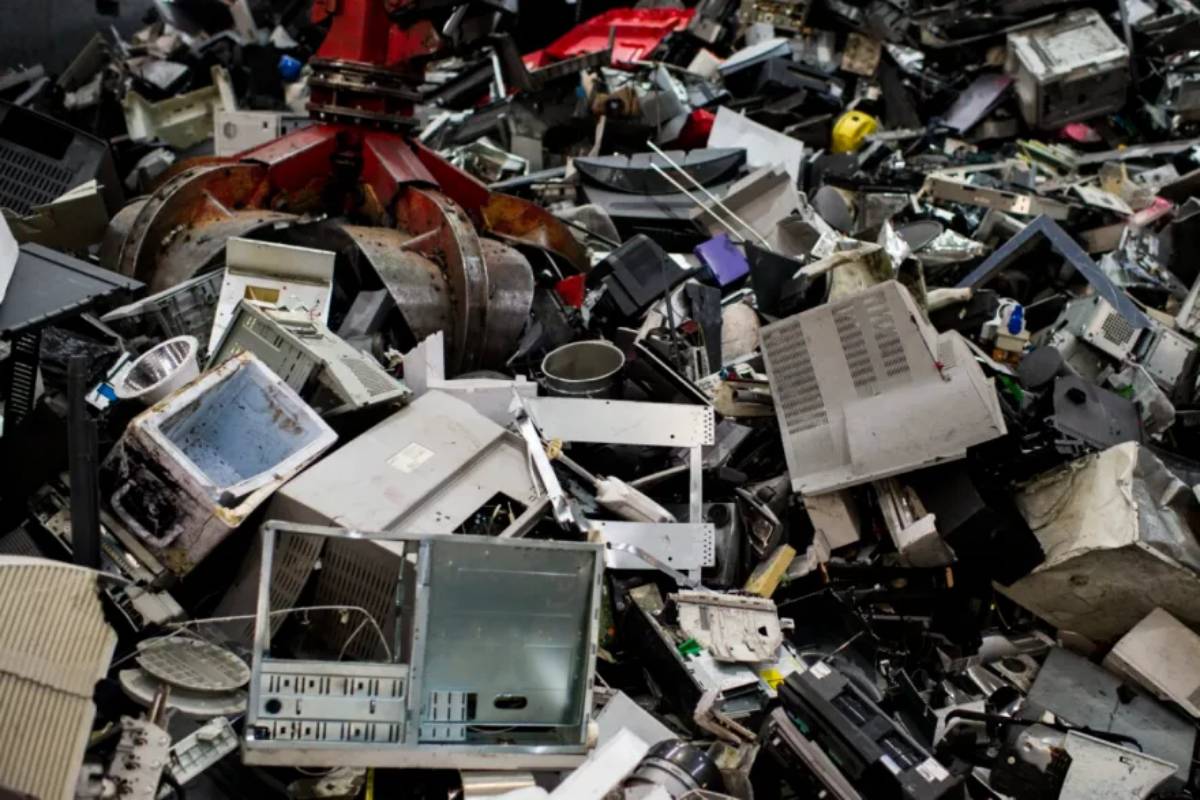
In Switzerland, national recycling systems processed more than 140,000 tonnes of electrical and electronic equipment, reflecting one of the highest per-capita e-waste recovery performances globally.

July 1, 2026
|

A significant sustainability milestone has been reported in Switzerland, where over 140,000 tonnes of electrical and electronic waste have been successfully recycled. The achievement underscores the country’s advanced circular economy framework and highlights growing global pressure on nations to manage escalating e-waste volumes through structured recovery and resource efficiency systems.

In Switzerland, national recycling systems processed more than 140,000 tonnes of electrical and electronic equipment, reflecting one of the highest per-capita e-waste recovery performances globally. The data, reported through national waste management and recycling channels, highlights strong participation from households, businesses, and certified collection networks.

The recycling system covers a broad range of devices, including consumer electronics, household appliances, and industrial equipment. The initiative is supported by established collection infrastructure and extended producer responsibility frameworks.

Authorities emphasize that the scale of recovery demonstrates both regulatory effectiveness and public compliance in managing rapidly growing electronic waste streams. The performance of Switzerland reflects a broader global challenge: the exponential rise of electronic waste driven by rapid technological turnover, shorter device lifecycles, and expanding digital consumption. E-waste is now one of the fastest-growing waste categories worldwide, creating environmental, regulatory, and resource scarcity concerns.

Switzerland has long positioned itself as a leader in environmental governance, supported by structured recycling systems and strong enforcement of producer responsibility. The country’s approach integrates collection networks, certified recyclers, and public awareness programs that encourage responsible disposal.

Globally, governments are increasingly prioritizing circular economy strategies to reduce dependence on raw material extraction and improve resource efficiency. This is particularly relevant for critical materials used in electronics, such as rare earth elements and precious metals. Switzerland’s high recovery rate serves as a benchmark for advanced economies seeking to strengthen sustainability frameworks.

Environmental policy analysts view the performance of Switzerland as evidence of “mature circular infrastructure,” where regulatory systems and consumer behavior are effectively aligned. Experts highlight that high recycling volumes are not only a function of technology but also of sustained institutional coordination and enforcement.

Commentators note that Switzerland’s extended producer responsibility model has been central to ensuring manufacturers contribute to end-of-life product management. This reduces landfill dependency and improves material recovery rates for valuable components.

While specific official quotes are not cited in the source material, sustainability observers emphasize that organizations such as Swissinfo have consistently reported on Switzerland’s leadership in environmental governance. Analysts further suggest that such systems are increasingly being studied by other developed economies seeking to replicate high-efficiency recycling ecosystems.

For manufacturers and electronics firms operating in Switzerland, the high recycling rate reinforces the importance of designing products with end-of-life recovery in mind. Compliance with strict recycling frameworks may influence supply chain decisions and product engineering strategies.

For investors, strong circular economy infrastructure signals long-term regulatory stability and reduced environmental risk exposure. It may also enhance opportunities in recycling technology, materials recovery, and sustainable supply chain services.

For policymakers globally, Switzerland’s model provides a reference point for scaling extended producer responsibility systems. It demonstrates how coordinated regulation, infrastructure investment, and public participation can significantly reduce environmental impact from electronic waste.

Looking ahead, Switzerland is expected to further refine its e-waste systems as electronic consumption continues to grow. Future priorities may include improving recovery efficiency for rare materials and integrating advanced sorting technologies.

As global e-waste volumes rise, Switzerland’s model may increasingly serve as a template for other nations seeking to strengthen circular economy resilience and resource sustainability frameworks.

Source: Swissinfo
Date: July 1, 2026

  • Featured tools
Writesonic AI
Free

Writesonic AI is a versatile AI writing platform designed for marketers, entrepreneurs, and content creators. It helps users create blog posts, ad copies, product descriptions, social media posts, and more with ease. With advanced AI models and user-friendly tools, Writesonic streamlines content production and saves time for busy professionals.

#
Copywriting
Learn more
Upscayl AI
Free

Upscayl AI is a free, open-source AI-powered tool that enhances and upscales images to higher resolutions. It transforms blurry or low-quality visuals into sharp, detailed versions with ease.

#
Productivity
Learn more

Learn more about future of AI

Join 80,000+ Ai enthusiast getting weekly updates on exciting AI tools.
Thank you! Your submission has been received!
Oops! Something went wrong while submitting the form.

Switzerland Leads Circular Economy Push

July 1, 2026

In Switzerland, national recycling systems processed more than 140,000 tonnes of electrical and electronic equipment, reflecting one of the highest per-capita e-waste recovery performances globally.

A significant sustainability milestone has been reported in Switzerland, where over 140,000 tonnes of electrical and electronic waste have been successfully recycled. The achievement underscores the country’s advanced circular economy framework and highlights growing global pressure on nations to manage escalating e-waste volumes through structured recovery and resource efficiency systems.

In Switzerland, national recycling systems processed more than 140,000 tonnes of electrical and electronic equipment, reflecting one of the highest per-capita e-waste recovery performances globally. The data, reported through national waste management and recycling channels, highlights strong participation from households, businesses, and certified collection networks.

The recycling system covers a broad range of devices, including consumer electronics, household appliances, and industrial equipment. The initiative is supported by established collection infrastructure and extended producer responsibility frameworks.

Authorities emphasize that the scale of recovery demonstrates both regulatory effectiveness and public compliance in managing rapidly growing electronic waste streams. The performance of Switzerland reflects a broader global challenge: the exponential rise of electronic waste driven by rapid technological turnover, shorter device lifecycles, and expanding digital consumption. E-waste is now one of the fastest-growing waste categories worldwide, creating environmental, regulatory, and resource scarcity concerns.

Switzerland has long positioned itself as a leader in environmental governance, supported by structured recycling systems and strong enforcement of producer responsibility. The country’s approach integrates collection networks, certified recyclers, and public awareness programs that encourage responsible disposal.

Globally, governments are increasingly prioritizing circular economy strategies to reduce dependence on raw material extraction and improve resource efficiency. This is particularly relevant for critical materials used in electronics, such as rare earth elements and precious metals. Switzerland’s high recovery rate serves as a benchmark for advanced economies seeking to strengthen sustainability frameworks.

Environmental policy analysts view the performance of Switzerland as evidence of “mature circular infrastructure,” where regulatory systems and consumer behavior are effectively aligned. Experts highlight that high recycling volumes are not only a function of technology but also of sustained institutional coordination and enforcement.

Commentators note that Switzerland’s extended producer responsibility model has been central to ensuring manufacturers contribute to end-of-life product management. This reduces landfill dependency and improves material recovery rates for valuable components.

While specific official quotes are not cited in the source material, sustainability observers emphasize that organizations such as Swissinfo have consistently reported on Switzerland’s leadership in environmental governance. Analysts further suggest that such systems are increasingly being studied by other developed economies seeking to replicate high-efficiency recycling ecosystems.

For manufacturers and electronics firms operating in Switzerland, the high recycling rate reinforces the importance of designing products with end-of-life recovery in mind. Compliance with strict recycling frameworks may influence supply chain decisions and product engineering strategies.

For investors, strong circular economy infrastructure signals long-term regulatory stability and reduced environmental risk exposure. It may also enhance opportunities in recycling technology, materials recovery, and sustainable supply chain services.

For policymakers globally, Switzerland’s model provides a reference point for scaling extended producer responsibility systems. It demonstrates how coordinated regulation, infrastructure investment, and public participation can significantly reduce environmental impact from electronic waste.

Looking ahead, Switzerland is expected to further refine its e-waste systems as electronic consumption continues to grow. Future priorities may include improving recovery efficiency for rare materials and integrating advanced sorting technologies.

As global e-waste volumes rise, Switzerland’s model may increasingly serve as a template for other nations seeking to strengthen circular economy resilience and resource sustainability frameworks.

Source: Swissinfo
Date: July 1, 2026

Promote Your Tool

Copy Embed Code

Similar Blogs

July 1, 2026
|

Ireland EU Presidency Influences Switzerland

As Ireland takes on influence within the EU policy cycle, its presidency is expected to help steer discussions across key strategic areas affecting non-EU partners such as Switzerland.
Read more
July 1, 2026
|

Swiss Traditions Face Climate Pressure

The Swiss Yodelling Festival in Basel concluded with a large-scale parade that proceeded despite unusually high temperatures affecting the region.
Read more
July 1, 2026
|

Zurich Opera for All Draws

The initiative hosted at the Zurich Opera House welcomed nearly 15,000 attendees under its “Opera House for All” program, designed to open traditionally exclusive cultural spaces to a broader public audience.
Read more
July 1, 2026
|

Palantir Signals Compliance Shift Ruling

Palantir Technologies has formally accepted a legal ruling arising from its dispute with Swiss investigative magazine Republik.
Read more
July 1, 2026
|

Switzerland Faces Extended Climate Stress

Meteorological data from Switzerland confirms that several weather stations have surpassed previous records for consecutive days of extreme heat.
Read more
July 1, 2026
|

Switzerland Leads Circular Economy Push

In Switzerland, national recycling systems processed more than 140,000 tonnes of electrical and electronic equipment, reflecting one of the highest per-capita e-waste recovery performances globally.
Read more