
Swiss Victory Overshadowed By Viral

Switzerland secured a victory over Algeria in a World Cup fixture, strengthening its position in the tournament standings and energising its fan base.

July 29, 2026
|
Image Source:  Swissinfo

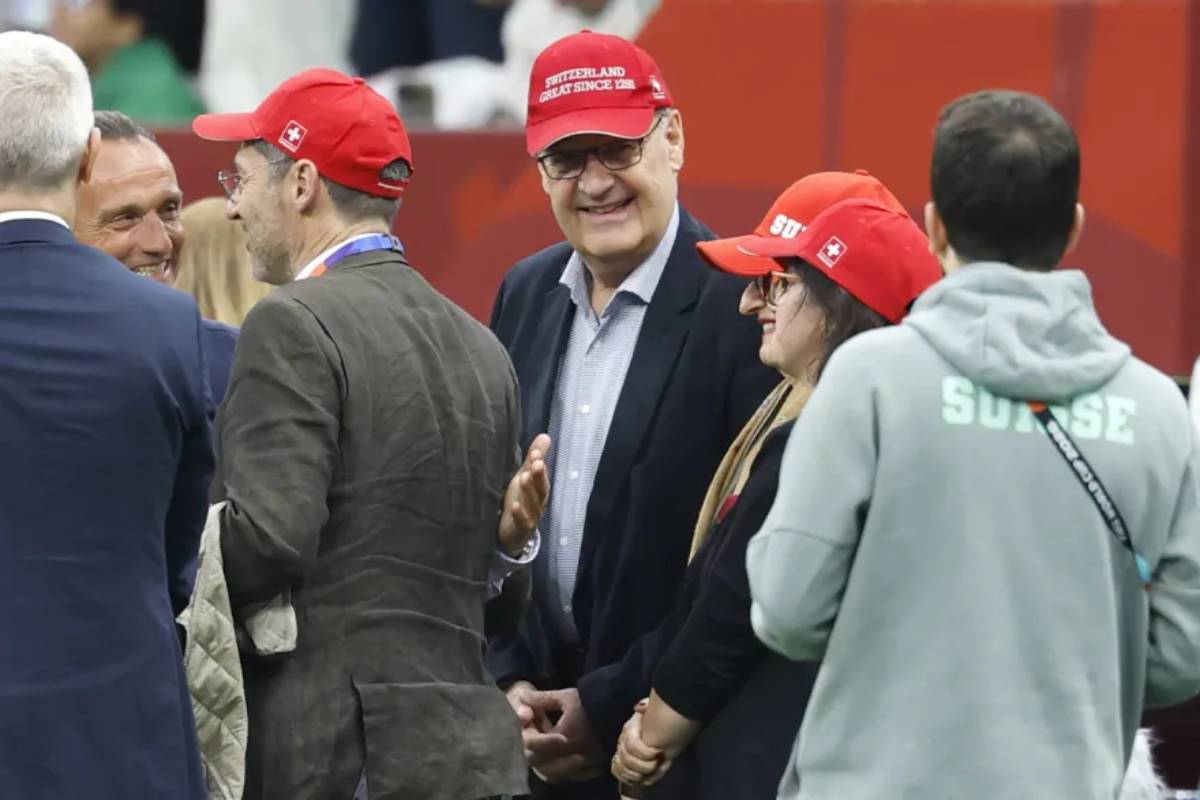
Switzerland’s World Cup win against Algeria delivered a strong sporting result, but global attention quickly shifted to a viral moment involving the Swiss president’s cap. The incident highlights how political symbolism and media virality can sometimes eclipse sporting outcomes, amplifying visibility for national leaders in unexpected digital narratives.

Switzerland secured a victory over Algeria in a World Cup fixture, strengthening its position in the tournament standings and energising its fan base. However, post-match coverage was dominated by an unexpected moment involving Swiss President Alain Berset, whose distinctive cap drew widespread social media attention.

Images and clips of the president supporting the national team circulated rapidly online, triggering global commentary that extended beyond the match itself. While the sporting outcome remained significant for Switzerland’s campaign, digital engagement metrics showed that the viral political moment generated even higher international visibility than the game result.

International football tournaments increasingly function as hybrid platforms where sport, politics, and digital culture intersect. National leaders attending major sporting events often become symbolic figures, representing state identity on a global stage.

Switzerland’s presence in the World Cup reflects its growing sporting competitiveness, but equally important is the role of public diplomacy through sports engagement. Political leaders attending matches is not new, but the social media era amplifies every visual detail, turning minor stylistic elements into global talking points.

This trend reflects a broader shift in how global audiences consume sports content, where moments off the pitch can rival on-field performances in attention value. Governments and public figures increasingly recognise the strategic communication potential of such appearances.

Media analysts note that modern sports coverage is increasingly driven by “attention economics,” where viral moments can outweigh match results in global visibility. Experts argue that political figures attending international sporting events now operate within a hybrid media environment shaped by real-time social amplification.

Communication strategists highlight that visual symbols such as clothing, gestures, or seating presence can significantly influence public perception, often independent of intent. In this case, the president’s appearance became a focal point for online engagement, demonstrating the unpredictable nature of digital narratives.

Sports sociologists also observe that national identity is increasingly performed through both athletic achievement and political representation, blurring traditional boundaries between sport and statecraft.

For governments, the incident underscores the importance of managing digital optics during high-visibility global events. Even informal appearances by political leaders can become viral assets or reputational risks.

For media and broadcasting organisations, it reinforces the shift toward real-time, multi-platform content ecosystems where secondary narratives can outperform primary event coverage.

For brands and sponsors, the development highlights the value of associating with moments that generate organic engagement beyond the core sporting action. Analysts suggest that attention fragmentation will continue to reshape how global audiences engage with international sports and political symbolism.

As global sporting events continue, the intersection of politics, sport, and social media will likely intensify. Future tournaments may see more deliberate media strategy from political figures attending matches. However, unpredictability will remain a defining factor, with viral moments often emerging spontaneously and reshaping narratives within minutes of occurrence.

Source: Swissinfo
Date: 2026

  • Featured tools
Symphony Ayasdi AI
Free

SymphonyAI Sensa is an AI-powered surveillance and financial crime detection platform that surfaces hidden risk behavior through explainable, AI-driven analytics.

#
Finance
Learn more
Kreateable AI
Free

Kreateable AI is a white-label, AI-driven design platform that enables logo generation, social media posts, ads, and more for businesses, agencies, and service providers.

#
Logo Generator
Learn more

Learn more about future of AI

Join 80,000+ Ai enthusiast getting weekly updates on exciting AI tools.
Thank you! Your submission has been received!
Oops! Something went wrong while submitting the form.

Swiss Victory Overshadowed By Viral

July 29, 2026

Switzerland secured a victory over Algeria in a World Cup fixture, strengthening its position in the tournament standings and energising its fan base.

Image Source:  Swissinfo

Switzerland’s World Cup win against Algeria delivered a strong sporting result, but global attention quickly shifted to a viral moment involving the Swiss president’s cap. The incident highlights how political symbolism and media virality can sometimes eclipse sporting outcomes, amplifying visibility for national leaders in unexpected digital narratives.

Switzerland secured a victory over Algeria in a World Cup fixture, strengthening its position in the tournament standings and energising its fan base. However, post-match coverage was dominated by an unexpected moment involving Swiss President Alain Berset, whose distinctive cap drew widespread social media attention.

Images and clips of the president supporting the national team circulated rapidly online, triggering global commentary that extended beyond the match itself. While the sporting outcome remained significant for Switzerland’s campaign, digital engagement metrics showed that the viral political moment generated even higher international visibility than the game result.

International football tournaments increasingly function as hybrid platforms where sport, politics, and digital culture intersect. National leaders attending major sporting events often become symbolic figures, representing state identity on a global stage.

Switzerland’s presence in the World Cup reflects its growing sporting competitiveness, but equally important is the role of public diplomacy through sports engagement. Political leaders attending matches is not new, but the social media era amplifies every visual detail, turning minor stylistic elements into global talking points.

This trend reflects a broader shift in how global audiences consume sports content, where moments off the pitch can rival on-field performances in attention value. Governments and public figures increasingly recognise the strategic communication potential of such appearances.

Media analysts note that modern sports coverage is increasingly driven by “attention economics,” where viral moments can outweigh match results in global visibility. Experts argue that political figures attending international sporting events now operate within a hybrid media environment shaped by real-time social amplification.

Communication strategists highlight that visual symbols such as clothing, gestures, or seating presence can significantly influence public perception, often independent of intent. In this case, the president’s appearance became a focal point for online engagement, demonstrating the unpredictable nature of digital narratives.

Sports sociologists also observe that national identity is increasingly performed through both athletic achievement and political representation, blurring traditional boundaries between sport and statecraft.

For governments, the incident underscores the importance of managing digital optics during high-visibility global events. Even informal appearances by political leaders can become viral assets or reputational risks.

For media and broadcasting organisations, it reinforces the shift toward real-time, multi-platform content ecosystems where secondary narratives can outperform primary event coverage.

For brands and sponsors, the development highlights the value of associating with moments that generate organic engagement beyond the core sporting action. Analysts suggest that attention fragmentation will continue to reshape how global audiences engage with international sports and political symbolism.

As global sporting events continue, the intersection of politics, sport, and social media will likely intensify. Future tournaments may see more deliberate media strategy from political figures attending matches. However, unpredictability will remain a defining factor, with viral moments often emerging spontaneously and reshaping narratives within minutes of occurrence.

Source: Swissinfo
Date: 2026

Promote Your Tool

Copy Embed Code

Similar Blogs

July 29, 2026
|

EmulationStation Enhances Retro Gaming Experience

EmulationStation is a front-end interface designed to organize and present video game emulation libraries through a streamlined user experience.
Read more
July 29, 2026
|

Tomoson Expands Influencer Marketing Collaboration

Tomoson operates as an influencer marketing platform designed to help brands collaborate with content creators and manage promotional campaigns.
Read more
July 29, 2026
|

ZeroBin.net Advances Secure Data Sharing

ZeroBin.net operates as a privacy-oriented platform that allows users to share encrypted information through temporary digital channels.
Read more
July 29, 2026
|

Gaia Expands Digital Knowledge Access

Gaia operates within the broader category of digital platforms focused on information discovery, organization, and knowledge accessibility.
Read more
July 29, 2026
|

MailDrop Expands Privacy Email Solutions

MailDrop operates as a temporary email service designed to help users create disposable email addresses for online registrations and digital interactions.
Read more
July 29, 2026
|

MacX YouTube Downloader Enhances Video Management

MacX YouTube Downloader is a multimedia software solution designed to support video downloading, conversion, and management from online platforms.
Read more