



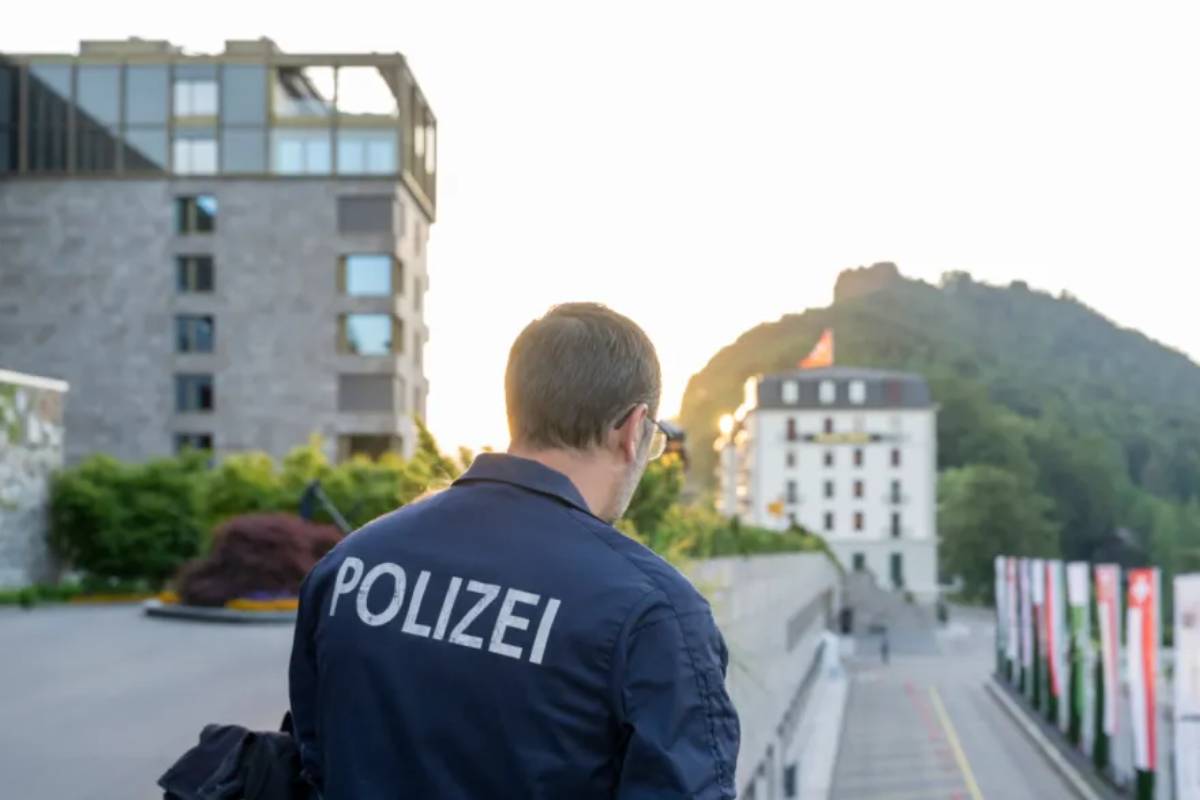
Swiss authorities have expressed satisfaction with the overall security performance during the high-profile Bürgenstock diplomatic summit. The event, which brought together international stakeholders for sensitive discussions, was conducted without major incidents, reinforcing Switzerland’s reputation as a secure and stable venue for global diplomacy and high-level negotiations.
The Canton of Nidwalden and Swiss federal authorities have concluded that security arrangements during the Bürgenstock summit were highly effective. The summit required extensive coordination between local law enforcement, federal security agencies, and international protection units to ensure the safety of delegates and surrounding infrastructure.
Authorities reported that the operation proceeded smoothly, with no significant disruptions recorded throughout the event. The large-scale security deployment included traffic management, restricted access zones, surveillance operations, and coordination with private security partners at the venue.
The summit brought significant logistical demands to the region, including temporary restrictions on public access and the redirection of hotel and transport services. Despite these constraints, officials described the execution as efficient and well-managed.
The development aligns with a broader trend across global markets where high-level diplomatic summits are increasingly hosted in secure, neutral, and privately managed venues. Switzerland, in particular, has long positioned itself as a global hub for international negotiations due to its political neutrality and strong security infrastructure.
The Bürgenstock summit is part of a continuing pattern of Switzerland hosting sensitive diplomatic engagements involving multiple global stakeholders. These events require advanced coordination between cantonal authorities, federal agencies, and international security services.
Historically, Switzerland has hosted numerous peace talks and multilateral discussions, reinforcing its role as a trusted intermediary in global diplomacy. The increasing complexity of modern geopolitical tensions has further elevated the importance of secure and controlled environments for international dialogue.
At the same time, such events place significant operational pressure on local infrastructure, requiring careful balancing between public access, tourism, and security imperatives.
Security analysts note that Switzerland’s ability to successfully manage large-scale diplomatic security operations reinforces its global reputation as a reliable host for international summits. The absence of major incidents is often viewed as a key indicator of operational success in such high-risk environments.
Governance experts highlight that multi-agency coordination is essential for events of this scale, particularly when multiple international delegations are involved. The Bürgenstock summit is seen as an example of effective collaboration between local and federal authorities.
Political observers emphasize that Switzerland’s neutrality plays a critical role in enabling it to host sensitive negotiations, as it reduces perceived bias and enhances trust among participating parties.
Security policy specialists also point out that modern summit protection increasingly relies on integrated systems combining physical security, digital surveillance, and intelligence sharing across jurisdictions.
Tourism and hospitality analysts add that while such events create short-term disruptions, they often enhance the long-term prestige of host locations, strengthening their positioning in the global events and luxury travel markets.
For Switzerland, the successful execution of the summit reinforces its strategic value as a global diplomatic hub, potentially attracting future high-profile negotiations and international events.
For the hospitality and tourism sector, the event demonstrates both opportunity and disruption, as security requirements can temporarily limit commercial activity while simultaneously boosting global visibility.
For policymakers, the outcome highlights the importance of continued investment in security infrastructure and inter-agency coordination capabilities to support large-scale international engagements.
For global stakeholders, Switzerland’s performance strengthens confidence in its ability to host sensitive negotiations in a stable and secure environment. Switzerland is likely to continue serving as a preferred location for international diplomatic summits, particularly as geopolitical complexity increases. Future events may require even more advanced security coordination and infrastructure planning.
Decision-makers should monitor how Switzerland evolves its summit hosting framework, particularly in balancing security efficiency with economic and tourism impacts. The Bürgenstock outcome reinforces its long-term positioning in global diplomacy.
Source: Swissinfo
Date: June 25, 2026


