
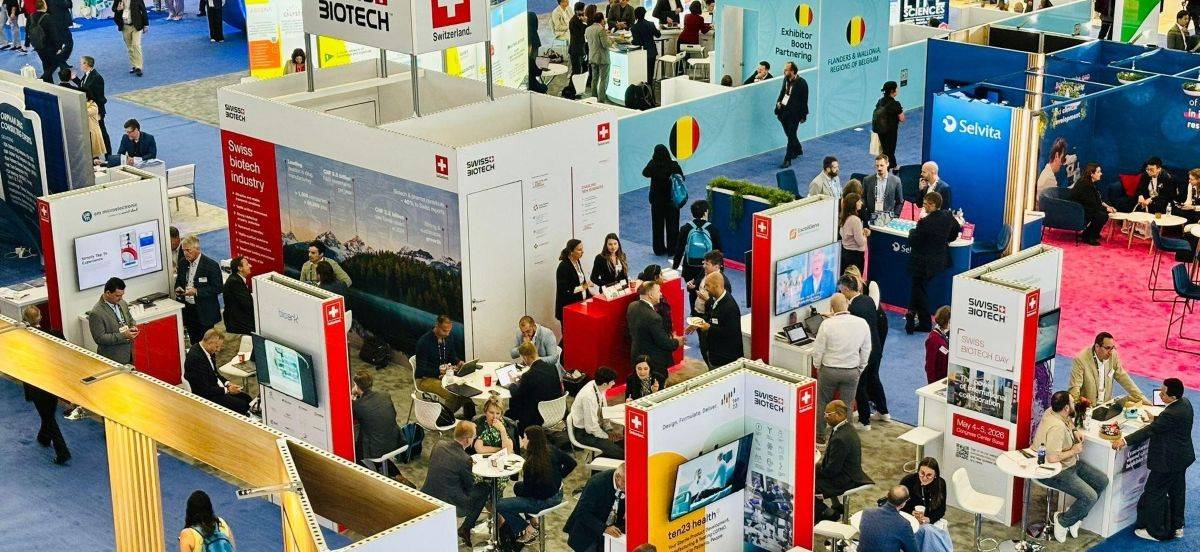
Swiss Biotech Firms Showcase Innovation at BIO 2026

Swiss biotechnology companies took center stage at BIO 2026 in San Diego, presenting advancements across drug development, precision medicine, and biologics.

June 22, 2026
|
Image Source: StartupTicker

A strong Swiss presence was showcased at BIO International Convention 2026, where leading biotech firms presented next-generation innovations in therapeutics, diagnostics, and life sciences. The participation underscores Switzerland’s growing influence in global biotech innovation, with implications for cross-border partnerships, investment flows, and the future of healthcare technologies.

Swiss biotechnology companies took center stage at BIO 2026 in San Diego, presenting advancements across drug development, precision medicine, and biologics. The delegation included startups and established firms seeking global partnerships, licensing deals, and investor engagement.

Key discussions focused on accelerating clinical pipelines, expanding access to international capital, and strengthening transatlantic research collaborations. Swiss firms highlighted innovations in rare disease treatment, AI-driven drug discovery, and next-generation biologics manufacturing.

The event served as a strategic platform for deal-making, with increased interest from U.S. pharmaceutical companies and venture investors seeking early-stage biotech assets from Europe’s innovation ecosystems.

The strong Swiss presence at BIO 2026 reflects the country’s long-standing position as a global hub for life sciences and pharmaceutical innovation. Switzerland’s biotech sector benefits from a dense ecosystem of universities, research institutes, and globally recognized pharmaceutical leaders, making it a consistent exporter of high-value medical innovation.

Globally, the biotechnology industry is experiencing rapid transformation driven by AI-enabled drug discovery, precision medicine, and advanced biologics manufacturing. International conferences such as BIO serve as critical junctions where capital, research, and commercialization strategies converge.

Historically, Swiss biotech firms have relied on international events to access U.S. markets and secure late-stage funding. The 2026 participation reflects a continuation of this strategy, but with increasing emphasis on platform technologies, scalable therapies, and digital health integration signaling a shift from niche research outputs to globally competitive biotech solutions.

Industry analysts note that Swiss biotech participation at BIO 2026 demonstrates sustained investor confidence in the country’s life sciences pipeline. Experts emphasize that Switzerland’s strength lies in its early-stage innovation density and strong translational research capabilities.

A biotech investment strategist commented that “Swiss companies consistently outperform in scientific rigor, making them attractive acquisition and licensing targets for global pharma players.” While official corporate statements at the event highlighted partnership opportunities, the broader industry narrative centered on collaboration and capital scaling.

Healthcare innovation consultants also point to growing convergence between AI and biotech, with Swiss firms increasingly adopting machine learning models to accelerate drug discovery timelines. This shift is expected to reshape competitive dynamics in global pharmaceutical development, particularly in oncology, neurology, and rare diseases.

For global pharmaceutical companies, Swiss biotech innovation represents a critical source of early-stage pipelines and breakthrough therapies. The BIO 2026 showcase is likely to strengthen cross-border licensing agreements and M&A activity in the sector.

Investors may see increased opportunities in Swiss startups specializing in AI-driven drug discovery and precision medicine platforms. For policymakers, the event reinforces the importance of sustained R&D funding, intellectual property protection, and international collaboration frameworks.

At a broader level, the integration of AI and biotech is expected to reshape healthcare delivery models, potentially improving treatment efficiency while increasing competitive pressure across global pharmaceutical markets.

Looking ahead, Swiss biotech firms are expected to deepen partnerships formed at BIO 2026, particularly with U.S.-based pharmaceutical companies and venture capital investors. Key areas to watch include AI-enabled therapeutics, scalable biologics manufacturing, and rare disease innovation.

However, challenges remain around regulatory alignment, clinical trial scalability, and funding competition. The sector’s trajectory will depend on how effectively Swiss innovators convert scientific breakthroughs into globally scalable commercial therapies.

Source: StartupTicker
Date: June 22, 2026

  • Featured tools
Alli AI
Free

Alli AI is an all-in-one, AI-powered SEO automation platform that streamlines on-page optimization, site auditing, speed improvements, schema generation, internal linking, and ranking insights.

#
SEO
Learn more
Ai Fiesta
Paid

AI Fiesta is an all-in-one productivity platform that gives users access to multiple leading AI models through a single interface. It includes features like prompt enhancement, image generation, audio transcription and side-by-side model comparison.

#
Copywriting
#
Art Generator
Learn more

Learn more about future of AI

Join 80,000+ Ai enthusiast getting weekly updates on exciting AI tools.
Thank you! Your submission has been received!
Oops! Something went wrong while submitting the form.

Swiss Biotech Firms Showcase Innovation at BIO 2026

June 22, 2026

Swiss biotechnology companies took center stage at BIO 2026 in San Diego, presenting advancements across drug development, precision medicine, and biologics.

Image Source: StartupTicker

A strong Swiss presence was showcased at BIO International Convention 2026, where leading biotech firms presented next-generation innovations in therapeutics, diagnostics, and life sciences. The participation underscores Switzerland’s growing influence in global biotech innovation, with implications for cross-border partnerships, investment flows, and the future of healthcare technologies.

Swiss biotechnology companies took center stage at BIO 2026 in San Diego, presenting advancements across drug development, precision medicine, and biologics. The delegation included startups and established firms seeking global partnerships, licensing deals, and investor engagement.

Key discussions focused on accelerating clinical pipelines, expanding access to international capital, and strengthening transatlantic research collaborations. Swiss firms highlighted innovations in rare disease treatment, AI-driven drug discovery, and next-generation biologics manufacturing.

The event served as a strategic platform for deal-making, with increased interest from U.S. pharmaceutical companies and venture investors seeking early-stage biotech assets from Europe’s innovation ecosystems.

The strong Swiss presence at BIO 2026 reflects the country’s long-standing position as a global hub for life sciences and pharmaceutical innovation. Switzerland’s biotech sector benefits from a dense ecosystem of universities, research institutes, and globally recognized pharmaceutical leaders, making it a consistent exporter of high-value medical innovation.

Globally, the biotechnology industry is experiencing rapid transformation driven by AI-enabled drug discovery, precision medicine, and advanced biologics manufacturing. International conferences such as BIO serve as critical junctions where capital, research, and commercialization strategies converge.

Historically, Swiss biotech firms have relied on international events to access U.S. markets and secure late-stage funding. The 2026 participation reflects a continuation of this strategy, but with increasing emphasis on platform technologies, scalable therapies, and digital health integration signaling a shift from niche research outputs to globally competitive biotech solutions.

Industry analysts note that Swiss biotech participation at BIO 2026 demonstrates sustained investor confidence in the country’s life sciences pipeline. Experts emphasize that Switzerland’s strength lies in its early-stage innovation density and strong translational research capabilities.

A biotech investment strategist commented that “Swiss companies consistently outperform in scientific rigor, making them attractive acquisition and licensing targets for global pharma players.” While official corporate statements at the event highlighted partnership opportunities, the broader industry narrative centered on collaboration and capital scaling.

Healthcare innovation consultants also point to growing convergence between AI and biotech, with Swiss firms increasingly adopting machine learning models to accelerate drug discovery timelines. This shift is expected to reshape competitive dynamics in global pharmaceutical development, particularly in oncology, neurology, and rare diseases.

For global pharmaceutical companies, Swiss biotech innovation represents a critical source of early-stage pipelines and breakthrough therapies. The BIO 2026 showcase is likely to strengthen cross-border licensing agreements and M&A activity in the sector.

Investors may see increased opportunities in Swiss startups specializing in AI-driven drug discovery and precision medicine platforms. For policymakers, the event reinforces the importance of sustained R&D funding, intellectual property protection, and international collaboration frameworks.

At a broader level, the integration of AI and biotech is expected to reshape healthcare delivery models, potentially improving treatment efficiency while increasing competitive pressure across global pharmaceutical markets.

Looking ahead, Swiss biotech firms are expected to deepen partnerships formed at BIO 2026, particularly with U.S.-based pharmaceutical companies and venture capital investors. Key areas to watch include AI-enabled therapeutics, scalable biologics manufacturing, and rare disease innovation.

However, challenges remain around regulatory alignment, clinical trial scalability, and funding competition. The sector’s trajectory will depend on how effectively Swiss innovators convert scientific breakthroughs into globally scalable commercial therapies.

Source: StartupTicker
Date: June 22, 2026

Promote Your Tool

Copy Embed Code

Similar Blogs

June 22, 2026
|

AI Reliability Crisis Deepens Amid Errors

The KPMG report, intended to analyze the benefits and risks of artificial intelligence adoption, reportedly included factual inconsistencies attributed to AI-generated content.
Read more
June 22, 2026
|

Skene Raises €800K for Agents

Skene has raised €800,000 in pre-seed funding to advance its AI-driven “code-reading agents” designed to help software products automatically teach users how to use them.
Read more
June 22, 2026
|

eMabler Secures EV Charging Funding Boost

eMabler has secured $5.5 million in Series A funding to expand its EV charging API platform, designed to integrate charging functionality directly into third-party mobility and energy systems.
Read more
June 22, 2026
|

GitHits Secures Funding for AI Code Search

GitHits has secured $1.5 million in pre-seed funding to advance its AI-driven code search platform designed to reduce inaccurate or “hallucinated” code suggestions generated by large language models.
Read more
June 22, 2026
|

Nordic Capital Reshapes SME Finance Stack

Nordic Capital has reportedly completed a strategic consolidation involving SME-focused fintech platforms, combining digital lending infrastructure with scalable financial services capabilities.
Read more
June 22, 2026
|

Norwegian Maritime Robotics Secures Funding Boost

Maritime Robotics has secured €28 million in fresh capital to scale its autonomous vessel technology, aimed at expanding unmanned operations across commercial and defense maritime sectors.
Read more