
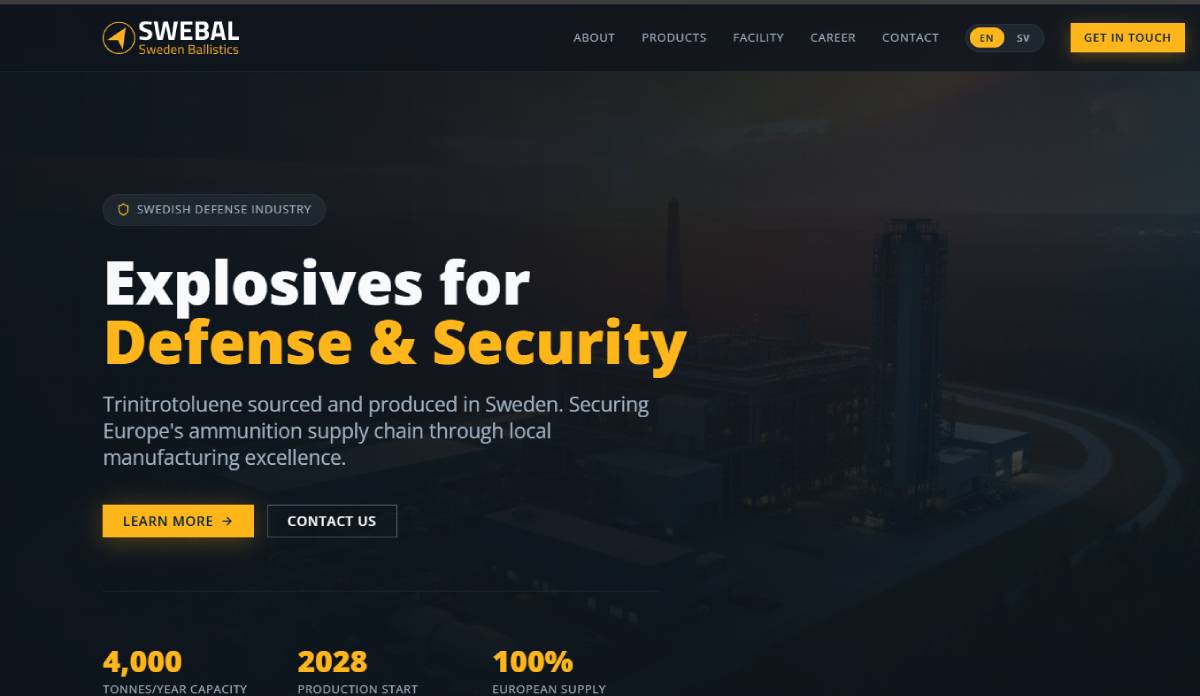
SWEBAL Funding Strengthens Defence Supply Chains

SWEBAL’s €30 million funding round focuses on expanding capabilities linked to explosives production, a crucial but often overlooked component of modern defence infrastructure.

July 9, 2026
|

A major development in Europe’s defence technology sector is emerging as SWEBAL secures €30 million to strengthen explosives manufacturing and supply chain capabilities. The investment highlights a critical shift in defence innovation, where resilience, industrial capacity, and secure access to strategic materials are becoming as important as advanced weapons systems and digital technologies.

SWEBAL’s €30 million funding round focuses on expanding capabilities linked to explosives production, a crucial but often overlooked component of modern defence infrastructure. The company aims to address growing demand for reliable defence supply chains amid rising geopolitical tensions.

The investment comes as European governments and defence companies seek greater independence in critical manufacturing areas. Stakeholders include defence contractors, investors, policymakers, and security organisations focused on strengthening regional production capacity.

The funding reflects a broader move toward rebuilding industrial capabilities, reducing external dependencies, and ensuring stable access to essential defence materials during periods of heightened global uncertainty.

The development aligns with a broader trend across global markets where defence resilience is becoming a strategic priority. Recent geopolitical conflicts have exposed vulnerabilities in military supply chains, particularly around ammunition, explosives, raw materials, and specialised manufacturing capabilities.

For decades, defence innovation has focused heavily on advanced technologies such as artificial intelligence, autonomous systems, and cybersecurity. However, recent events have demonstrated that traditional industrial foundations remain essential for national security.

Europe has increasingly prioritised strengthening domestic defence production to reduce reliance on external suppliers and improve readiness. Investments such as SWEBAL’s funding round reflect a changing defence landscape where industrial capacity is viewed as a critical security asset.

The intersection of manufacturing, technology, and defence strategy is creating new opportunities for companies operating within essential supply chains. Defence analysts increasingly argue that modern military strength depends on both technological superiority and reliable industrial ecosystems. Experts note that advanced defence systems cannot operate effectively without secure access to fundamental components, including ammunition and specialised materials.

Industry observers suggest that investments in companies like SWEBAL represent a broader shift in European defence thinking. Instead of focusing only on next-generation platforms, governments and investors are paying greater attention to production capacity, supply chain security, and manufacturing scalability.

Officials across Europe have emphasised the importance of strengthening domestic defence industries amid changing security conditions. While technological innovation remains central, analysts believe that companies capable of solving supply chain challenges could become strategic partners for governments and defence organisations.

For defence companies and investors, SWEBAL’s funding highlights growing opportunities within critical manufacturing sectors. Businesses involved in materials, industrial automation, logistics, and security infrastructure may see increased demand as governments prioritise supply chain resilience.

Policymakers may use such investments to support domestic defence capabilities and reduce dependency on international suppliers. However, expanding defence manufacturing will require balancing strategic priorities with regulatory oversight, environmental considerations, and responsible production practices.

For global executives, the message is clear: defence competitiveness increasingly depends on the strength of underlying industrial networks, not only technological breakthroughs. Supply chain security is becoming a core component of national and corporate strategy.

SWEBAL’s expansion reflects a wider transformation in Europe’s defence ecosystem, where industrial readiness is becoming a central security priority. Future developments will depend on whether the company can scale production, attract additional partnerships, and support long-term defence supply needs. As geopolitical pressures continue, investors and policymakers will closely monitor companies strengthening the foundations of modern defence infrastructure.

Source: Nordic Tech News
Date: July 2026

  • Featured tools
Twistly AI
Paid

Twistly AI is a PowerPoint add-in that allows users to generate full slide decks, improve existing presentations, and convert various content types into polished slides directly within Microsoft PowerPoint.It streamlines presentation creation using AI-powered text analysis, image generation and content conversion.

#
Presentation
Learn more
Ai Fiesta
Paid

AI Fiesta is an all-in-one productivity platform that gives users access to multiple leading AI models through a single interface. It includes features like prompt enhancement, image generation, audio transcription and side-by-side model comparison.

#
Copywriting
#
Art Generator
Learn more

Learn more about future of AI

Join 80,000+ Ai enthusiast getting weekly updates on exciting AI tools.
Thank you! Your submission has been received!
Oops! Something went wrong while submitting the form.

SWEBAL Funding Strengthens Defence Supply Chains

July 9, 2026

SWEBAL’s €30 million funding round focuses on expanding capabilities linked to explosives production, a crucial but often overlooked component of modern defence infrastructure.

A major development in Europe’s defence technology sector is emerging as SWEBAL secures €30 million to strengthen explosives manufacturing and supply chain capabilities. The investment highlights a critical shift in defence innovation, where resilience, industrial capacity, and secure access to strategic materials are becoming as important as advanced weapons systems and digital technologies.

SWEBAL’s €30 million funding round focuses on expanding capabilities linked to explosives production, a crucial but often overlooked component of modern defence infrastructure. The company aims to address growing demand for reliable defence supply chains amid rising geopolitical tensions.

The investment comes as European governments and defence companies seek greater independence in critical manufacturing areas. Stakeholders include defence contractors, investors, policymakers, and security organisations focused on strengthening regional production capacity.

The funding reflects a broader move toward rebuilding industrial capabilities, reducing external dependencies, and ensuring stable access to essential defence materials during periods of heightened global uncertainty.

The development aligns with a broader trend across global markets where defence resilience is becoming a strategic priority. Recent geopolitical conflicts have exposed vulnerabilities in military supply chains, particularly around ammunition, explosives, raw materials, and specialised manufacturing capabilities.

For decades, defence innovation has focused heavily on advanced technologies such as artificial intelligence, autonomous systems, and cybersecurity. However, recent events have demonstrated that traditional industrial foundations remain essential for national security.

Europe has increasingly prioritised strengthening domestic defence production to reduce reliance on external suppliers and improve readiness. Investments such as SWEBAL’s funding round reflect a changing defence landscape where industrial capacity is viewed as a critical security asset.

The intersection of manufacturing, technology, and defence strategy is creating new opportunities for companies operating within essential supply chains. Defence analysts increasingly argue that modern military strength depends on both technological superiority and reliable industrial ecosystems. Experts note that advanced defence systems cannot operate effectively without secure access to fundamental components, including ammunition and specialised materials.

Industry observers suggest that investments in companies like SWEBAL represent a broader shift in European defence thinking. Instead of focusing only on next-generation platforms, governments and investors are paying greater attention to production capacity, supply chain security, and manufacturing scalability.

Officials across Europe have emphasised the importance of strengthening domestic defence industries amid changing security conditions. While technological innovation remains central, analysts believe that companies capable of solving supply chain challenges could become strategic partners for governments and defence organisations.

For defence companies and investors, SWEBAL’s funding highlights growing opportunities within critical manufacturing sectors. Businesses involved in materials, industrial automation, logistics, and security infrastructure may see increased demand as governments prioritise supply chain resilience.

Policymakers may use such investments to support domestic defence capabilities and reduce dependency on international suppliers. However, expanding defence manufacturing will require balancing strategic priorities with regulatory oversight, environmental considerations, and responsible production practices.

For global executives, the message is clear: defence competitiveness increasingly depends on the strength of underlying industrial networks, not only technological breakthroughs. Supply chain security is becoming a core component of national and corporate strategy.

SWEBAL’s expansion reflects a wider transformation in Europe’s defence ecosystem, where industrial readiness is becoming a central security priority. Future developments will depend on whether the company can scale production, attract additional partnerships, and support long-term defence supply needs. As geopolitical pressures continue, investors and policymakers will closely monitor companies strengthening the foundations of modern defence infrastructure.

Source: Nordic Tech News
Date: July 2026

Promote Your Tool

Copy Embed Code

Similar Blogs

July 9, 2026
|

Swiss Investors Drive Corporate Accountability

Swiss shareholders are becoming increasingly assertive at annual general meetings, using their voting power to challenge corporate leadership and influence business direction.
Read more
July 9, 2026
|

Zurich Beazley Acquisition Reshapes Insurance Strategy

The European Commission has cleared Zurich Insurance Group’s planned acquisition of Beazley, removing a key regulatory hurdle for the transaction. Beazley, a London-based specialist insurer.
Read more
July 9, 2026
|

Sapient Perception Unlocks Drone AI Intelligence

Sapient Perception’s €2 million funding round will accelerate the development of AI technologies designed to interpret complex drone imagery at scale.
Read more
July 9, 2026
|

NanoStruct Revolutionizes Food Safety Testing

NanoStruct is developing advanced testing solutions designed to help food factories identify harmful pathogens more quickly than conventional laboratory methods.
Read more
July 9, 2026
|

Switzerland Heatwave Alert Signals Climate Risks

Swiss federal authorities have issued warnings regarding a new period of extreme heat, advising the population to take preventive measures, particularly vulnerable groups such as elderly citizens and people with existing health risks.
Read more
July 9, 2026
|

Moleculent Funding Unlocks Cellular Intelligence

Moleculent’s $20 million funding round will support the company’s efforts to expand its platform for analysing cellular interactions and biological processes.
Read more