



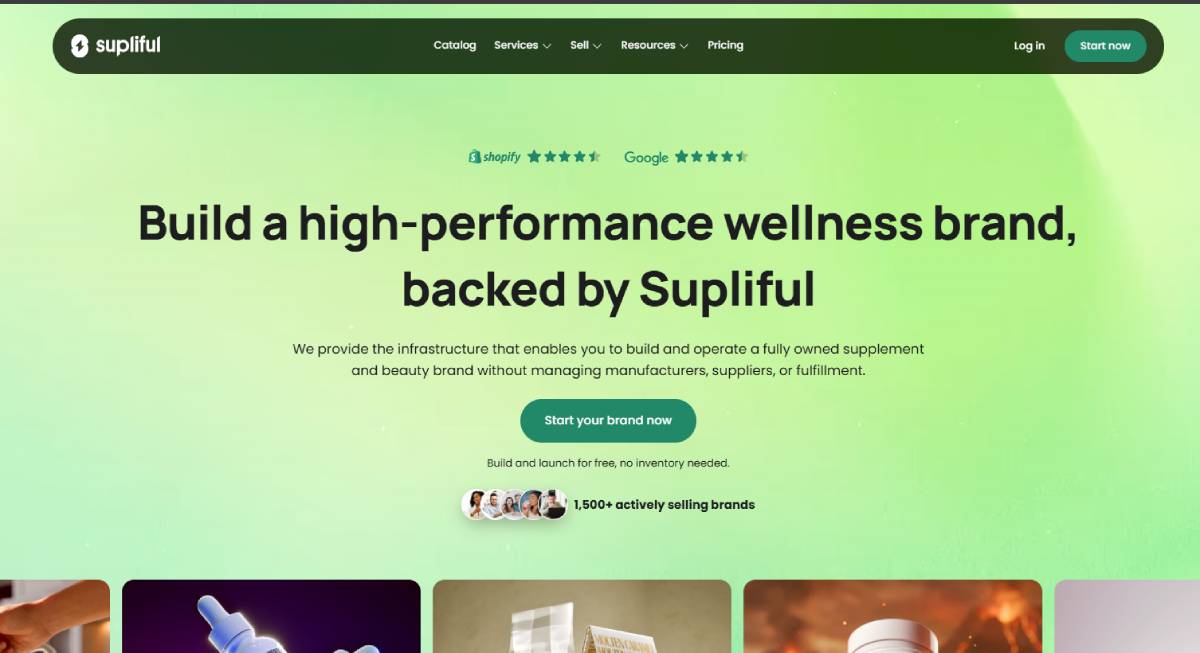
Supliful is reshaping the creator commerce landscape by enabling entrepreneurs, influencers, and businesses to launch branded products through automated fulfillment solutions. The platform reflects a growing shift toward digital entrepreneurship, allowing users to create, sell, and manage custom products without traditional inventory challenges while responding to rising demand for flexible e-commerce models.
Supliful provides a platform that connects creators and businesses with product sourcing, customization, and fulfillment capabilities. The solution enables users to develop branded products, manage online sales, and streamline order delivery through an integrated digital workflow. Key stakeholders include content creators, e-commerce entrepreneurs, online retailers, and consumer brands seeking scalable business models.
The platform aligns with the expansion of the creator economy, where individuals and small businesses are increasingly building direct-to-consumer brands. By reducing operational barriers such as inventory management and logistics complexity, Supliful supports entrepreneurs looking to enter competitive online markets with lower upfront investment.
The global e-commerce industry is undergoing a significant transformation as creators, entrepreneurs, and small businesses increasingly seek independent revenue opportunities outside traditional retail structures. The rise of social media platforms and digital marketplaces has accelerated demand for tools that simplify product creation, branding, and distribution.
Print-on-demand and fulfillment technologies have become important drivers of this movement by allowing businesses to test products, reduce inventory risks, and scale operations more efficiently. Supliful operates within this broader trend by combining product development, fulfillment, and digital commerce capabilities into a single platform.
As consumer preferences continue shifting toward personalized products and authentic brand experiences, businesses are exploring new models that connect creators directly with audiences. This evolution is reshaping how products are developed, marketed, and delivered globally.
Industry analysts suggest that creator-driven commerce will remain a major growth area as digital platforms enable more individuals to build independent brands. Experts highlight that fulfillment automation can help entrepreneurs focus on marketing, customer relationships, and product innovation rather than complex supply chain operations.
Market observers note that successful e-commerce platforms are increasingly differentiating themselves through speed, customization options, and integrated business tools. While specific executive statements regarding Supliful are unavailable, broader industry trends indicate strong demand for solutions that reduce barriers to entrepreneurship.
The platform represents a wider shift toward decentralized commerce, where individuals and smaller businesses can compete with established brands by leveraging digital tools, online communities, and automated infrastructure.
For businesses and entrepreneurs, Supliful could provide opportunities to launch products faster, reduce operational complexity, and experiment with new revenue streams. Small brands and creators may benefit from easier access to manufacturing and fulfillment capabilities traditionally available only to larger companies.
Investors may view creator commerce platforms as part of the expanding digital economy, supported by increasing online shopping adoption and personalized consumer demand. Customers benefit from greater product variety and unique brand experiences.
From a policy perspective, companies operating in this space must consider consumer protection, product quality standards, data privacy, and cross-border commerce regulations as digital entrepreneurship continues expanding worldwide.
The creator economy is expected to continue evolving through automation, artificial intelligence, and advanced e-commerce technologies. Platforms like Supliful are positioned within a market where entrepreneurs increasingly seek flexible ways to build global brands. Decision-makers should monitor trends in personalized products, digital marketplaces, and automated supply chains as businesses continue adapting to a more decentralized and technology-driven commerce environment.
Source: Crozdesk
Date: August 5, 2026


