
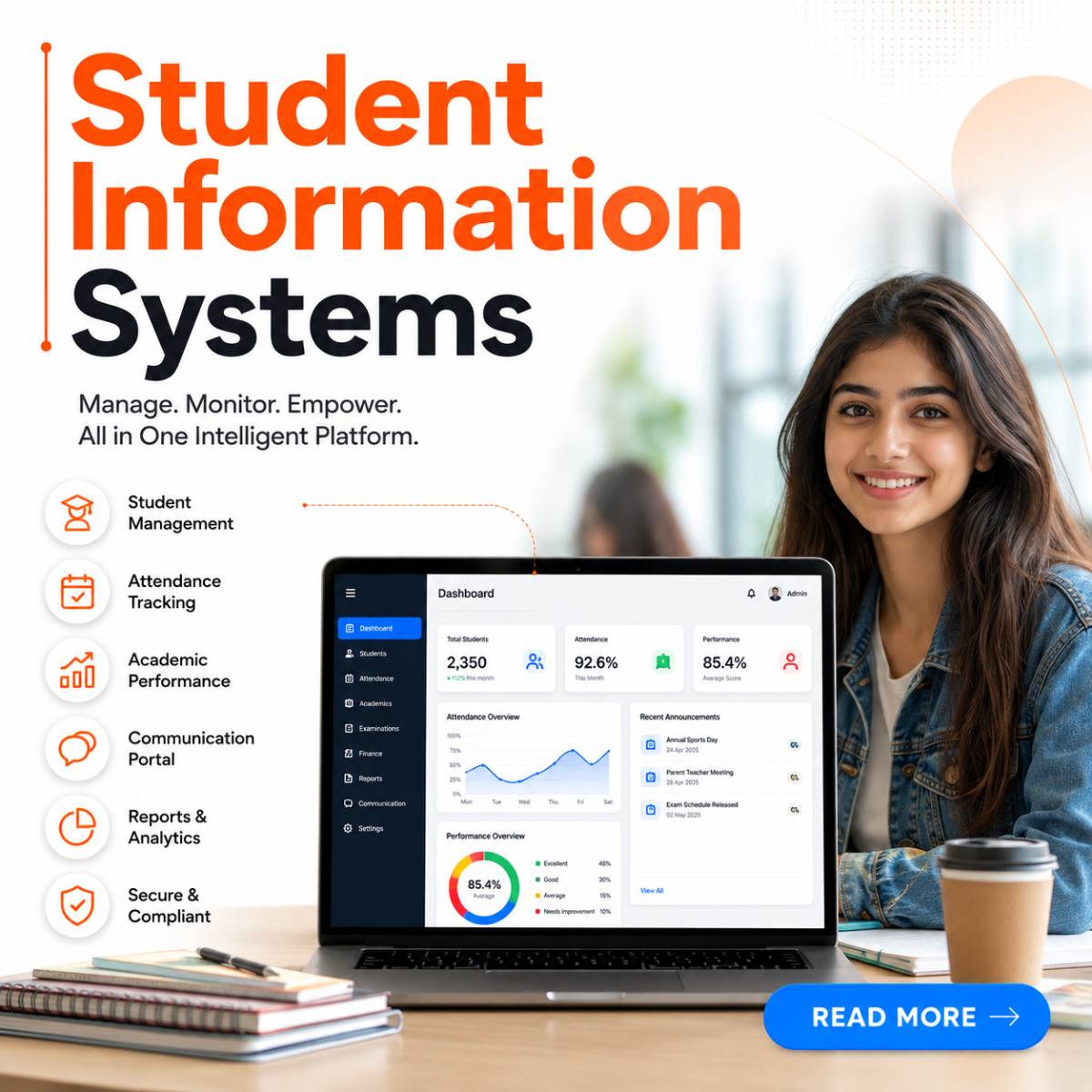
Student Information Systems Transform Education Digitally

Student Information Systems have become core components of modern education technology ecosystems, providing integrated tools for student enrollment, attendance, grading, scheduling, admissions, financial management, communication, and academic reporting.

August 3, 2026
|

Educational institutions worldwide are accelerating digital transformation through Student Information Systems (SIS) that centralize academic, administrative, and operational data. The growing adoption of cloud-based SIS platforms reflects a strategic shift toward data-driven education management, improving institutional efficiency, student engagement, and regulatory compliance across schools, colleges, and universities.

Student Information Systems have become core components of modern education technology ecosystems, providing integrated tools for student enrollment, attendance, grading, scheduling, admissions, financial management, communication, and academic reporting. These platforms streamline administrative workflows while improving access to real-time educational data.

Key stakeholders include educational institutions, government education departments, school administrators, faculty members, students, parents, and technology providers. As digital learning environments continue expanding globally, institutions are increasingly investing in cloud-native SIS solutions that support automation, analytics, mobile accessibility, and interoperability with learning management systems (LMS) and other education technologies.

The trend highlights continued modernization across the global education sector. The education sector has undergone significant digital transformation over the past decade, driven by cloud computing, remote learning, artificial intelligence, and growing expectations for personalized educational experiences. Institutions now require integrated platforms capable of managing increasingly complex academic and administrative operations.

This development aligns with a broader trend across global markets where governments and educational organizations are investing heavily in digital infrastructure to improve learning outcomes, institutional efficiency, and operational transparency. Student Information Systems have evolved beyond administrative databases into enterprise-grade platforms supporting analytics, compliance reporting, student success initiatives, and resource planning.

Historically, educational institutions relied on disconnected legacy systems and manual recordkeeping. Modern SIS platforms consolidate student records, academic performance, financial data, communication, and institutional reporting into centralized digital ecosystems. This integration supports improved decision-making while enabling institutions to respond more effectively to changing educational and regulatory requirements.

Education technology analysts believe Student Information Systems will remain foundational investments as institutions modernize digital operations and strengthen student services. Experts note that centralized data management improves institutional governance while enabling administrators to make faster, evidence-based decisions regarding enrollment, academic performance, and operational planning.

Industry specialists also expect artificial intelligence to play an increasingly important role within SIS platforms through predictive student success analytics, automated administrative workflows, personalized academic recommendations, and intelligent reporting. These capabilities are expected to improve educational outcomes while reducing administrative workloads.

Analysts further emphasize that educational institutions increasingly evaluate SIS providers based on cybersecurity, data privacy, interoperability, scalability, cloud architecture, and compliance with national education standards. Digital trust and secure student data management are becoming critical competitive differentiators across the education technology sector.

For educational institutions, Student Information Systems improve operational efficiency, data accuracy, student engagement, financial management, and institutional reporting. Integrated platforms also support better collaboration among administrators, educators, students, and parents while simplifying compliance with education regulations.

Investors continue viewing education technology as a high-growth sector supported by increasing digital learning adoption and government modernization initiatives. Policymakers are strengthening requirements related to student data protection, cybersecurity, accessibility, and digital governance.

For institutional leaders, investing in modern Student Information Systems has become a strategic priority for improving educational quality, operational resilience, and long-term institutional competitiveness.

The future of Student Information Systems is expected to focus on artificial intelligence, predictive analytics, cloud-native infrastructure, and deeper integration across digital education ecosystems. Decision-makers should monitor evolving privacy regulations, cybersecurity standards, and AI-driven educational innovations. Institutions that successfully combine intelligent data management with personalized learning support and secure digital operations will be better positioned to meet the evolving demands of modern education.

Source: Crozdesk
Date: August 3, 2026

  • Featured tools
Twistly AI
Paid

Twistly AI is a PowerPoint add-in that allows users to generate full slide decks, improve existing presentations, and convert various content types into polished slides directly within Microsoft PowerPoint.It streamlines presentation creation using AI-powered text analysis, image generation and content conversion.

#
Presentation
Learn more
Beautiful AI
Free

Beautiful AI is an AI-powered presentation platform that automates slide design and formatting, enabling users to create polished, on-brand presentations quickly.

#
Presentation
Learn more

Learn more about future of AI

Join 80,000+ Ai enthusiast getting weekly updates on exciting AI tools.
Thank you! Your submission has been received!
Oops! Something went wrong while submitting the form.

Student Information Systems Transform Education Digitally

August 3, 2026

Student Information Systems have become core components of modern education technology ecosystems, providing integrated tools for student enrollment, attendance, grading, scheduling, admissions, financial management, communication, and academic reporting.

Educational institutions worldwide are accelerating digital transformation through Student Information Systems (SIS) that centralize academic, administrative, and operational data. The growing adoption of cloud-based SIS platforms reflects a strategic shift toward data-driven education management, improving institutional efficiency, student engagement, and regulatory compliance across schools, colleges, and universities.

Student Information Systems have become core components of modern education technology ecosystems, providing integrated tools for student enrollment, attendance, grading, scheduling, admissions, financial management, communication, and academic reporting. These platforms streamline administrative workflows while improving access to real-time educational data.

Key stakeholders include educational institutions, government education departments, school administrators, faculty members, students, parents, and technology providers. As digital learning environments continue expanding globally, institutions are increasingly investing in cloud-native SIS solutions that support automation, analytics, mobile accessibility, and interoperability with learning management systems (LMS) and other education technologies.

The trend highlights continued modernization across the global education sector. The education sector has undergone significant digital transformation over the past decade, driven by cloud computing, remote learning, artificial intelligence, and growing expectations for personalized educational experiences. Institutions now require integrated platforms capable of managing increasingly complex academic and administrative operations.

This development aligns with a broader trend across global markets where governments and educational organizations are investing heavily in digital infrastructure to improve learning outcomes, institutional efficiency, and operational transparency. Student Information Systems have evolved beyond administrative databases into enterprise-grade platforms supporting analytics, compliance reporting, student success initiatives, and resource planning.

Historically, educational institutions relied on disconnected legacy systems and manual recordkeeping. Modern SIS platforms consolidate student records, academic performance, financial data, communication, and institutional reporting into centralized digital ecosystems. This integration supports improved decision-making while enabling institutions to respond more effectively to changing educational and regulatory requirements.

Education technology analysts believe Student Information Systems will remain foundational investments as institutions modernize digital operations and strengthen student services. Experts note that centralized data management improves institutional governance while enabling administrators to make faster, evidence-based decisions regarding enrollment, academic performance, and operational planning.

Industry specialists also expect artificial intelligence to play an increasingly important role within SIS platforms through predictive student success analytics, automated administrative workflows, personalized academic recommendations, and intelligent reporting. These capabilities are expected to improve educational outcomes while reducing administrative workloads.

Analysts further emphasize that educational institutions increasingly evaluate SIS providers based on cybersecurity, data privacy, interoperability, scalability, cloud architecture, and compliance with national education standards. Digital trust and secure student data management are becoming critical competitive differentiators across the education technology sector.

For educational institutions, Student Information Systems improve operational efficiency, data accuracy, student engagement, financial management, and institutional reporting. Integrated platforms also support better collaboration among administrators, educators, students, and parents while simplifying compliance with education regulations.

Investors continue viewing education technology as a high-growth sector supported by increasing digital learning adoption and government modernization initiatives. Policymakers are strengthening requirements related to student data protection, cybersecurity, accessibility, and digital governance.

For institutional leaders, investing in modern Student Information Systems has become a strategic priority for improving educational quality, operational resilience, and long-term institutional competitiveness.

The future of Student Information Systems is expected to focus on artificial intelligence, predictive analytics, cloud-native infrastructure, and deeper integration across digital education ecosystems. Decision-makers should monitor evolving privacy regulations, cybersecurity standards, and AI-driven educational innovations. Institutions that successfully combine intelligent data management with personalized learning support and secure digital operations will be better positioned to meet the evolving demands of modern education.

Source: Crozdesk
Date: August 3, 2026

Promote Your Tool

Copy Embed Code

Similar Blogs

August 3, 2026
|

BusyBusy Enhances Construction Workforce Management

BusyBusy provides construction organizations with digital tools focused on employee time tracking, productivity monitoring, project management support, and workforce accountability.
Read more
August 3, 2026
|

Ease Transforms Digital Workforce Management

Ease provides organizations with digital tools designed to manage HR operations, employee information, benefits administration, and workforce processes through a unified platform.
Read more
August 3, 2026
|

WorksBuddy Advances Digital Workforce Solutions

WorksBuddy provides organizations with tools focused on managing workplace activities, employee engagement, operational workflows, and productivity processes through a centralized digital platform.
Read more
August 3, 2026
|

IconArchive Expands Digital Icon Resources

IconArchive operates within the digital asset and design resource landscape, providing a platform for discovering and sharing icon collections used across websites, applications, presentations, and software projects.
Read more
August 3, 2026
|

Zoho Inventory Strengthens Supply Chain Management

Zoho Inventory operates within the inventory and order management software market, offering cloud-based capabilities for inventory tracking, warehouse management, order processing, shipping integration, purchasing, and multi-channel sales management.
Read more
August 3, 2026
|

Kognic Accelerates Autonomous AI Data Management

Kognic operates within the AI data management and machine learning infrastructure market, providing platforms for data annotation, labeling, validation, and quality assurance used in developing autonomous systems.
Read more