



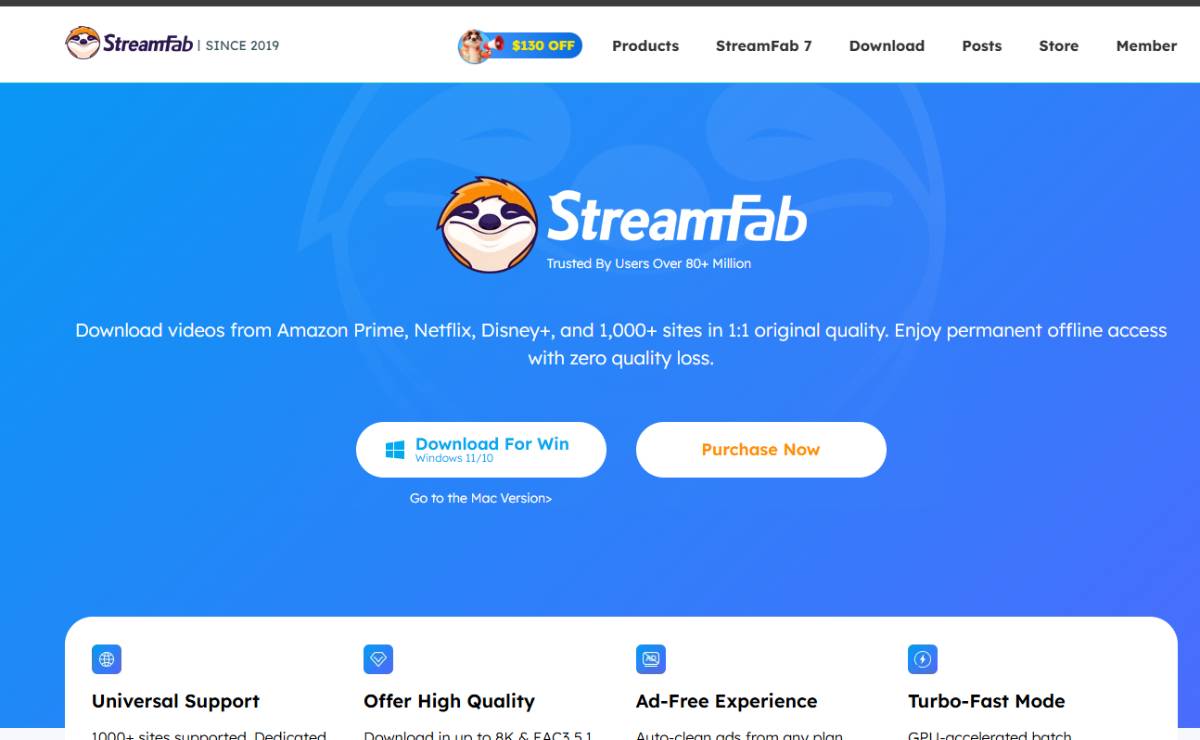
The digital media software market continues to evolve as consumers and organizations seek more flexible tools for managing online video content. StreamFab Video Downloader reflects growing demand for media management applications that support offline viewing, content organization, and cross-device accessibility, while operating within an increasingly regulated digital content ecosystem.
StreamFab Video Downloader is positioned within the digital media management software segment, offering features designed to download and organize online video content for offline access. The software supports users seeking greater flexibility in managing digital media across multiple devices and environments.
Key stakeholders include consumers, digital content creators, media professionals, educational institutions, and software vendors operating in the media technology ecosystem. As streaming services continue expanding globally, interest in media management tools has also increased alongside evolving licensing models and digital distribution practices.
The broader market continues to emphasize usability, automation, high-quality media processing, and compatibility with modern digital workflows. The rapid growth of streaming platforms has fundamentally transformed how digital content is distributed and consumed worldwide. Subscription-based services, cloud delivery, and on-demand viewing have created new opportunities while also introducing complex questions surrounding content portability, licensing, and user accessibility.
This development aligns with a broader trend across global markets where organizations and consumers increasingly rely on digital media management solutions to organize multimedia assets and improve workflow efficiency. Businesses involved in education, creative production, marketing, and enterprise communications often require reliable tools for handling legitimate digital media resources.
At the same time, governments, technology companies, and content owners continue strengthening policies related to copyright protection, digital rights management (DRM), and intellectual property enforcement. As a result, software providers operating in this segment must navigate evolving legal frameworks while responding to growing customer demand for flexible and efficient media management capabilities.
Digital media analysts note that demand for media management software continues to rise as organizations expand video-based communication, online learning, and multimedia content production. Experts believe workflow efficiency, cloud integration, and automation will remain key competitive differentiators within the sector.
Industry observers also emphasize that compliance with copyright law and licensing agreements remains an important consideration for software vendors and enterprise users. Businesses are increasingly expected to adopt technologies that support legitimate content management while respecting intellectual property rights.
Analysts further predict that artificial intelligence will enhance media software through automated organization, metadata generation, content indexing, quality optimization, and multilingual accessibility. These capabilities are expected to improve operational efficiency for creative teams, educational institutions, and enterprise communication departments.
For businesses, digital media management software can improve content organization, operational efficiency, and multimedia workflows across marketing, training, and communication functions. Organizations should ensure that any media management practices align with applicable copyright laws, licensing agreements, and internal governance policies.
Investors continue monitoring the expanding digital media software sector as video consumption and enterprise content creation increase worldwide. Policymakers remain focused on balancing technological innovation with intellectual property protection, cybersecurity, consumer rights, and responsible digital content distribution.
For executives, selecting compliant and scalable media management solutions has become an important component of broader digital transformation strategies. The future of digital media management is expected to emphasize artificial intelligence, cloud-native workflows, enhanced content organization, and stronger interoperability across enterprise platforms. Decision-makers should closely monitor evolving copyright regulations, digital rights management standards, and advances in AI-powered media technologies. Organizations that combine operational efficiency with responsible content governance will be better positioned to adapt to the next phase of the digital media economy.
Source: Crozdesk
Date: August 3, 2026


