
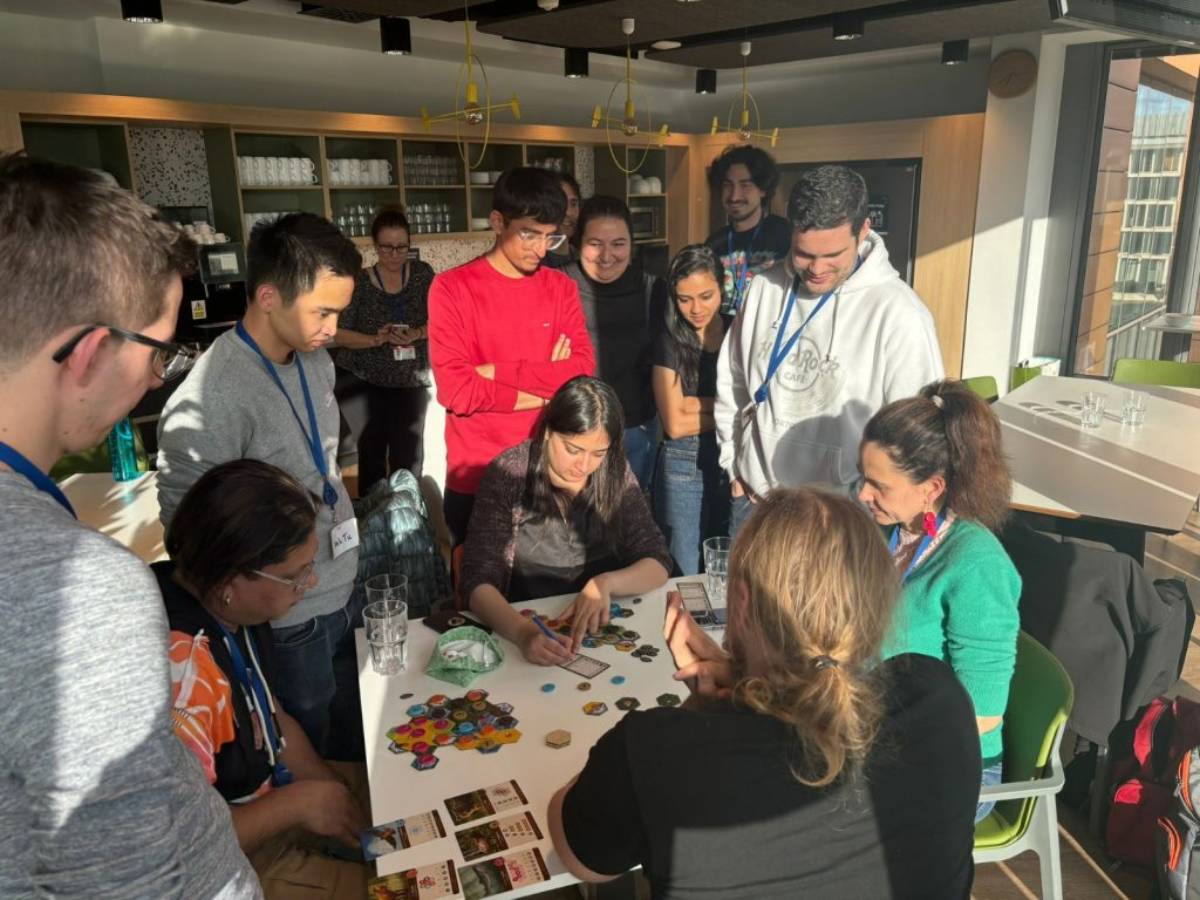
Startup Leaders Sharpen Strategy Boardgames

The initiative explores the similarities between startup management and strategic board games, where participants must balance limited resources, negotiate partnerships, assess risks, and adapt to constantly changing circumstances.

July 29, 2026
|

A growing movement within Luxembourg's startup ecosystem is using board games as practical tools to strengthen leadership, negotiation, and strategic thinking. The initiative highlights how entrepreneurs are adopting experiential learning techniques to improve collaboration, decision-making, and business resilience in increasingly competitive innovation markets.

The initiative explores the similarities between startup management and strategic board games, where participants must balance limited resources, negotiate partnerships, assess risks, and adapt to constantly changing circumstances. Rather than treating gaming as entertainment alone, founders and innovation professionals are incorporating structured gameplay into leadership development and team-building exercises.

Startup communities, accelerators, and innovation hubs are increasingly recognizing the educational value of simulation-based learning. These sessions encourage entrepreneurs to practice negotiation, crisis management, long-term planning, and collaborative problem-solving without exposing their businesses to real financial or operational risks.

The approach reflects a broader shift toward interactive professional development within Europe's innovation ecosystem. Entrepreneurship has become increasingly complex as startups navigate uncertain funding environments, rapid technological change, and expanding regulatory requirements. Traditional classroom training often struggles to replicate the fast-paced, unpredictable nature of business decision-making, leading many organizations to adopt more immersive learning methods.

Simulation exercises, business games, and scenario-based workshops have gained popularity across executive education programmes worldwide. These approaches allow participants to experience competition, negotiation, resource allocation, and strategic planning in controlled environments while receiving immediate feedback on their decisions.

Within Luxembourg's growing startup ecosystem, founders are placing greater emphasis on leadership development alongside technical innovation. As startups mature and expand internationally, interpersonal skills including communication, negotiation, conflict resolution, and collaborative leadership are becoming equally important as product development and fundraising capabilities. The integration of board games into entrepreneurial education reflects this broader evolution toward practical, experience-driven learning.

Leadership development specialists argue that strategic games provide valuable opportunities to observe decision-making patterns under pressure while encouraging creative thinking and collaborative problem-solving. Analysts note that simulated environments help entrepreneurs develop risk assessment skills without the financial consequences associated with real-world business decisions.

Innovation ecosystem experts increasingly emphasize that startup success depends not only on technological expertise but also on effective leadership, negotiation, and relationship management. Exercises involving resource scarcity, alliance building, and strategic competition closely mirror challenges founders encounter when securing investment, entering new markets, or managing growing organizations.

Industry observers also highlight that experiential learning encourages stronger team cohesion by improving communication, trust, and collective decision-making. As startup teams become more diverse and internationally distributed, these capabilities are becoming increasingly valuable for sustaining long-term organizational performance and innovation.

For startups, incorporating experiential learning into leadership development can strengthen decision-making, improve team collaboration, and reduce organizational risk during periods of rapid growth. Investors may also benefit indirectly, as stronger leadership capabilities often contribute to improved operational execution and business resilience.

Accelerators and innovation hubs could increasingly integrate simulation-based learning into entrepreneurship programmes, complementing mentoring, technical training, and investment readiness initiatives. Policymakers seeking to strengthen innovation ecosystems may view these collaborative educational approaches as cost-effective methods for developing entrepreneurial talent while enhancing the long-term competitiveness of startup communities across Europe.

As startup ecosystems continue evolving, experiential learning is expected to become a more prominent component of founder education. Innovation organizations will likely explore additional simulation-based programmes focused on negotiation, leadership, crisis management, and strategic planning. For entrepreneurs operating in increasingly uncertain global markets, practical decision-making exercises may become as valuable as traditional business training in preparing companies for sustainable long-term growth.

Source: Silicon Luxembourg
Date:
July 14, 2026

  • Featured tools
Copy Ai
Free

Copy AI is one of the most popular AI writing tools designed to help professionals create high-quality content quickly. Whether you are a product manager drafting feature descriptions or a marketer creating ad copy, Copy AI can save hours of work while maintaining creativity and tone.

#
Copywriting
Learn more
Murf Ai
Free

Murf AI Review – Advanced AI Voice Generator for Realistic Voiceovers

#
Text to Speech
Learn more

Learn more about future of AI

Join 80,000+ Ai enthusiast getting weekly updates on exciting AI tools.
Thank you! Your submission has been received!
Oops! Something went wrong while submitting the form.

Startup Leaders Sharpen Strategy Boardgames

July 29, 2026

The initiative explores the similarities between startup management and strategic board games, where participants must balance limited resources, negotiate partnerships, assess risks, and adapt to constantly changing circumstances.

A growing movement within Luxembourg's startup ecosystem is using board games as practical tools to strengthen leadership, negotiation, and strategic thinking. The initiative highlights how entrepreneurs are adopting experiential learning techniques to improve collaboration, decision-making, and business resilience in increasingly competitive innovation markets.

The initiative explores the similarities between startup management and strategic board games, where participants must balance limited resources, negotiate partnerships, assess risks, and adapt to constantly changing circumstances. Rather than treating gaming as entertainment alone, founders and innovation professionals are incorporating structured gameplay into leadership development and team-building exercises.

Startup communities, accelerators, and innovation hubs are increasingly recognizing the educational value of simulation-based learning. These sessions encourage entrepreneurs to practice negotiation, crisis management, long-term planning, and collaborative problem-solving without exposing their businesses to real financial or operational risks.

The approach reflects a broader shift toward interactive professional development within Europe's innovation ecosystem. Entrepreneurship has become increasingly complex as startups navigate uncertain funding environments, rapid technological change, and expanding regulatory requirements. Traditional classroom training often struggles to replicate the fast-paced, unpredictable nature of business decision-making, leading many organizations to adopt more immersive learning methods.

Simulation exercises, business games, and scenario-based workshops have gained popularity across executive education programmes worldwide. These approaches allow participants to experience competition, negotiation, resource allocation, and strategic planning in controlled environments while receiving immediate feedback on their decisions.

Within Luxembourg's growing startup ecosystem, founders are placing greater emphasis on leadership development alongside technical innovation. As startups mature and expand internationally, interpersonal skills including communication, negotiation, conflict resolution, and collaborative leadership are becoming equally important as product development and fundraising capabilities. The integration of board games into entrepreneurial education reflects this broader evolution toward practical, experience-driven learning.

Leadership development specialists argue that strategic games provide valuable opportunities to observe decision-making patterns under pressure while encouraging creative thinking and collaborative problem-solving. Analysts note that simulated environments help entrepreneurs develop risk assessment skills without the financial consequences associated with real-world business decisions.

Innovation ecosystem experts increasingly emphasize that startup success depends not only on technological expertise but also on effective leadership, negotiation, and relationship management. Exercises involving resource scarcity, alliance building, and strategic competition closely mirror challenges founders encounter when securing investment, entering new markets, or managing growing organizations.

Industry observers also highlight that experiential learning encourages stronger team cohesion by improving communication, trust, and collective decision-making. As startup teams become more diverse and internationally distributed, these capabilities are becoming increasingly valuable for sustaining long-term organizational performance and innovation.

For startups, incorporating experiential learning into leadership development can strengthen decision-making, improve team collaboration, and reduce organizational risk during periods of rapid growth. Investors may also benefit indirectly, as stronger leadership capabilities often contribute to improved operational execution and business resilience.

Accelerators and innovation hubs could increasingly integrate simulation-based learning into entrepreneurship programmes, complementing mentoring, technical training, and investment readiness initiatives. Policymakers seeking to strengthen innovation ecosystems may view these collaborative educational approaches as cost-effective methods for developing entrepreneurial talent while enhancing the long-term competitiveness of startup communities across Europe.

As startup ecosystems continue evolving, experiential learning is expected to become a more prominent component of founder education. Innovation organizations will likely explore additional simulation-based programmes focused on negotiation, leadership, crisis management, and strategic planning. For entrepreneurs operating in increasingly uncertain global markets, practical decision-making exercises may become as valuable as traditional business training in preparing companies for sustainable long-term growth.

Source: Silicon Luxembourg
Date:
July 14, 2026

Promote Your Tool

Copy Embed Code

Similar Blogs

July 29, 2026
|

EmulationStation Enhances Retro Gaming Experience

EmulationStation is a front-end interface designed to organize and present video game emulation libraries through a streamlined user experience.
Read more
July 29, 2026
|

Tomoson Expands Influencer Marketing Collaboration

Tomoson operates as an influencer marketing platform designed to help brands collaborate with content creators and manage promotional campaigns.
Read more
July 29, 2026
|

ZeroBin.net Advances Secure Data Sharing

ZeroBin.net operates as a privacy-oriented platform that allows users to share encrypted information through temporary digital channels.
Read more
July 29, 2026
|

Gaia Expands Digital Knowledge Access

Gaia operates within the broader category of digital platforms focused on information discovery, organization, and knowledge accessibility.
Read more
July 29, 2026
|

MailDrop Expands Privacy Email Solutions

MailDrop operates as a temporary email service designed to help users create disposable email addresses for online registrations and digital interactions.
Read more
July 29, 2026
|

MacX YouTube Downloader Enhances Video Management

MacX YouTube Downloader is a multimedia software solution designed to support video downloading, conversion, and management from online platforms.
Read more