
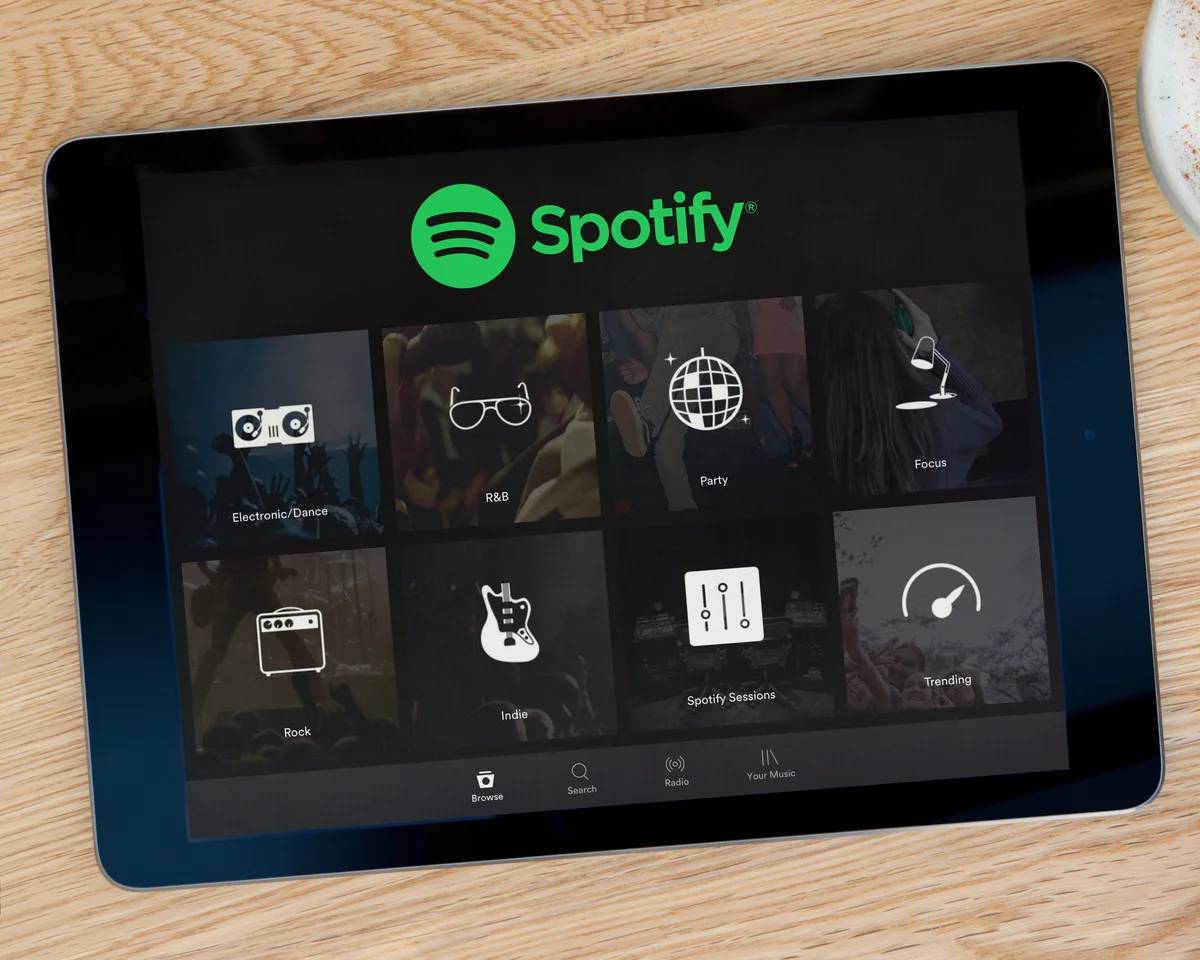
Spotify Universal AI Remix Deal Reshapes Music

Spotify and Universal Music Group have reached an agreement allowing subscribers to create AI-generated remixes using licensed music, marking a significant shift in how consumers interact with digital entertainment.

May 22, 2026
|
Image Source: The Guardian

Spotify and Universal Music Group have reached an agreement allowing subscribers to create AI-generated remixes using licensed music, marking a significant shift in how consumers interact with digital entertainment. The partnership highlights the music industry’s accelerating move toward AI-powered personalization while intensifying debates around copyright, artist compensation, and creative ownership.

The agreement will enable Spotify subscribers to generate customized AI-assisted remixes using tracks from Universal Music’s catalog. The initiative represents one of the clearest examples yet of a major music label formally embracing generative AI tools within mainstream streaming platforms. The deal is expected to create new interactive listening experiences while potentially opening additional revenue opportunities tied to user-generated music personalization.

The move arrives as entertainment companies globally attempt to balance consumer demand for AI creativity tools with growing concerns from artists and rights holders regarding intellectual property protection and fair compensation in the AI era.

The Spotify-Universal agreement reflects a broader transformation underway across the global entertainment industry, where artificial intelligence is rapidly reshaping how music is produced, distributed, and consumed. Generative AI tools are increasingly capable of creating songs, replicating vocal styles, remixing compositions, and personalizing content experiences in real time.

The music industry initially responded cautiously to AI-generated content due to fears surrounding copyright infringement, unauthorized voice cloning, and declining artist control. Several high-profile controversies involving AI-generated songs imitating major artists intensified pressure on labels and streaming platforms to establish clearer legal and commercial frameworks.

However, major entertainment companies are now increasingly exploring partnerships that integrate AI within licensed ecosystems rather than resisting the technology outright. By working directly with streaming services and AI developers, music labels hope to maintain control over intellectual property while unlocking new revenue models linked to personalization and fan engagement.

The shift also reflects wider changes in consumer behavior. Younger audiences increasingly expect interactive and customizable digital experiences across gaming, social media, and entertainment platforms. AI-generated remixes and adaptive music experiences align closely with those evolving consumption patterns.

At a geopolitical level, the debate over AI and copyright is becoming globally significant as regulators in the United States, Europe, and Asia examine how existing intellectual property laws apply to generative AI systems trained on creative content.

Industry analysts say the agreement signals a strategic turning point for the music business, where AI is transitioning from a disruptive threat into a potentially monetizable product category. Experts argue that licensed AI remixing could provide a commercially viable framework balancing innovation with copyright protection.

Entertainment industry observers note that streaming platforms are under growing pressure to expand engagement tools and differentiate subscription offerings in an increasingly competitive market. AI-assisted remixing and personalization could help platforms increase user retention while generating new premium features and revenue streams.

At the same time, analysts caution that significant tensions remain unresolved. Artists and creators continue expressing concerns that AI-generated derivative works may dilute creative identity or weaken traditional compensation models if safeguards are insufficient.

Legal experts also emphasize that licensing agreements between major labels and technology platforms may eventually shape global standards around AI-generated media rights. Regulators and courts are closely monitoring how companies define ownership, attribution, and revenue-sharing structures involving AI-assisted creative content.

Meanwhile, supporters of the deal argue that integrating AI into officially licensed ecosystems is preferable to uncontrolled third-party use of copyrighted music across unregulated platforms.

For businesses, the partnership highlights growing opportunities in AI-powered entertainment and personalized digital experiences. Streaming services, record labels, and media companies may increasingly invest in generative AI tools capable of deepening audience engagement and creating new monetization channels.

Investors are likely to view the deal as further evidence that AI integration across entertainment industries is moving from experimentation toward commercial deployment. Companies positioned at the intersection of AI, media, and intellectual property management could attract stronger strategic interest.

From a policy perspective, governments and regulators may accelerate efforts to modernize copyright frameworks governing AI-generated creative works. Questions surrounding licensing rights, artist consent, royalty distribution, and synthetic content disclosure are expected to become increasingly central to global digital media regulation.

Attention will now shift toward how consumers, artists, and regulators respond as AI-generated remixing enters mainstream music platforms. Industry leaders will closely watch user adoption, copyright enforcement mechanisms, and broader reactions from creators concerned about artistic control.

The partnership signals a broader reality confronting the entertainment sector: artificial intelligence is no longer operating at the margins of creative industries, but is increasingly becoming embedded directly into how culture, content, and digital experiences are produced and consumed.

Source: The Guardian
Date: May 21, 2026

  • Featured tools
Twistly AI
Paid

Twistly AI is a PowerPoint add-in that allows users to generate full slide decks, improve existing presentations, and convert various content types into polished slides directly within Microsoft PowerPoint.It streamlines presentation creation using AI-powered text analysis, image generation and content conversion.

#
Presentation
Learn more
Surfer AI
Free

Surfer AI is an AI-powered content creation assistant built into the Surfer SEO platform, designed to generate SEO-optimized articles from prompts, leveraging data from search results to inform tone, structure, and relevance.

#
SEO
Learn more

Learn more about future of AI

Join 80,000+ Ai enthusiast getting weekly updates on exciting AI tools.
Thank you! Your submission has been received!
Oops! Something went wrong while submitting the form.

Spotify Universal AI Remix Deal Reshapes Music

May 22, 2026

Spotify and Universal Music Group have reached an agreement allowing subscribers to create AI-generated remixes using licensed music, marking a significant shift in how consumers interact with digital entertainment.

Image Source: The Guardian

Spotify and Universal Music Group have reached an agreement allowing subscribers to create AI-generated remixes using licensed music, marking a significant shift in how consumers interact with digital entertainment. The partnership highlights the music industry’s accelerating move toward AI-powered personalization while intensifying debates around copyright, artist compensation, and creative ownership.

The agreement will enable Spotify subscribers to generate customized AI-assisted remixes using tracks from Universal Music’s catalog. The initiative represents one of the clearest examples yet of a major music label formally embracing generative AI tools within mainstream streaming platforms. The deal is expected to create new interactive listening experiences while potentially opening additional revenue opportunities tied to user-generated music personalization.

The move arrives as entertainment companies globally attempt to balance consumer demand for AI creativity tools with growing concerns from artists and rights holders regarding intellectual property protection and fair compensation in the AI era.

The Spotify-Universal agreement reflects a broader transformation underway across the global entertainment industry, where artificial intelligence is rapidly reshaping how music is produced, distributed, and consumed. Generative AI tools are increasingly capable of creating songs, replicating vocal styles, remixing compositions, and personalizing content experiences in real time.

The music industry initially responded cautiously to AI-generated content due to fears surrounding copyright infringement, unauthorized voice cloning, and declining artist control. Several high-profile controversies involving AI-generated songs imitating major artists intensified pressure on labels and streaming platforms to establish clearer legal and commercial frameworks.

However, major entertainment companies are now increasingly exploring partnerships that integrate AI within licensed ecosystems rather than resisting the technology outright. By working directly with streaming services and AI developers, music labels hope to maintain control over intellectual property while unlocking new revenue models linked to personalization and fan engagement.

The shift also reflects wider changes in consumer behavior. Younger audiences increasingly expect interactive and customizable digital experiences across gaming, social media, and entertainment platforms. AI-generated remixes and adaptive music experiences align closely with those evolving consumption patterns.

At a geopolitical level, the debate over AI and copyright is becoming globally significant as regulators in the United States, Europe, and Asia examine how existing intellectual property laws apply to generative AI systems trained on creative content.

Industry analysts say the agreement signals a strategic turning point for the music business, where AI is transitioning from a disruptive threat into a potentially monetizable product category. Experts argue that licensed AI remixing could provide a commercially viable framework balancing innovation with copyright protection.

Entertainment industry observers note that streaming platforms are under growing pressure to expand engagement tools and differentiate subscription offerings in an increasingly competitive market. AI-assisted remixing and personalization could help platforms increase user retention while generating new premium features and revenue streams.

At the same time, analysts caution that significant tensions remain unresolved. Artists and creators continue expressing concerns that AI-generated derivative works may dilute creative identity or weaken traditional compensation models if safeguards are insufficient.

Legal experts also emphasize that licensing agreements between major labels and technology platforms may eventually shape global standards around AI-generated media rights. Regulators and courts are closely monitoring how companies define ownership, attribution, and revenue-sharing structures involving AI-assisted creative content.

Meanwhile, supporters of the deal argue that integrating AI into officially licensed ecosystems is preferable to uncontrolled third-party use of copyrighted music across unregulated platforms.

For businesses, the partnership highlights growing opportunities in AI-powered entertainment and personalized digital experiences. Streaming services, record labels, and media companies may increasingly invest in generative AI tools capable of deepening audience engagement and creating new monetization channels.

Investors are likely to view the deal as further evidence that AI integration across entertainment industries is moving from experimentation toward commercial deployment. Companies positioned at the intersection of AI, media, and intellectual property management could attract stronger strategic interest.

From a policy perspective, governments and regulators may accelerate efforts to modernize copyright frameworks governing AI-generated creative works. Questions surrounding licensing rights, artist consent, royalty distribution, and synthetic content disclosure are expected to become increasingly central to global digital media regulation.

Attention will now shift toward how consumers, artists, and regulators respond as AI-generated remixing enters mainstream music platforms. Industry leaders will closely watch user adoption, copyright enforcement mechanisms, and broader reactions from creators concerned about artistic control.

The partnership signals a broader reality confronting the entertainment sector: artificial intelligence is no longer operating at the margins of creative industries, but is increasingly becoming embedded directly into how culture, content, and digital experiences are produced and consumed.

Source: The Guardian
Date: May 21, 2026

Promote Your Tool

Copy Embed Code

Similar Blogs

June 22, 2026
|

Switzerland Tests Digital Sovereignty Limits

The analysis examines Switzerland’s dependence on major global technology providers across cloud computing, productivity software, search infrastructure, and digital communications.
Read more
June 22, 2026
|

Switzerland Faces Larger Emissions Gap

The report indicates that Switzerland’s actual emissions gap defined as the difference between current emission levels and targeted climate reduction pathways may be significantly larger than previously disclosed in official assessments.
Read more
June 22, 2026
|

Switzerland AI Jobs Surge Amid Digital Demand

A new labor market analysis indicates a record level of AI-related job postings and employment growth in Switzerland. Demand spans roles in machine learning engineering, data science.
Read more
June 22, 2026
|

Global Leaders Scrutinize AI Risks

The Geneva counter-summit brought together policymakers, academics, and technology governance experts to evaluate the risks associated with rapidly advancing artificial intelligence systems.
Read more
June 22, 2026
|

AI Reliability Crisis Deepens Amid Errors

The KPMG report, intended to analyze the benefits and risks of artificial intelligence adoption, reportedly included factual inconsistencies attributed to AI-generated content.
Read more
June 22, 2026
|

Skene Raises €800K for Agents

Skene has raised €800,000 in pre-seed funding to advance its AI-driven “code-reading agents” designed to help software products automatically teach users how to use them.
Read more