



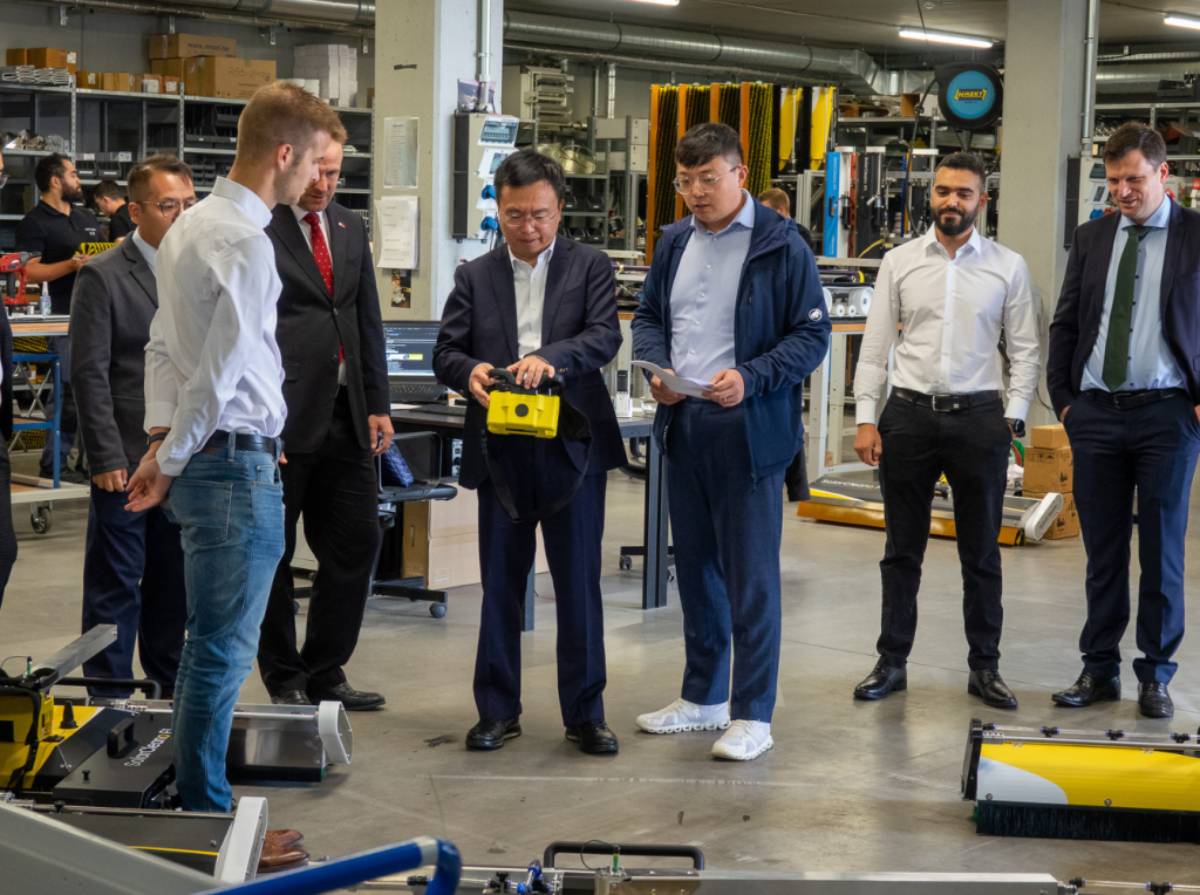
Luxembourg clean-tech company SolarCleano has accelerated its international expansion by securing a major agreement to establish a robotic solar panel assembly line in China. The move underscores growing global demand for renewable energy automation while strengthening cross-border industrial collaboration in one of the world's largest solar energy markets.
SolarCleano has signed a strategic agreement to deliver approximately 500 robotic solar panel cleaning systems while supporting the launch of a dedicated robotic assembly line in China. The expansion significantly increases the company's manufacturing footprint and positions it closer to one of the fastest-growing renewable energy markets globally.
The partnership is expected to improve production capacity, shorten delivery timelines, and enhance after-sales support for regional customers. By localizing manufacturing, SolarCleano aims to scale deployment of autonomous cleaning technologies that improve solar farm efficiency while reducing maintenance costs. The development reflects increasing commercial demand for automation across utility-scale renewable energy infrastructure.
Global solar power installations continue to expand rapidly as governments pursue decarbonization targets and energy security strategies. As solar farms become larger and more geographically diverse, operators face mounting challenges in maintaining panel efficiency. Dust accumulation, sand, pollution, and environmental conditions can significantly reduce electricity generation, making automated cleaning technologies increasingly valuable.
China remains the world's largest manufacturer and installer of solar panels, accounting for a substantial share of global renewable energy capacity. At the same time, European clean-tech companies are seeking stronger access to Asian markets through manufacturing partnerships and localized production.
SolarCleano's expansion reflects this broader trend of combining European engineering expertise with Asian manufacturing ecosystems. The move also highlights growing international cooperation in renewable energy technologies despite increasing geopolitical competition across strategic industrial sectors.
Industry analysts view robotic maintenance technologies as an increasingly important component of the renewable energy value chain. As labor shortages, water conservation requirements, and operational efficiency become greater priorities, autonomous cleaning systems are expected to play a larger role in maximizing energy output from utility-scale solar installations.
Corporate leaders generally emphasize that localized manufacturing improves responsiveness to customer demand while reducing logistics costs and supply chain complexity. Industry experts also note that partnerships between European technology developers and Chinese manufacturing capabilities can accelerate commercialization of advanced clean-energy solutions.
However, analysts caution that companies expanding internationally must continue managing intellectual property protection, regulatory compliance, and geopolitical uncertainties while balancing global growth with resilient supply chain strategies.
For businesses, SolarCleano's expansion demonstrates how specialized clean-tech firms can achieve global scale through strategic manufacturing partnerships. Renewable energy developers may benefit from greater access to advanced maintenance technologies that improve operational efficiency and lower lifecycle costs.
Investors are likely to view the agreement as evidence of continued commercial momentum in climate technology and industrial robotics. Policymakers may also see the partnership as an example of how international collaboration can accelerate clean-energy deployment while supporting innovation led economic growth. As countries expand renewable infrastructure, automation technologies are expected to become increasingly important within national energy transition strategies.
The success of SolarCleano's China expansion will depend on efficient production scaling, continued market demand, and effective cross-border collaboration. Industry observers will monitor deployment of the initial robotic systems, future manufacturing capacity, and additional international partnerships. As global solar installations continue to grow, automation is expected to become a core competitive advantage across renewable energy operations and maintenance.
Source: Silicon Luxembourg
Date: July 2026


