



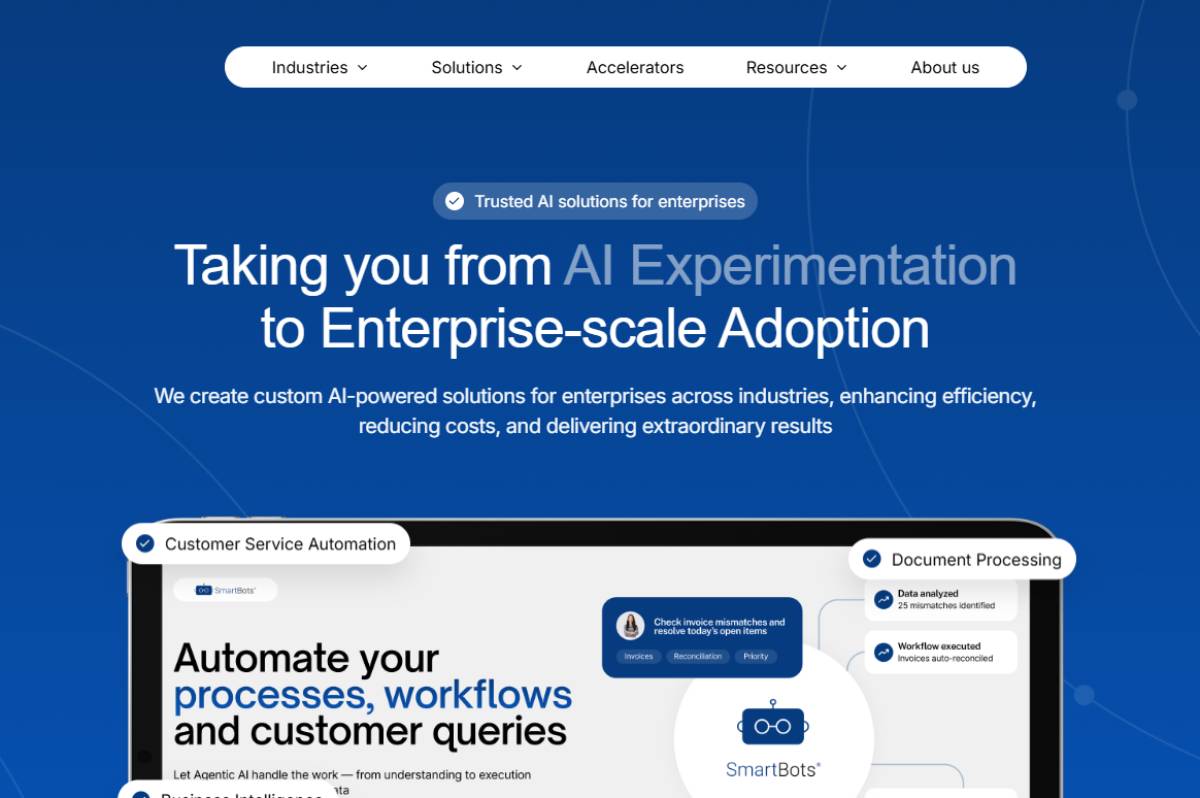
Smartbots is positioned within the expanding AI chatbot and conversational automation market, helping organizations explore automated customer interactions across digital channels. As businesses seek to improve response times while controlling service costs, intelligent chatbot platforms are becoming increasingly relevant to customer support, lead generation and engagement strategies.
Smartbots focuses on chatbot technology designed to automate interactions between businesses and their customers. Such platforms can support common conversational tasks, including answering questions, guiding visitors, collecting information and assisting users through digital experiences.
The technology addresses a growing demand for businesses to provide faster customer responses without requiring human agents to handle every routine interaction. For companies, chatbot automation can potentially extend customer engagement beyond traditional operating hours while allowing service teams to concentrate on more complex requests.
The broader market is also moving toward AI-enhanced conversational systems capable of understanding natural-language questions and delivering increasingly personalized responses. This evolution is expanding the role of chatbots from basic scripted assistants toward more flexible digital customer-service tools.
The development reflects the rapid transformation of customer engagement through artificial intelligence. Businesses across industries are under pressure to respond quickly to customers while managing rising expectations for convenient, always-available digital support.
Traditional customer-service models can become expensive as interaction volumes increase. Chatbots offer organizations a way to automate repetitive questions and routine workflows before transferring more complex cases to human employees.
The rise of generative AI has further accelerated expectations for conversational systems. Customers increasingly expect digital assistants to understand natural language rather than requiring rigid commands or predefined navigation paths.
For enterprises, however, automation introduces new considerations around accuracy, security and customer experience. Incorrect responses can create frustration or reputational risk, particularly when chatbots are used for sensitive transactions.
For CXOs, the strategic opportunity lies in using conversational AI to augment human teams rather than simply replacing them. Well-designed automation can improve response times while allowing employees to focus on higher-value interactions.
AI and customer-experience specialists increasingly emphasize that successful chatbot deployments depend on more than conversational capabilities. Organizations need clearly defined use cases, reliable knowledge sources and appropriate escalation processes.
Smartbots' positioning reflects the broader movement toward automated customer engagement. Chatbots can provide immediate responses to common questions while helping businesses manage interaction volumes more efficiently.
For technology leaders, integration is becoming increasingly important. Connecting conversational systems with websites, customer databases, CRM platforms and business workflows can allow automated interactions to become more useful and context-aware.
Industry observers are also focused on the governance challenges associated with AI-generated responses. Businesses must consider data privacy, transparency, accuracy and human oversight when deploying automated customer-facing systems.
The market is consequently moving toward more sophisticated AI assistants that combine conversational capabilities with business-process automation. Organizations that successfully integrate these technologies could gain efficiency without compromising customer trust.
For businesses, AI chatbot technology can reduce the workload associated with repetitive customer inquiries while improving response availability. This can be particularly valuable for organizations managing large volumes of digital interactions.
For executives, automation may create opportunities to improve service efficiency and control operating costs while allowing employees to focus on complex customer needs. Consumers can benefit from faster access to information, although organizations must ensure automated systems provide accurate and transparent responses.
From a policy perspective, companies should establish governance around customer data, AI-generated communications and escalation procedures. Sensitive use cases may require additional human oversight.
For investors and business leaders, chatbot technology is increasingly becoming part of a broader AI-transformation strategy. The key consideration will be whether automation produces measurable improvements in customer satisfaction, productivity and operating efficiency.
Conversational AI is expected to advance rapidly as businesses integrate chatbots with generative AI, customer data and automated workflows. Future systems may handle increasingly complex interactions while recognizing context and customer intent more effectively.
Decision-makers should watch developments in AI accuracy, privacy controls, integration capabilities and human escalation. The strongest platforms will likely combine automation with responsible governance, enabling businesses to scale digital customer engagement without sacrificing reliability or trust.
Source: Crozdesk; Smartbots
Date: August 12, 2026


