
Singify Accelerates AI Music Creation Amid Generative Audio Disruption

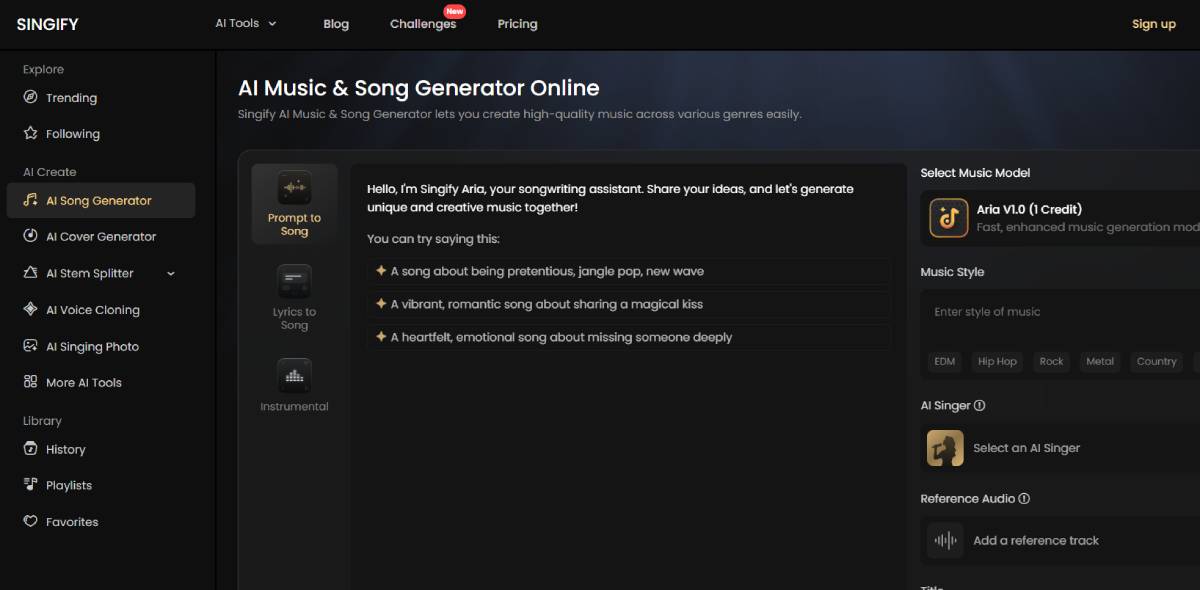
Singify, developed by FineShare, provides an AI-powered platform enabling users to generate songs, transform voices, and create music covers with minimal technical expertise.

March 30, 2026
|

A new development in the generative AI ecosystem is reshaping the music creation landscape as Singify introduces tools that allow users to generate songs, vocals, and covers using artificial intelligence. The platform highlights a growing shift toward AI-driven audio production, with implications for the global music industry, digital creators, and media businesses.

Singify, developed by FineShare, provides an AI-powered platform enabling users to generate songs, transform voices, and create music covers with minimal technical expertise.

Key capabilities include:

  • AI-generated song creation from text prompts
  • Voice conversion and AI singing models
  • Rapid music cover generation
  • Accessible tools for creators, streamers, and content producers

The platform reflects the rapid expansion of generative AI into creative industries, where artificial intelligence can replicate or simulate musical styles, vocal performances, and production elements.

By lowering barriers to entry, Singify aims to democratize music creation while enabling creators to produce content faster for platforms such as social media, streaming services, and digital marketing campaigns. The emergence of AI music generators comes amid a broader transformation in the creative technology sector.

Over the past two years, generative AI tools have expanded beyond text and images into audio, video, and interactive media. Platforms such as OpenAI, Google, and emerging startups have invested heavily in synthetic media technologies. Within the music industry, AI-generated vocals and compositions have sparked both excitement and controversy.

Record labels and artist organizations have raised concerns about copyright protection, unauthorized voice replication, and the economic impact on musicians. At the same time, content creators and independent producers are embracing AI tools to speed up production and reduce costs.

Platforms like Singify reflect the growing convergence between artificial intelligence, creator economies, and digital entertainment infrastructure. Industry analysts say AI-generated music could become one of the fastest-growing segments within the generative AI market.

Technology researchers argue that platforms capable of synthesizing vocals and music tracks in real time may significantly change how digital content is produced. Media strategists note that AI music tools enable rapid creation of soundtracks for short-form content, advertising campaigns, and gaming environments.

However, experts also emphasize the legal and ethical challenges surrounding AI-generated voices. Music industry stakeholders including labels, performing rights organizations, and artists have increasingly called for clearer regulations governing voice cloning and AI-assisted music production.

Policy experts suggest that the next phase of development will likely involve licensing frameworks and authentication systems designed to protect intellectual property while allowing innovation in AI-powered creativity.

For businesses, AI music platforms like Singify could dramatically reduce the time and cost required to produce audio content. Marketing agencies, gaming studios, and media companies may increasingly rely on AI-generated music to scale content production across digital channels.

Investors are also watching the generative audio market closely as part of the broader artificial intelligence boom. However, policymakers and regulators face mounting pressure to address copyright protection and voice ownership rights.

As AI-generated music becomes more realistic, governments and industry groups may introduce new legal frameworks to ensure that artists retain control over their likeness and creative output. For executives, the challenge will be balancing innovation with responsible use of synthetic media technologies.

As generative AI expands deeper into the entertainment sector, platforms like Singify may become central tools for the creator economy. Future advancements could include real-time AI songwriting, personalized music generation, and deeper integration with streaming and social media platforms.

For industry leaders, the coming years will determine whether AI music tools evolve into collaborative creative systems or disrupt traditional music production models entirely.

Source: Singify (FineShare)
Date: March 6, 2026

  • Featured tools
Alli AI
Free

Alli AI is an all-in-one, AI-powered SEO automation platform that streamlines on-page optimization, site auditing, speed improvements, schema generation, internal linking, and ranking insights.

#
SEO
Learn more
Copy Ai
Free

Copy AI is one of the most popular AI writing tools designed to help professionals create high-quality content quickly. Whether you are a product manager drafting feature descriptions or a marketer creating ad copy, Copy AI can save hours of work while maintaining creativity and tone.

#
Copywriting
Learn more

Learn more about future of AI

Join 80,000+ Ai enthusiast getting weekly updates on exciting AI tools.
Thank you! Your submission has been received!
Oops! Something went wrong while submitting the form.

Singify Accelerates AI Music Creation Amid Generative Audio Disruption

March 30, 2026

Singify, developed by FineShare, provides an AI-powered platform enabling users to generate songs, transform voices, and create music covers with minimal technical expertise.

A new development in the generative AI ecosystem is reshaping the music creation landscape as Singify introduces tools that allow users to generate songs, vocals, and covers using artificial intelligence. The platform highlights a growing shift toward AI-driven audio production, with implications for the global music industry, digital creators, and media businesses.

Singify, developed by FineShare, provides an AI-powered platform enabling users to generate songs, transform voices, and create music covers with minimal technical expertise.

Key capabilities include:

  • AI-generated song creation from text prompts
  • Voice conversion and AI singing models
  • Rapid music cover generation
  • Accessible tools for creators, streamers, and content producers

The platform reflects the rapid expansion of generative AI into creative industries, where artificial intelligence can replicate or simulate musical styles, vocal performances, and production elements.

By lowering barriers to entry, Singify aims to democratize music creation while enabling creators to produce content faster for platforms such as social media, streaming services, and digital marketing campaigns. The emergence of AI music generators comes amid a broader transformation in the creative technology sector.

Over the past two years, generative AI tools have expanded beyond text and images into audio, video, and interactive media. Platforms such as OpenAI, Google, and emerging startups have invested heavily in synthetic media technologies. Within the music industry, AI-generated vocals and compositions have sparked both excitement and controversy.

Record labels and artist organizations have raised concerns about copyright protection, unauthorized voice replication, and the economic impact on musicians. At the same time, content creators and independent producers are embracing AI tools to speed up production and reduce costs.

Platforms like Singify reflect the growing convergence between artificial intelligence, creator economies, and digital entertainment infrastructure. Industry analysts say AI-generated music could become one of the fastest-growing segments within the generative AI market.

Technology researchers argue that platforms capable of synthesizing vocals and music tracks in real time may significantly change how digital content is produced. Media strategists note that AI music tools enable rapid creation of soundtracks for short-form content, advertising campaigns, and gaming environments.

However, experts also emphasize the legal and ethical challenges surrounding AI-generated voices. Music industry stakeholders including labels, performing rights organizations, and artists have increasingly called for clearer regulations governing voice cloning and AI-assisted music production.

Policy experts suggest that the next phase of development will likely involve licensing frameworks and authentication systems designed to protect intellectual property while allowing innovation in AI-powered creativity.

For businesses, AI music platforms like Singify could dramatically reduce the time and cost required to produce audio content. Marketing agencies, gaming studios, and media companies may increasingly rely on AI-generated music to scale content production across digital channels.

Investors are also watching the generative audio market closely as part of the broader artificial intelligence boom. However, policymakers and regulators face mounting pressure to address copyright protection and voice ownership rights.

As AI-generated music becomes more realistic, governments and industry groups may introduce new legal frameworks to ensure that artists retain control over their likeness and creative output. For executives, the challenge will be balancing innovation with responsible use of synthetic media technologies.

As generative AI expands deeper into the entertainment sector, platforms like Singify may become central tools for the creator economy. Future advancements could include real-time AI songwriting, personalized music generation, and deeper integration with streaming and social media platforms.

For industry leaders, the coming years will determine whether AI music tools evolve into collaborative creative systems or disrupt traditional music production models entirely.

Source: Singify (FineShare)
Date: March 6, 2026

Promote Your Tool

Copy Embed Code

Similar Blogs

April 17, 2026
|

Cybertruck-Style E-Bike Targets Urban Mobility

The newly introduced e-bike, often described as the “Cybertruck of e-bikes,” is designed with a rugged, futuristic aesthetic and enhanced performance capabilities aimed at replacing short car commutes.
Read more
April 17, 2026
|

Casely Reissues Power Bank Recall Over Safety

Casely has officially reannounced a recall of its portable power bank products originally flagged in 2025, following confirmation of a fatality associated with battery malfunction.
Read more
April 17, 2026
|

Telegram Scrutiny Over $21B Crypto Scam

Investigations highlight that Telegram has remained a hosting channel for a sprawling crypto scam ecosystem despite prior sanctions and enforcement actions targeting related entities.
Read more
April 17, 2026
|

Europe Launches Online Age Verification App

European regulators have rolled out a new age verification app designed to help online platforms confirm user eligibility for age-restricted content and services.
Read more
April 17, 2026
|

Meta Raises Quest 3 Prices on Supply Strain

Meta has officially raised prices on its Quest 3 and Quest 3S VR headsets, citing increased memory (RAM) costs amid global supply constraints.
Read more
April 17, 2026
|

Ozlo Sleepbuds See 30% Price Cut

Ozlo Sleepbuds, designed for noise-masking and sleep optimization, are currently being offered at nearly 30% off their standard retail price in a limited-time promotional campaign aligned with Mother’s Day gifting demand.
Read more