
Simply Voting Advances Secure Digital Elections

Simply Voting provides an online voting platform designed to support elections, surveys and decision-making processes for organizations.

August 11, 2026
|

Simply Voting is strengthening the digital voting and election-management landscape with an online platform designed to make organizational elections more accessible, structured and secure. The development reflects growing demand for digital alternatives to paper-based voting, particularly among associations, businesses, institutions and other organizations seeking efficient election administration and transparent participation.

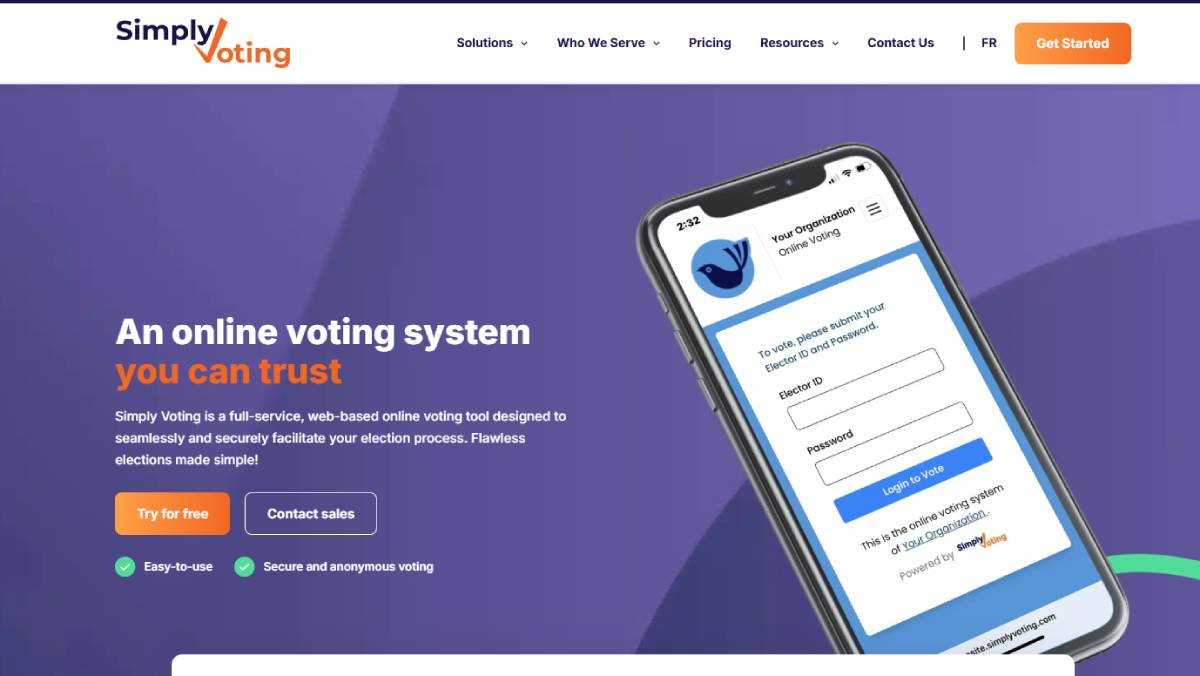
Simply Voting provides an online voting platform designed to support elections, surveys and decision-making processes for organizations. Its capabilities are centered on creating ballots, managing voter lists, conducting elections and providing results through a digital environment.

The platform is positioned for a wide range of organizational elections, including associations, unions, corporations, educational institutions and other membership-based organizations. Digital administration can reduce manual workloads associated with ballot preparation, voter management and vote counting.

The broader development comes as organizations increasingly seek technology that can improve participation while maintaining appropriate controls around voter authentication, ballot integrity and election administration. For executives, the appeal lies in combining operational efficiency with a more accessible voting experience.

The shift toward digital voting is part of a wider transformation in organizational administration. Membership associations, professional bodies, corporations and educational institutions increasingly operate across geographically distributed communities, making traditional in-person voting more difficult to coordinate.

Online voting platforms can address these challenges by allowing eligible voters to participate remotely while giving administrators centralized tools for election preparation and management. This can be particularly valuable when organizations have members spread across multiple cities, regions or countries.

However, digital elections also introduce important requirements around security, privacy and trust. Organizations must ensure that voter identities are appropriately managed while protecting ballot confidentiality and maintaining confidence in the accuracy of results.

Simply Voting operates within this evolving environment, where convenience must be balanced with election integrity. The broader market is therefore moving toward platforms that provide streamlined administration while incorporating safeguards designed to support credible organizational decision-making.

From an executive perspective, the value of online voting extends beyond eliminating paper ballots. Digital election-management systems can help organizations standardize procedures, reduce administrative effort and provide voters with greater flexibility.

Simply Voting's positioning reflects this demand for structured digital election administration. The platform is designed to support organizations that require a dedicated voting environment rather than relying on general-purpose survey or form tools.

Industry considerations remain centered on trust. Voters need confidence that eligible participants can vote, that ballots are handled appropriately and that election outcomes accurately represent the submitted votes. Administrators, meanwhile, require visibility into election configuration and participation without compromising ballot confidentiality.

For organizations evaluating digital voting, experts would typically focus on authentication, security controls, auditability, accessibility and compliance requirements. The strongest platforms will increasingly be judged not simply by ease of use but by their ability to provide a credible balance between convenience, privacy and electoral integrity.

For businesses and membership organizations, digital voting can reduce the logistical costs associated with elections while expanding participation opportunities. Remote voting can also make it easier for geographically dispersed members and employees to participate in organizational decisions.

For executives, the primary considerations include security, reliability, voter accessibility and administrative efficiency. Organizations must also establish clear election policies governing eligibility, voting periods, ballot procedures and result verification.

From a policy perspective, the increased adoption of digital voting highlights the importance of data protection and cybersecurity standards. While organizational elections differ from government elections, they still involve sensitive participation data and require strong controls to maintain trust.

The broader business impact could be significant as more organizations transition routine governance processes into digital environments. Digital voting is likely to become increasingly common as organizations seek faster, more accessible and less resource-intensive election processes. Future platforms may incorporate stronger authentication, automation, analytics and accessibility features while maintaining strict safeguards around voter privacy.

For decision-makers, the critical test will remain trust. Successful digital voting platforms must demonstrate that greater convenience can coexist with secure administration, transparent procedures and credible results.

Source: Crozdesk; Simply Voting
Date: August 11, 2026

  • Featured tools
Wonder AI
Free

Wonder AI is a versatile AI-powered creative platform that generates text, images, and audio with minimal input, designed for fast storytelling, visual creation, and audio content generation

#
Art Generator
Learn more
Upscayl AI
Free

Upscayl AI is a free, open-source AI-powered tool that enhances and upscales images to higher resolutions. It transforms blurry or low-quality visuals into sharp, detailed versions with ease.

#
Productivity
Learn more

Learn more about future of AI

Join 80,000+ Ai enthusiast getting weekly updates on exciting AI tools.
Thank you! Your submission has been received!
Oops! Something went wrong while submitting the form.

Simply Voting Advances Secure Digital Elections

August 11, 2026

Simply Voting provides an online voting platform designed to support elections, surveys and decision-making processes for organizations.

Simply Voting is strengthening the digital voting and election-management landscape with an online platform designed to make organizational elections more accessible, structured and secure. The development reflects growing demand for digital alternatives to paper-based voting, particularly among associations, businesses, institutions and other organizations seeking efficient election administration and transparent participation.

Simply Voting provides an online voting platform designed to support elections, surveys and decision-making processes for organizations. Its capabilities are centered on creating ballots, managing voter lists, conducting elections and providing results through a digital environment.

The platform is positioned for a wide range of organizational elections, including associations, unions, corporations, educational institutions and other membership-based organizations. Digital administration can reduce manual workloads associated with ballot preparation, voter management and vote counting.

The broader development comes as organizations increasingly seek technology that can improve participation while maintaining appropriate controls around voter authentication, ballot integrity and election administration. For executives, the appeal lies in combining operational efficiency with a more accessible voting experience.

The shift toward digital voting is part of a wider transformation in organizational administration. Membership associations, professional bodies, corporations and educational institutions increasingly operate across geographically distributed communities, making traditional in-person voting more difficult to coordinate.

Online voting platforms can address these challenges by allowing eligible voters to participate remotely while giving administrators centralized tools for election preparation and management. This can be particularly valuable when organizations have members spread across multiple cities, regions or countries.

However, digital elections also introduce important requirements around security, privacy and trust. Organizations must ensure that voter identities are appropriately managed while protecting ballot confidentiality and maintaining confidence in the accuracy of results.

Simply Voting operates within this evolving environment, where convenience must be balanced with election integrity. The broader market is therefore moving toward platforms that provide streamlined administration while incorporating safeguards designed to support credible organizational decision-making.

From an executive perspective, the value of online voting extends beyond eliminating paper ballots. Digital election-management systems can help organizations standardize procedures, reduce administrative effort and provide voters with greater flexibility.

Simply Voting's positioning reflects this demand for structured digital election administration. The platform is designed to support organizations that require a dedicated voting environment rather than relying on general-purpose survey or form tools.

Industry considerations remain centered on trust. Voters need confidence that eligible participants can vote, that ballots are handled appropriately and that election outcomes accurately represent the submitted votes. Administrators, meanwhile, require visibility into election configuration and participation without compromising ballot confidentiality.

For organizations evaluating digital voting, experts would typically focus on authentication, security controls, auditability, accessibility and compliance requirements. The strongest platforms will increasingly be judged not simply by ease of use but by their ability to provide a credible balance between convenience, privacy and electoral integrity.

For businesses and membership organizations, digital voting can reduce the logistical costs associated with elections while expanding participation opportunities. Remote voting can also make it easier for geographically dispersed members and employees to participate in organizational decisions.

For executives, the primary considerations include security, reliability, voter accessibility and administrative efficiency. Organizations must also establish clear election policies governing eligibility, voting periods, ballot procedures and result verification.

From a policy perspective, the increased adoption of digital voting highlights the importance of data protection and cybersecurity standards. While organizational elections differ from government elections, they still involve sensitive participation data and require strong controls to maintain trust.

The broader business impact could be significant as more organizations transition routine governance processes into digital environments. Digital voting is likely to become increasingly common as organizations seek faster, more accessible and less resource-intensive election processes. Future platforms may incorporate stronger authentication, automation, analytics and accessibility features while maintaining strict safeguards around voter privacy.

For decision-makers, the critical test will remain trust. Successful digital voting platforms must demonstrate that greater convenience can coexist with secure administration, transparent procedures and credible results.

Source: Crozdesk; Simply Voting
Date: August 11, 2026

Promote Your Tool

Copy Embed Code

Similar Blogs

August 14, 2026
|

Benefitfocus Expands Digital Benefits Administration

Benefitfocus provides cloud-based technology covering benefits enrollment, administration, communications, billing, payments and data exchange.
Read more
August 14, 2026
|

Travel Agent Revenue Models Evolve Digitally

Travel agencies can earn commissions when customers book hotels, cruises, tours, vacation packages and other travel products through them. Suppliers may pay agents for generating bookings, making commissions a traditional component of agency revenue.
Read more
August 14, 2026
|

Sofon Advances Guided Selling CPQ Automation

Sofon's platform combines guided selling, product configuration, pricing, quotation and sales-management capabilities. Guided questionnaires help sales teams identify customer requirements and translate them into suitable product configurations.
Read more
August 14, 2026
|

WellRyde Advances Medical Transportation Management

WellRyde provides technology for managing non-emergency medical transportation operations, including trip scheduling, dispatch coordination, transportation-provider management and reporting.
Read more
August 14, 2026
|

Review WAVE Advances Digital Patient Engagement

Review WAVE provides healthcare practices with tools for online appointment scheduling, two-way texting, automated appointment reminders, digital forms, web chat, marketing campaigns and online review generation.
Read more
August 14, 2026
|

Edgenuity Expands Digital Virtual Education

Edgenuity provides digital curriculum and learning solutions covering core academic subjects, electives, Advanced Placement and career-oriented education.
Read more