



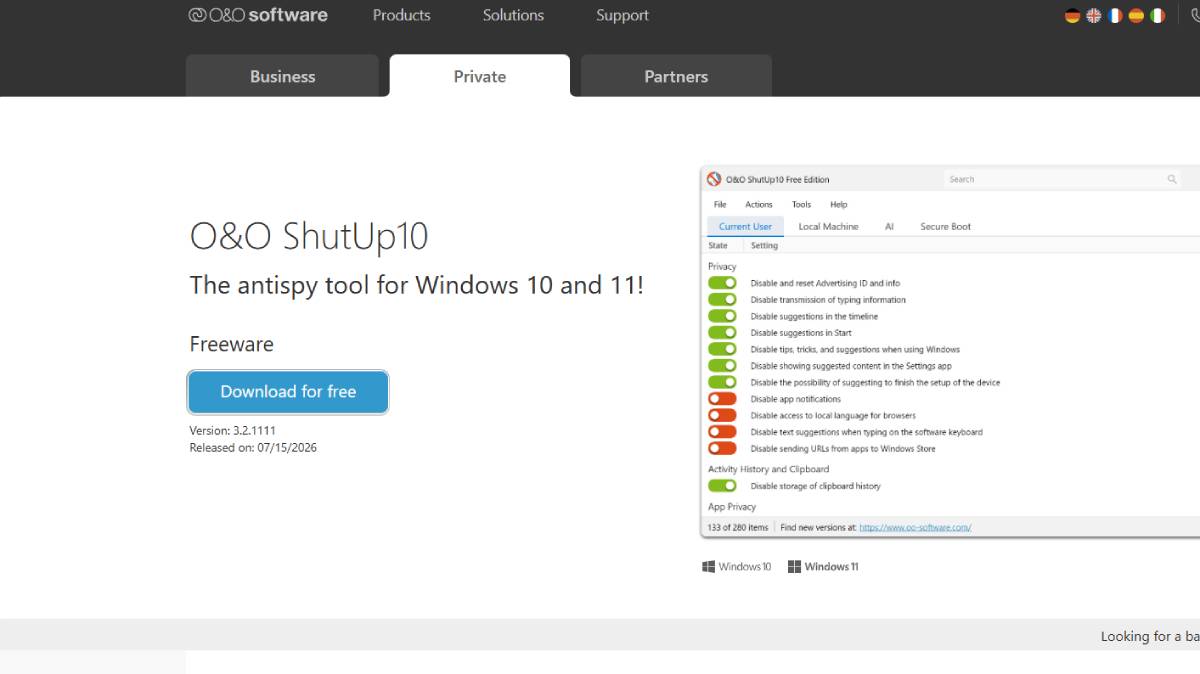
ShutUp10++ reflects the growing demand for privacy-focused Windows management tools as organizations and individual users seek greater transparency and control over operating system settings. The software aligns with broader trends in cybersecurity, regulatory compliance, and digital governance, reinforcing the importance of configurable privacy features in modern computing environments.
ShutUp10++ is a Windows configuration utility designed to help users review and adjust operating system privacy, telemetry, and security-related settings through a centralized interface. As enterprises and consumers place greater emphasis on data protection, tools that simplify privacy management have become increasingly relevant. The software enables users to customize system behavior without requiring advanced technical expertise, supporting greater visibility into Windows configuration options. Its availability reflects a wider market trend toward user-centric privacy controls, where software utilities complement built-in operating system capabilities and help organizations align device configurations with internal security policies and operational requirements.
The rapid expansion of digital services, cloud computing, and connected devices has intensified discussions surrounding data privacy and operating system transparency. Businesses today manage thousands of endpoints, making consistent privacy configuration an important component of enterprise cybersecurity strategies. At the same time, governments worldwide continue strengthening regulations governing personal data protection, cybersecurity, and digital accountability. These developments have increased demand for software that enables users to better understand and manage system-level privacy settings.
The trend aligns with a broader shift across global technology markets toward greater user control, security-by-design principles, and transparent software governance. ShutUp10++ represents part of this evolving ecosystem by providing an accessible approach to configuring Windows privacy settings while supporting organizations seeking stronger operational oversight and compliance readiness.
Cybersecurity analysts argue that privacy management tools can play an important role in broader endpoint security strategies when used alongside official operating system controls and enterprise security policies. Experts emphasize that organizations should carefully evaluate configuration changes to ensure they support business requirements without affecting system stability or essential functionality.
While no specific official statements are directly associated with ShutUp10++, industry observers agree that demand for configurable privacy solutions will continue growing as digital regulations evolve. Analysts also anticipate increased integration of artificial intelligence into endpoint management, enabling automated security recommendations, risk assessments, and compliance monitoring. Future success in this market will depend on balancing ease of use, transparency, security, and compatibility with evolving enterprise IT environments.
For businesses, ShutUp10++ illustrates the growing importance of endpoint privacy management within broader cybersecurity and governance strategies. Organizations seeking stronger oversight of Windows devices may benefit from tools that simplify configuration management while supporting internal compliance objectives. Investors continue monitoring cybersecurity and endpoint management markets as regulatory requirements and enterprise security spending increase.
Policymakers remain focused on privacy protections, software transparency, and responsible handling of user data across digital ecosystems. Companies operating in this space will likely need to strengthen interoperability, documentation, and governance capabilities as enterprise customers prioritize security, accountability, and operational resilience.
The market for privacy-focused system management tools is expected to expand alongside growing investments in cybersecurity, endpoint management, and regulatory compliance. Decision-makers should monitor developments in operating system security, artificial intelligence, and evolving privacy legislation. Solutions that successfully combine transparency, user control, and enterprise-grade reliability are likely to play an increasingly important role in modern digital infrastructure.
Source: AlternativeTo
Date: July 29, 2026


