
SEO Platforms Intensify Search Intelligence Competition

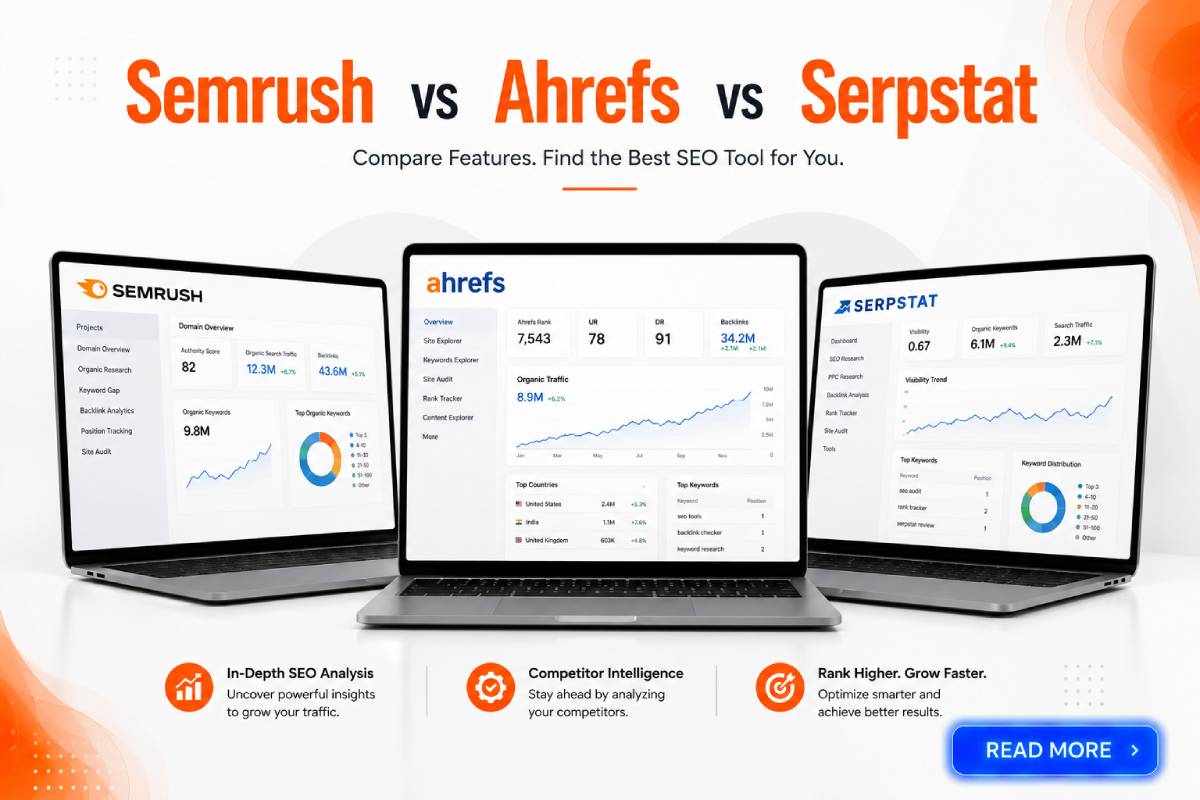
The comparison places three established SEO platforms against one another across capabilities relevant to modern digital marketing.

August 12, 2026
|

A three-way comparison of Semrush, Ahrefs and Serpstat highlights the intensifying competition among search-engine optimization platforms as businesses seek stronger visibility in increasingly complex digital markets. The comparison matters for marketing leaders, agencies and enterprises evaluating keyword research, competitor intelligence, backlink analysis and broader search-performance capabilities.

The comparison places three established SEO platforms against one another across capabilities relevant to modern digital marketing. Key evaluation areas include keyword research, rank tracking, competitor analysis, backlink intelligence, site auditing and reporting.

Semrush, Ahrefs and Serpstat each approach search intelligence from slightly different strategic positions, giving businesses multiple options depending on their marketing objectives and operational requirements.

The comparison reflects a wider shift in SEO from basic keyword optimization toward comprehensive data analysis. Marketing teams increasingly need visibility into competitors, search trends, technical website performance and content opportunities.

For executives, platform selection has become a strategic technology decision because search visibility can influence customer acquisition, digital revenue and overall marketing efficiency.

The development aligns with a broader transformation in digital marketing. Search engines remain an important discovery channel, but competition for visibility has intensified as businesses produce more online content and increasingly compete across paid, organic and emerging AI-driven search environments.

SEO platforms have consequently evolved from simple keyword-research tools into broader intelligence systems. Businesses can use these technologies to examine competitor strategies, monitor rankings, identify technical issues, evaluate backlinks and uncover potential content opportunities.

The comparison between Semrush, Ahrefs and Serpstat illustrates this increasingly sophisticated market. Each platform can serve different organizational priorities, from comprehensive marketing intelligence to specialized SEO analysis.

The emergence of generative AI is also changing search behavior. Businesses must increasingly understand not only traditional rankings but also how content is discovered, interpreted and surfaced through new forms of search.

For CXOs, SEO technology is therefore becoming part of a broader digital-growth strategy. The priority is selecting platforms that turn search data into actionable decisions rather than simply generating large volumes of metrics.

Digital-marketing specialists increasingly emphasize that SEO performance depends on combining technical optimization, content strategy, competitive intelligence and continuous measurement. A platform's value therefore depends on how effectively its data supports business decisions.

Semrush, Ahrefs and Serpstat demonstrate different approaches to delivering search intelligence. Marketing teams may prioritize different combinations of keyword databases, backlink information, auditing capabilities, reporting and competitive research.

For executives, usability and integration are also important considerations. A powerful SEO platform can have limited strategic value if teams struggle to interpret its data or connect insights with broader marketing workflows.

Industry observers are also watching the impact of AI on search analytics. Search behavior is becoming more dynamic as AI-generated answers and conversational discovery influence how users find information.

This environment increases the importance of adaptable SEO strategies. Companies may need technology capable of monitoring traditional search performance while helping teams understand emerging discovery channels.

For businesses, advanced SEO platforms can support better decisions around content investment, website optimization and customer acquisition. Stronger competitive intelligence may also help marketing teams identify market opportunities before competitors.

For investors and executives, platform selection should be evaluated according to business objectives, data requirements, team expertise, scalability and overall return on marketing investment.

Agencies can use search intelligence tools to improve reporting and campaign strategy across multiple clients, while internal teams can use them to monitor organic performance and competitive movements.

From a broader governance perspective, businesses should ensure that data-driven marketing practices respect privacy, intellectual-property considerations and applicable digital regulations.

The strategic priority is shifting from simply achieving search rankings toward building durable digital visibility. Companies that combine reliable data with strong content and technical execution may be better positioned to compete as search continues to evolve.

SEO platforms are likely to expand further into AI-powered search intelligence, automated recommendations and broader digital-market analysis. Traditional ranking data will increasingly be combined with competitive, content and behavioral signals.

Decision-makers should watch how effectively platforms adapt to AI-driven search and changing discovery patterns. The strongest solutions will likely be those that transform increasingly complex search data into clear, actionable intelligence for marketers and business leaders.

Source: Crozdesk
Date: August 12, 2026

  • Featured tools
Neuron AI
Free

Neuron AI is an AI-driven content optimization platform that helps creators produce SEO-friendly content by combining semantic SEO, competitor analysis, and AI-assisted writing workflows.

#
SEO
Learn more
Surfer AI
Free

Surfer AI is an AI-powered content creation assistant built into the Surfer SEO platform, designed to generate SEO-optimized articles from prompts, leveraging data from search results to inform tone, structure, and relevance.

#
SEO
Learn more

Learn more about future of AI

Join 80,000+ Ai enthusiast getting weekly updates on exciting AI tools.
Thank you! Your submission has been received!
Oops! Something went wrong while submitting the form.

SEO Platforms Intensify Search Intelligence Competition

August 12, 2026

The comparison places three established SEO platforms against one another across capabilities relevant to modern digital marketing.

A three-way comparison of Semrush, Ahrefs and Serpstat highlights the intensifying competition among search-engine optimization platforms as businesses seek stronger visibility in increasingly complex digital markets. The comparison matters for marketing leaders, agencies and enterprises evaluating keyword research, competitor intelligence, backlink analysis and broader search-performance capabilities.

The comparison places three established SEO platforms against one another across capabilities relevant to modern digital marketing. Key evaluation areas include keyword research, rank tracking, competitor analysis, backlink intelligence, site auditing and reporting.

Semrush, Ahrefs and Serpstat each approach search intelligence from slightly different strategic positions, giving businesses multiple options depending on their marketing objectives and operational requirements.

The comparison reflects a wider shift in SEO from basic keyword optimization toward comprehensive data analysis. Marketing teams increasingly need visibility into competitors, search trends, technical website performance and content opportunities.

For executives, platform selection has become a strategic technology decision because search visibility can influence customer acquisition, digital revenue and overall marketing efficiency.

The development aligns with a broader transformation in digital marketing. Search engines remain an important discovery channel, but competition for visibility has intensified as businesses produce more online content and increasingly compete across paid, organic and emerging AI-driven search environments.

SEO platforms have consequently evolved from simple keyword-research tools into broader intelligence systems. Businesses can use these technologies to examine competitor strategies, monitor rankings, identify technical issues, evaluate backlinks and uncover potential content opportunities.

The comparison between Semrush, Ahrefs and Serpstat illustrates this increasingly sophisticated market. Each platform can serve different organizational priorities, from comprehensive marketing intelligence to specialized SEO analysis.

The emergence of generative AI is also changing search behavior. Businesses must increasingly understand not only traditional rankings but also how content is discovered, interpreted and surfaced through new forms of search.

For CXOs, SEO technology is therefore becoming part of a broader digital-growth strategy. The priority is selecting platforms that turn search data into actionable decisions rather than simply generating large volumes of metrics.

Digital-marketing specialists increasingly emphasize that SEO performance depends on combining technical optimization, content strategy, competitive intelligence and continuous measurement. A platform's value therefore depends on how effectively its data supports business decisions.

Semrush, Ahrefs and Serpstat demonstrate different approaches to delivering search intelligence. Marketing teams may prioritize different combinations of keyword databases, backlink information, auditing capabilities, reporting and competitive research.

For executives, usability and integration are also important considerations. A powerful SEO platform can have limited strategic value if teams struggle to interpret its data or connect insights with broader marketing workflows.

Industry observers are also watching the impact of AI on search analytics. Search behavior is becoming more dynamic as AI-generated answers and conversational discovery influence how users find information.

This environment increases the importance of adaptable SEO strategies. Companies may need technology capable of monitoring traditional search performance while helping teams understand emerging discovery channels.

For businesses, advanced SEO platforms can support better decisions around content investment, website optimization and customer acquisition. Stronger competitive intelligence may also help marketing teams identify market opportunities before competitors.

For investors and executives, platform selection should be evaluated according to business objectives, data requirements, team expertise, scalability and overall return on marketing investment.

Agencies can use search intelligence tools to improve reporting and campaign strategy across multiple clients, while internal teams can use them to monitor organic performance and competitive movements.

From a broader governance perspective, businesses should ensure that data-driven marketing practices respect privacy, intellectual-property considerations and applicable digital regulations.

The strategic priority is shifting from simply achieving search rankings toward building durable digital visibility. Companies that combine reliable data with strong content and technical execution may be better positioned to compete as search continues to evolve.

SEO platforms are likely to expand further into AI-powered search intelligence, automated recommendations and broader digital-market analysis. Traditional ranking data will increasingly be combined with competitive, content and behavioral signals.

Decision-makers should watch how effectively platforms adapt to AI-driven search and changing discovery patterns. The strongest solutions will likely be those that transform increasingly complex search data into clear, actionable intelligence for marketers and business leaders.

Source: Crozdesk
Date: August 12, 2026

Promote Your Tool

Copy Embed Code

Similar Blogs

August 14, 2026
|

Benefitfocus Expands Digital Benefits Administration

Benefitfocus provides cloud-based technology covering benefits enrollment, administration, communications, billing, payments and data exchange.
Read more
August 14, 2026
|

Travel Agent Revenue Models Evolve Digitally

Travel agencies can earn commissions when customers book hotels, cruises, tours, vacation packages and other travel products through them. Suppliers may pay agents for generating bookings, making commissions a traditional component of agency revenue.
Read more
August 14, 2026
|

Sofon Advances Guided Selling CPQ Automation

Sofon's platform combines guided selling, product configuration, pricing, quotation and sales-management capabilities. Guided questionnaires help sales teams identify customer requirements and translate them into suitable product configurations.
Read more
August 14, 2026
|

WellRyde Advances Medical Transportation Management

WellRyde provides technology for managing non-emergency medical transportation operations, including trip scheduling, dispatch coordination, transportation-provider management and reporting.
Read more
August 14, 2026
|

Review WAVE Advances Digital Patient Engagement

Review WAVE provides healthcare practices with tools for online appointment scheduling, two-way texting, automated appointment reminders, digital forms, web chat, marketing campaigns and online review generation.
Read more
August 14, 2026
|

Edgenuity Expands Digital Virtual Education

Edgenuity provides digital curriculum and learning solutions covering core academic subjects, electives, Advanced Placement and career-oriented education.
Read more