
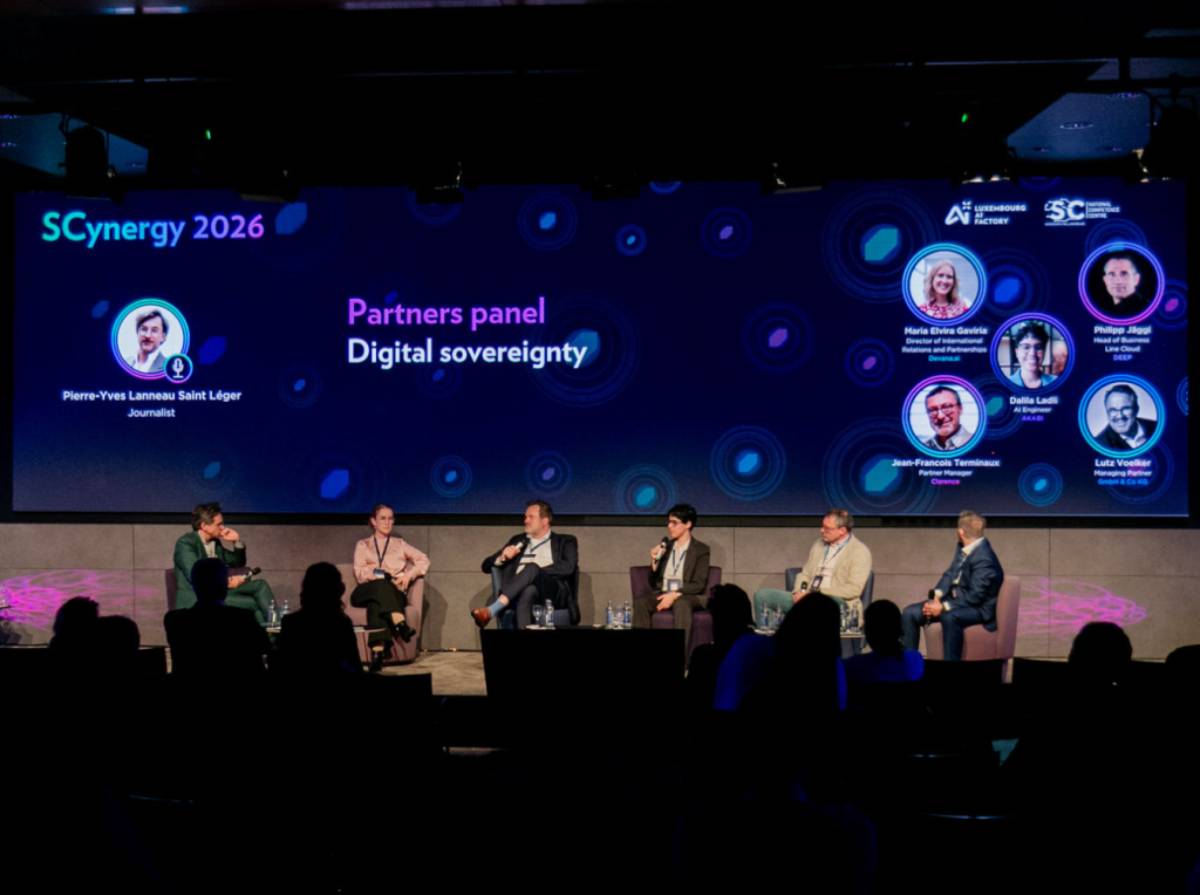
SCynergy 2026 Champions Digital Sovereignty

SCynergy 2026 brought together industry executives, cybersecurity specialists, government representatives, and technology innovators to explore practical approaches to digital sovereignty.

July 29, 2026
|
Image Source: Silicon Luxembourg

A major cybersecurity discussion unfolded at SCynergy 2026 as policymakers, technology leaders, and cybersecurity experts examined how Europe can strengthen digital sovereignty amid rising cyber threats and geopolitical uncertainty. The event underscored the growing importance of secure digital infrastructure, resilient cloud ecosystems, and trusted technology partnerships for governments and enterprises alike.

SCynergy 2026 brought together industry executives, cybersecurity specialists, government representatives, and technology innovators to explore practical approaches to digital sovereignty. Discussions focused on securing critical infrastructure, strengthening cyber resilience, reducing dependence on foreign digital platforms, and promoting trusted European technology ecosystems.

Participants highlighted the increasing role of cybersecurity in economic competitiveness and national resilience. Topics included cloud security, artificial intelligence, regulatory compliance, supply chain protection, and cross-border digital cooperation. The conference emphasized collaboration between public institutions and private enterprises as cyber threats become more sophisticated and increasingly target essential sectors including finance, healthcare, telecommunications, and government services.

Digital sovereignty has become a strategic priority across Europe as governments seek greater control over critical digital infrastructure, sensitive data, and cybersecurity capabilities. Growing geopolitical tensions, sophisticated cyberattacks, and concerns surrounding technology dependence have accelerated investment in secure cloud infrastructure, domestic innovation, and trusted digital ecosystems.

The European Union has introduced a series of regulatory initiatives including cybersecurity directives, data governance frameworks, and digital resilience legislation—to strengthen strategic autonomy while promoting secure digital transformation. Businesses are simultaneously facing increasing compliance obligations alongside rising operational risks from ransomware, supply chain attacks, and state-sponsored cyber activity.

Luxembourg has positioned itself as an important European cybersecurity hub through continued investment in digital infrastructure, financial technology, space technologies, and secure cloud services. Events such as SCynergy 2026 demonstrate the country's ambition to foster collaboration between industry, academia, and policymakers while supporting Europe's broader digital resilience agenda.

Cybersecurity experts increasingly argue that digital sovereignty extends beyond data localization, encompassing technological independence, resilient infrastructure, trusted supply chains, and strong public-private cooperation. Analysts note that organizations capable of maintaining control over critical digital assets are better positioned to withstand geopolitical disruptions and evolving cyber threats.

Conference participants emphasized that cybersecurity should now be treated as a strategic business function rather than solely an IT responsibility. Executives discussed the growing importance of integrating cyber resilience into corporate governance, investment planning, and operational decision-making.

Industry leaders also highlighted artificial intelligence as both an opportunity and a growing security challenge, requiring balanced governance frameworks that encourage innovation while protecting sensitive information. Speakers stressed that cross-border cooperation, workforce development, and continuous innovation remain essential to strengthening Europe's long-term cybersecurity capabilities and digital competitiveness.

For business leaders, SCynergy 2026 reinforces that cybersecurity and digital sovereignty are becoming board-level priorities directly linked to operational resilience, regulatory compliance, and competitive advantage. Companies may need to reassess technology procurement strategies, cloud architecture, vendor relationships, and cybersecurity investments to align with evolving European standards.

Investors are likely to continue monitoring growth opportunities across cybersecurity, secure cloud services, AI governance, and digital infrastructure markets. Policymakers, meanwhile, are expected to strengthen initiatives supporting trusted technology ecosystems while encouraging innovation through closer collaboration between governments, startups, research institutions, and established technology providers operating throughout Europe.

Attention will now turn toward how governments and industry convert strategic discussions into measurable action through policy implementation, infrastructure investment, and stronger cybersecurity partnerships. As digital threats continue evolving, organizations that prioritize resilience, trusted technology ecosystems, and secure innovation are expected to gain long-term competitive advantages. SCynergy 2026 reinforces that digital sovereignty will remain central to Europe's technology and security agenda.

Source: Silicon Luxembourg
Date: July 3, 2026

  • Featured tools
Symphony Ayasdi AI
Free

SymphonyAI Sensa is an AI-powered surveillance and financial crime detection platform that surfaces hidden risk behavior through explainable, AI-driven analytics.

#
Finance
Learn more
Ai Fiesta
Paid

AI Fiesta is an all-in-one productivity platform that gives users access to multiple leading AI models through a single interface. It includes features like prompt enhancement, image generation, audio transcription and side-by-side model comparison.

#
Copywriting
#
Art Generator
Learn more

Learn more about future of AI

Join 80,000+ Ai enthusiast getting weekly updates on exciting AI tools.
Thank you! Your submission has been received!
Oops! Something went wrong while submitting the form.

SCynergy 2026 Champions Digital Sovereignty

July 29, 2026

SCynergy 2026 brought together industry executives, cybersecurity specialists, government representatives, and technology innovators to explore practical approaches to digital sovereignty.

Image Source: Silicon Luxembourg

A major cybersecurity discussion unfolded at SCynergy 2026 as policymakers, technology leaders, and cybersecurity experts examined how Europe can strengthen digital sovereignty amid rising cyber threats and geopolitical uncertainty. The event underscored the growing importance of secure digital infrastructure, resilient cloud ecosystems, and trusted technology partnerships for governments and enterprises alike.

SCynergy 2026 brought together industry executives, cybersecurity specialists, government representatives, and technology innovators to explore practical approaches to digital sovereignty. Discussions focused on securing critical infrastructure, strengthening cyber resilience, reducing dependence on foreign digital platforms, and promoting trusted European technology ecosystems.

Participants highlighted the increasing role of cybersecurity in economic competitiveness and national resilience. Topics included cloud security, artificial intelligence, regulatory compliance, supply chain protection, and cross-border digital cooperation. The conference emphasized collaboration between public institutions and private enterprises as cyber threats become more sophisticated and increasingly target essential sectors including finance, healthcare, telecommunications, and government services.

Digital sovereignty has become a strategic priority across Europe as governments seek greater control over critical digital infrastructure, sensitive data, and cybersecurity capabilities. Growing geopolitical tensions, sophisticated cyberattacks, and concerns surrounding technology dependence have accelerated investment in secure cloud infrastructure, domestic innovation, and trusted digital ecosystems.

The European Union has introduced a series of regulatory initiatives including cybersecurity directives, data governance frameworks, and digital resilience legislation—to strengthen strategic autonomy while promoting secure digital transformation. Businesses are simultaneously facing increasing compliance obligations alongside rising operational risks from ransomware, supply chain attacks, and state-sponsored cyber activity.

Luxembourg has positioned itself as an important European cybersecurity hub through continued investment in digital infrastructure, financial technology, space technologies, and secure cloud services. Events such as SCynergy 2026 demonstrate the country's ambition to foster collaboration between industry, academia, and policymakers while supporting Europe's broader digital resilience agenda.

Cybersecurity experts increasingly argue that digital sovereignty extends beyond data localization, encompassing technological independence, resilient infrastructure, trusted supply chains, and strong public-private cooperation. Analysts note that organizations capable of maintaining control over critical digital assets are better positioned to withstand geopolitical disruptions and evolving cyber threats.

Conference participants emphasized that cybersecurity should now be treated as a strategic business function rather than solely an IT responsibility. Executives discussed the growing importance of integrating cyber resilience into corporate governance, investment planning, and operational decision-making.

Industry leaders also highlighted artificial intelligence as both an opportunity and a growing security challenge, requiring balanced governance frameworks that encourage innovation while protecting sensitive information. Speakers stressed that cross-border cooperation, workforce development, and continuous innovation remain essential to strengthening Europe's long-term cybersecurity capabilities and digital competitiveness.

For business leaders, SCynergy 2026 reinforces that cybersecurity and digital sovereignty are becoming board-level priorities directly linked to operational resilience, regulatory compliance, and competitive advantage. Companies may need to reassess technology procurement strategies, cloud architecture, vendor relationships, and cybersecurity investments to align with evolving European standards.

Investors are likely to continue monitoring growth opportunities across cybersecurity, secure cloud services, AI governance, and digital infrastructure markets. Policymakers, meanwhile, are expected to strengthen initiatives supporting trusted technology ecosystems while encouraging innovation through closer collaboration between governments, startups, research institutions, and established technology providers operating throughout Europe.

Attention will now turn toward how governments and industry convert strategic discussions into measurable action through policy implementation, infrastructure investment, and stronger cybersecurity partnerships. As digital threats continue evolving, organizations that prioritize resilience, trusted technology ecosystems, and secure innovation are expected to gain long-term competitive advantages. SCynergy 2026 reinforces that digital sovereignty will remain central to Europe's technology and security agenda.

Source: Silicon Luxembourg
Date: July 3, 2026

Promote Your Tool

Copy Embed Code

Similar Blogs

August 14, 2026
|

Benefitfocus Expands Digital Benefits Administration

Benefitfocus provides cloud-based technology covering benefits enrollment, administration, communications, billing, payments and data exchange.
Read more
August 14, 2026
|

Travel Agent Revenue Models Evolve Digitally

Travel agencies can earn commissions when customers book hotels, cruises, tours, vacation packages and other travel products through them. Suppliers may pay agents for generating bookings, making commissions a traditional component of agency revenue.
Read more
August 14, 2026
|

Sofon Advances Guided Selling CPQ Automation

Sofon's platform combines guided selling, product configuration, pricing, quotation and sales-management capabilities. Guided questionnaires help sales teams identify customer requirements and translate them into suitable product configurations.
Read more
August 14, 2026
|

WellRyde Advances Medical Transportation Management

WellRyde provides technology for managing non-emergency medical transportation operations, including trip scheduling, dispatch coordination, transportation-provider management and reporting.
Read more
August 14, 2026
|

Review WAVE Advances Digital Patient Engagement

Review WAVE provides healthcare practices with tools for online appointment scheduling, two-way texting, automated appointment reminders, digital forms, web chat, marketing campaigns and online review generation.
Read more
August 14, 2026
|

Edgenuity Expands Digital Virtual Education

Edgenuity provides digital curriculum and learning solutions covering core academic subjects, electives, Advanced Placement and career-oriented education.
Read more