
SaneBox Expands AI Inbox Automation Amid Productivity Tool Surge

SaneBox has emerged as a widely adopted email management platform that uses artificial intelligence to help users organize and prioritize incoming messages across major email providers.

March 30, 2026
|

A major development in workplace productivity technology is unfolding as SaneBox advances AI-powered inbox management designed to reduce digital overload for professionals and enterprises. The platform signals a broader shift toward intelligent email automation as organizations seek tools that streamline communication workflows and improve executive productivity.

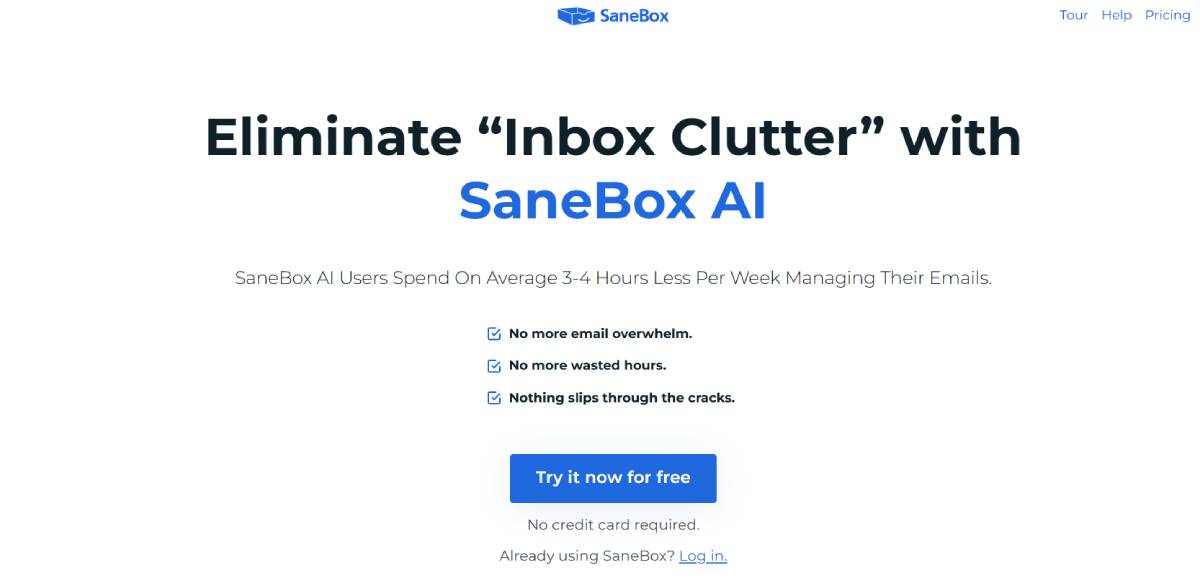
SaneBox AI has emerged as a widely adopted email management platform that uses artificial intelligence to help users organize and prioritize incoming messages across major email providers. The platform connects directly to inboxes hosted by services such as Gmail, Microsoft Outlook, and Yahoo Mail, automatically sorting emails into priority folders based on user behavior and communication patterns.

Key capabilities include:

  • AI-driven email prioritization
  • Automated inbox filtering and folder management
  • Digest summaries for non-urgent messages
  • Tools for unsubscribing and email cleanup

The company’s approach focuses on reducing inbox noise without requiring users to change their existing email platforms or workflows.

The rise of AI-powered email management tools reflects a growing challenge facing modern workplaces: information overload. Executives, managers, and knowledge workers often receive hundreds of emails daily, making inbox management a major productivity concern. Technology companies have increasingly turned to artificial intelligence to solve this problem. Platforms such as Superhuman, Spark Mail, and productivity integrations from Google and Microsoft highlight the growing competition in intelligent communication tools.

The broader market trend reflects the rise of “workflow automation” software, where AI helps manage repetitive digital tasks ranging from scheduling and email filtering to document processing. For organizations managing distributed teams and remote workforces, automated inbox management tools are becoming increasingly essential for maintaining efficient communication.

Productivity analysts say AI-driven inbox management could play a critical role in reducing workplace inefficiencies. Industry experts estimate that professionals spend several hours per week sorting, reading, and responding to emails time that could otherwise be allocated to strategic decision-making or creative work.

Technology consultants argue that AI-enabled inbox prioritization allows executives to focus on high-value communications while filtering out routine or low-priority messages. Digital workplace strategists also emphasize that automation tools like SaneBox can support better attention management, helping employees avoid burnout associated with constant digital interruptions.

At the same time, cybersecurity experts stress the importance of secure integrations when AI tools access email systems, noting that data privacy and enterprise security will remain key considerations for corporate adoption.

For businesses, intelligent inbox management tools offer a clear productivity advantage in increasingly complex digital work environments. Organizations that adopt AI-powered communication tools may see improvements in workflow efficiency, faster response times, and reduced cognitive load for employees. From a market perspective, the expansion of email automation platforms highlights the growing demand for AI productivity software across sectors such as finance, consulting, technology, and media.

However, policymakers and enterprise IT leaders are also evaluating how AI systems interact with sensitive communication data. Issues such as email privacy, enterprise security, and regulatory compliance could influence how widely these tools are adopted within large organizations.

As workplace communication continues to intensify, AI-powered inbox management platforms are likely to become a core component of enterprise productivity ecosystems. Future innovations may include deeper integration with collaboration tools, predictive communication insights, and automated response capabilities. For business leaders, the central question will be how to balance automation with human oversight while ensuring secure and efficient communication across increasingly digital organizations.

Source: SaneBox
Date: March 6, 2026

  • Featured tools
Hostinger Website Builder
Paid

Hostinger Website Builder is a drag-and-drop website creator bundled with hosting and AI-powered tools, designed for businesses, blogs and small shops with minimal technical effort.It makes launching a site fast and affordable, with templates, responsive design and built-in hosting all in one.

#
Productivity
#
Startup Tools
#
Ecommerce
Learn more
Upscayl AI
Free

Upscayl AI is a free, open-source AI-powered tool that enhances and upscales images to higher resolutions. It transforms blurry or low-quality visuals into sharp, detailed versions with ease.

#
Productivity
Learn more

Learn more about future of AI

Join 80,000+ Ai enthusiast getting weekly updates on exciting AI tools.
Thank you! Your submission has been received!
Oops! Something went wrong while submitting the form.

SaneBox Expands AI Inbox Automation Amid Productivity Tool Surge

March 30, 2026

SaneBox has emerged as a widely adopted email management platform that uses artificial intelligence to help users organize and prioritize incoming messages across major email providers.

A major development in workplace productivity technology is unfolding as SaneBox advances AI-powered inbox management designed to reduce digital overload for professionals and enterprises. The platform signals a broader shift toward intelligent email automation as organizations seek tools that streamline communication workflows and improve executive productivity.

SaneBox AI has emerged as a widely adopted email management platform that uses artificial intelligence to help users organize and prioritize incoming messages across major email providers. The platform connects directly to inboxes hosted by services such as Gmail, Microsoft Outlook, and Yahoo Mail, automatically sorting emails into priority folders based on user behavior and communication patterns.

Key capabilities include:

  • AI-driven email prioritization
  • Automated inbox filtering and folder management
  • Digest summaries for non-urgent messages
  • Tools for unsubscribing and email cleanup

The company’s approach focuses on reducing inbox noise without requiring users to change their existing email platforms or workflows.

The rise of AI-powered email management tools reflects a growing challenge facing modern workplaces: information overload. Executives, managers, and knowledge workers often receive hundreds of emails daily, making inbox management a major productivity concern. Technology companies have increasingly turned to artificial intelligence to solve this problem. Platforms such as Superhuman, Spark Mail, and productivity integrations from Google and Microsoft highlight the growing competition in intelligent communication tools.

The broader market trend reflects the rise of “workflow automation” software, where AI helps manage repetitive digital tasks ranging from scheduling and email filtering to document processing. For organizations managing distributed teams and remote workforces, automated inbox management tools are becoming increasingly essential for maintaining efficient communication.

Productivity analysts say AI-driven inbox management could play a critical role in reducing workplace inefficiencies. Industry experts estimate that professionals spend several hours per week sorting, reading, and responding to emails time that could otherwise be allocated to strategic decision-making or creative work.

Technology consultants argue that AI-enabled inbox prioritization allows executives to focus on high-value communications while filtering out routine or low-priority messages. Digital workplace strategists also emphasize that automation tools like SaneBox can support better attention management, helping employees avoid burnout associated with constant digital interruptions.

At the same time, cybersecurity experts stress the importance of secure integrations when AI tools access email systems, noting that data privacy and enterprise security will remain key considerations for corporate adoption.

For businesses, intelligent inbox management tools offer a clear productivity advantage in increasingly complex digital work environments. Organizations that adopt AI-powered communication tools may see improvements in workflow efficiency, faster response times, and reduced cognitive load for employees. From a market perspective, the expansion of email automation platforms highlights the growing demand for AI productivity software across sectors such as finance, consulting, technology, and media.

However, policymakers and enterprise IT leaders are also evaluating how AI systems interact with sensitive communication data. Issues such as email privacy, enterprise security, and regulatory compliance could influence how widely these tools are adopted within large organizations.

As workplace communication continues to intensify, AI-powered inbox management platforms are likely to become a core component of enterprise productivity ecosystems. Future innovations may include deeper integration with collaboration tools, predictive communication insights, and automated response capabilities. For business leaders, the central question will be how to balance automation with human oversight while ensuring secure and efficient communication across increasingly digital organizations.

Source: SaneBox
Date: March 6, 2026

Promote Your Tool

Copy Embed Code

Similar Blogs

May 8, 2026
|

Google Rebrands Fitbit App Integration

The Fitbit app is being phased into a new identity under Google’s broader health and fitness ecosystem, accompanied by updated features designed to enhance user tracking, analytics.
Read more
May 8, 2026
|

AI Tools Boost Workforce Productivity

AI-powered tools are being widely adopted to streamline everyday work tasks such as scheduling, email drafting, research, and workflow organization.
Read more
May 8, 2026
|

Global Tech Faces RAMageddon Crisis

Technology companies across hardware, cloud computing, and artificial intelligence sectors are reporting rising concerns over a shortage of RAM (random-access memory).
Read more
May 8, 2026
|

Huawei Launches Ultra-Thin Premium Tablet

Huawei has launched its latest premium tablet, positioned as a direct competitor to Apple’s high-end iPad Pro series.
Read more
May 8, 2026
|

Cloudflare AI Shift Cuts Workforce

Cloudflare has announced plans to cut approximately 20% of its workforce, equating to more than 1,100 jobs, as it restructures operations around AI-driven efficiency models.
Read more
May 8, 2026
|

OpenAI Advances Cybersecurity AI Race

OpenAI has reportedly rolled out a new AI model tailored for cybersecurity applications, aimed at strengthening threat detection, vulnerability analysis, and automated defense mechanisms.
Read more