



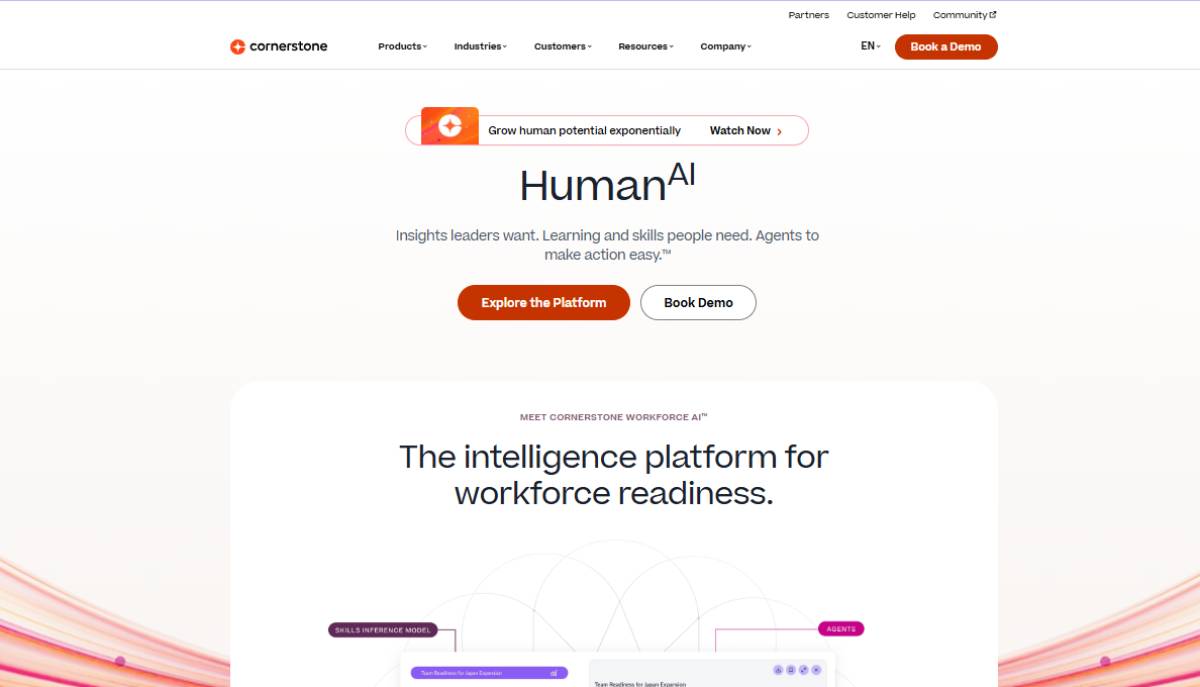
Saba Cloud represents the shift toward integrated, cloud-based learning and talent management for large organizations. Its platform brings together employee learning, skills development, compliance training, performance support, analytics, and engagement, helping enterprises build workforce capabilities while aligning professional development with broader operational and strategic priorities.
Saba Cloud provides an enterprise learning environment covering course and curriculum management, assessments, compliance training, employee development, analytics, and mobile learning. The platform is designed to support employees as well as extended enterprise audiences such as partners and other external stakeholders.
Its capabilities also include centralized administration, reporting, personalized learning, assessments, coaching, feedback, and workforce-development tools. These functions allow organizations to manage learning programs across geographically distributed teams while maintaining greater visibility into participation and outcomes.
The platform's enterprise orientation makes it particularly relevant to large companies seeking to standardize workforce development, compliance programs, and professional learning across multiple business units.
The evolution of Saba Cloud reflects a broader transformation in corporate learning. Traditional learning-management systems were primarily designed to distribute courses and track completion. Modern enterprises increasingly expect these platforms to support continuous development, skills management, employee engagement, coaching, performance, and workforce analytics.
This shift has become more important as organizations respond to changing skill requirements, hybrid work models, automation, and increasingly complex compliance obligations. Learning platforms are therefore moving closer to the center of strategic HR and workforce planning.
Saba has historically operated in the enterprise learning and talent-management market, building capabilities around personalized development and connected employee experiences. Its integration into the broader Cornerstone ecosystem further reflects the industry's consolidation and the growing demand for comprehensive talent-management platforms.
For executives, the larger significance is the transition from viewing training as an administrative activity to treating workforce capability as a strategic business asset. The strategic value of Saba Cloud comes from its ability to connect learning activities with wider workforce objectives. Enterprises can use centralized learning infrastructure to manage mandatory training, professional development, leadership programs, assessments, and employee capability initiatives.
From an executive perspective, integrated analytics can provide greater visibility into workforce participation and development patterns. This can help HR leaders identify capability gaps, monitor compliance, and better align development programs with organizational priorities.
Industry analysis also points toward a growing emphasis on personalized and skills-based learning. Employees increasingly expect learning experiences that are relevant to their roles and career goals, while managers require better visibility into development progress.
However, technology deployment alone does not guarantee measurable results. Successful enterprise learning programs depend on content quality, employee participation, leadership support, effective change management, and responsible handling of workforce data.
The strongest strategic outcomes are likely to come from organizations that connect learning initiatives directly to measurable workforce and business objectives. For businesses, Saba Cloud highlights the growing importance of centralized workforce-development infrastructure. Enterprises can use integrated learning capabilities to standardize training, manage compliance requirements, support career development, and improve visibility across distributed teams.
For HR and learning executives, combining learning data with skills and development information can support more informed workforce planning. Large organizations may also benefit from greater consistency in training standards across regions and business units.
For investors and corporate leaders, enterprise learning technology increasingly forms part of the broader shift toward skills-based workforce management. Organizations that understand their internal capabilities may be better positioned to respond to automation and changing market requirements.
At the policy level, workforce analytics and personalized learning raise important considerations around employee privacy, data governance, accessibility, and responsible use of technology.
Enterprise learning is likely to become increasingly personalized, skills-oriented, and analytics-driven. Saba Cloud's capabilities position this model within the broader evolution of digital workforce management, where learning increasingly connects with talent strategy and organizational performance.
Decision-makers should watch how enterprise platforms integrate emerging technologies, workforce analytics, and skills intelligence while maintaining data protection and employee trust. The central challenge will be turning learning activity into measurable improvements in workforce capability, productivity, and business performance.
Source: Crozdesk
Date: August 10, 2026


